

Reviewed and signed off by Blue Blossom Surveys· Published 24 November 2026 · Updated 24 November 2026
Your surveyor does not produce the Energy Performance Certificate. Under the RICS Home Survey Standard, the surveyor obtains the most recent EPC from the central register, states its rating in your report and checks it for obvious discrepancies with the house in front of them. That last part is the bit most buyers never hear about, and it is where a home survey EPC check earns its keep.
The two documents are often confused because both turn up during a purchase and both say something about the property. They answer very different questions, though, and knowing which one tells you what saves a lot of false reassurance.
Quick answer: No, a home survey does not include a new EPC. The seller must provide a valid EPC before marketing the property. A RICS Level 2 or Level 3 surveyor reviews the existing certificate, records its rating, and checks for obvious mismatches between what the EPC says and what is actually there, then explains what any difference means for you.
In this guide
EPC vs home survey: two different jobs
An EPC is a standardised energy assessment. A home survey is a condition inspection. They are produced by different people, for different reasons, and to different rules.
| Energy Performance Certificate | RICS home survey (Level 2 or 3) | |
|---|---|---|
| Who arranges it | The seller, before the property is marketed | You, the buyer, after your offer is accepted |
| Legally required? | Yes, when a home is sold or let | No, but strongly advisable |
| Produced by | An accredited energy assessor | A RICS-registered surveyor |
| What it rates | Energy efficiency, from A (best) to G (worst) | The condition of each part of the building, with condition ratings |
| How long it lasts | Valid for 10 years | A snapshot on the day of inspection |
| Tells you about defects? | No | Yes, that is its purpose |
The GOV.UK guidance for sellers confirms the basics: an EPC rates a property from A to G, is valid for 10 years, and must be in place before the home is put on the market.
That ten-year validity is the catch. A certificate lodged nine years ago can still be perfectly valid while describing a house that has since had a new boiler, an extension, a loft conversion or a different heating fuel altogether.
What your home survey report says about the EPC
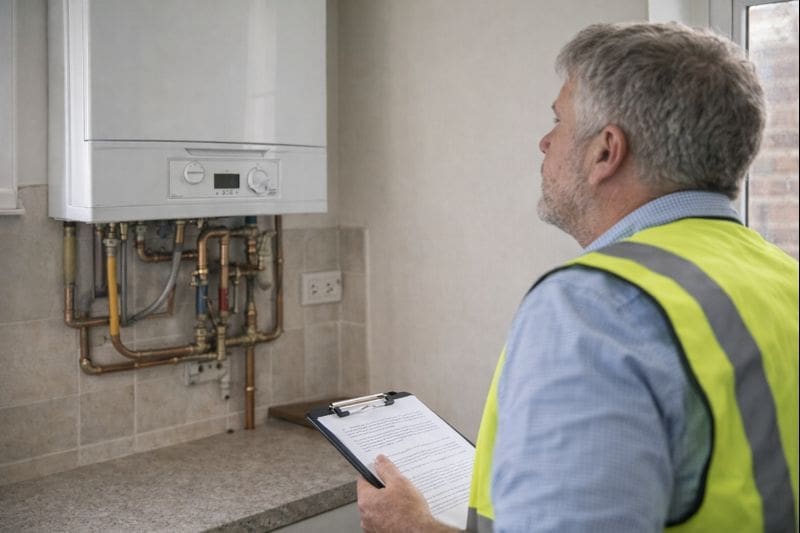
Both RICS survey levels have an energy section. In a RICS Level 2 Homebuyer Survey, the report includes a heading called “Energy efficiency”. The surveyor records the rating shown on the current EPC, notes whether they found any obvious discrepancies, and explains the implications.
A Level 3 Building Survey does the same, and goes a step further. The RICS description of the Level 3 service says the surveyor may add wider commentary on energy-related matters for the property as a whole, while making clear this is not a formal energy assessment.
In practice, that means your report will not re-score the house. It will tell you whether the certificate you have been given is a fair description of the property you are buying, and flag where it is not.
The EPC mismatches a surveyor looks for
An energy assessor records what they can see and what they are told on the day. Houses change after that. These are the kinds of differences that come up when a surveyor compares the certificate with the building:
Insulation that is recorded but not visible
An EPC may list cavity wall insulation, or a set depth of loft insulation. If the surveyor sees no sign of an injected cavity, or finds a thin, patchy layer in the roof space, they will say so. Equally, insulation added since the EPC was done may not be credited.
Heating that has been changed
A boiler replaced, a switch from oil to an air source heat pump, or a woodburner added since the EPC can all mean the certificate no longer reflects the main heating system.
Extensions and conversions added since the EPC
A rear extension or loft room changes the floor area and the amount of heat-losing wall and roof. If the EPC floor area looks too small for the house in front of you, that is worth knowing. Our guide on whether surveyors check extensions and loft conversions covers what the inspection looks at.
Glazing and renewables
Replacement windows, or panels added to the roof, can move the rating. If the house has panels, our article on buying a house with solar panels explains the separate questions those raise for your survey and your solicitor.
Our view: a discrepancy is rarely a reason to walk away. It is a reason to stop relying on the EPC’s running-cost estimates and to ask the seller for paperwork on whatever changed, such as boiler installation certificates or insulation guarantees.
Why a wrong or out-of-date EPC matters to you
The EPC rating feeds into more decisions than most buyers realise.
- Running costs. The certificate estimates typical energy costs. If it describes a different heating system or different insulation, those figures may be misleading.
- Improvement plans. The recommendations section suggests upgrades. If some have already been done, or were recorded as done but were not, your budget for improvements will be off.
- Letting the property. If you are buying to let, the rating has legal weight. Under the minimum energy efficiency standard for private rented homes, landlords have been unable since 1 April 2020 to let or continue to let a property covered by the regulations with an EPC rating below E, unless a valid exemption is registered.
- Your lender. Some lenders offer products linked to a property’s energy rating, so it is worth checking the certificate is accurate before you rely on it.
If you are buying an F or G rated home to let, the survey and the EPC together give you a realistic view of the work needed before a tenancy can start. That is a conversation to have before exchange, not after.
What neither document tells you
An EPC does not tell you whether the roof leaks, the walls are damp or the boiler is safe. It is not a condition report at all.
A home survey has limits too. The RICS description of the Level 2 service states that the visual inspection cannot assess the efficiency or safety of electrical, gas or other energy sources, and does not test heating installations. If you want to know how a boiler or electrical system is performing, that needs a specialist.

When energy upgrades become a survey issue
Here is the angle many EPC guides miss. Some measures that improve a rating on paper can create problems a surveyor will flag.
Spray foam applied to the underside of a roof is the clearest example. It may help insulation, but it hides the roof timbers and can make some lenders cautious. Our guide to spray foam insulation and your survey explains what the surveyor can and cannot see.
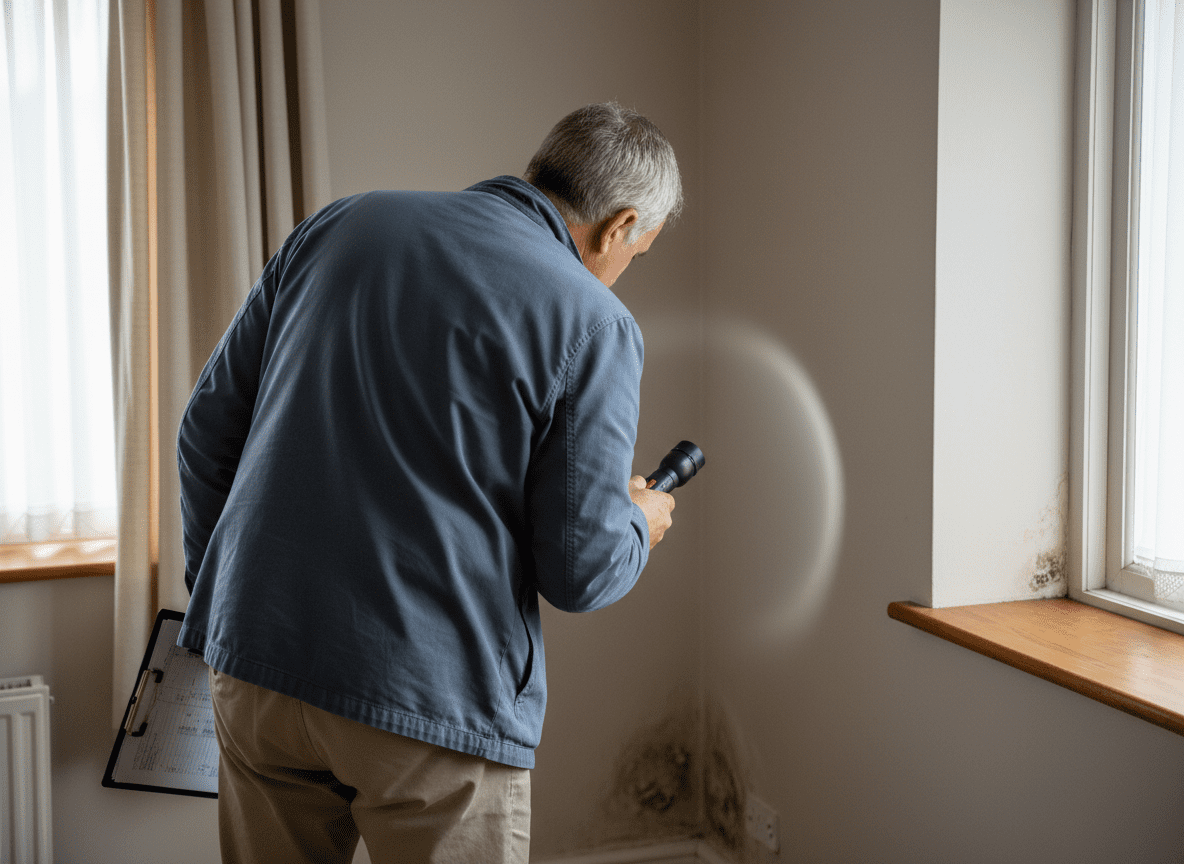
Retrofitted cavity wall insulation in a wall that is exposed to driving rain, or where the cavity was not suitable, can be associated with damp on the inside face of the wall. Where a surveyor sees dampness that lines up with an insulated wall, they will recommend further investigation.
So a better EPC rating is not automatically good news. It is the condition of how the work was done that matters, and that is what the survey looks at.
How to check the EPC yourself before the survey
You do not need to wait for the survey to look at the certificate. The government’s find an energy certificate service lets anyone look up and download an EPC for free by postcode.
When you open it, check:
- The date. How old is it, and what might have changed since?
- The address. Make sure it is the right flat or house number.
- The floor area. Does it look right for the size of the home, including any extension?
- The main heating and fuel. Does it match what the listing describes?
- The recommendations. Note which upgrades are suggested and their indicative cost.
Anything that does not add up is worth mentioning to your surveyor when you book. It helps them focus on the right areas, and it gives your solicitor useful questions for the seller.
Which survey gives you the most on energy?
Both levels review the EPC and check for discrepancies. If energy performance is a big part of your decision, perhaps because you are planning a retrofit, buying an older solid-walled home or buying to let, a RICS Level 3 Building Survey gives the surveyor room to comment on energy matters for the property as a whole, alongside a deeper look at its condition.
For a conventional, reasonably modern home in fair condition, a Level 2 survey is usually enough. If you are unsure, tell us about the property when you get in touch and we will recommend the right level.
Buying in Peterborough, Stamford, Oakham or the surrounding area? Blue Blossom Surveys provides independent RICS Level 2 and Level 3 surveys that check the EPC against the real property and explain what any difference means for you. Get in touch to book your survey.
Frequently asked questions
Does a homebuyer survey include an EPC?
No. The surveyor does not prepare an EPC as part of a RICS Level 2 survey. They obtain the existing certificate, state its rating in the report, and check for obvious discrepancies between the EPC and the property, explaining what any difference means.
Who pays for the EPC when buying a house?
The seller. They must have a valid EPC in place before the property is marketed, and the buyer should be given it. You can also look it up yourself for free on the government’s find an energy certificate service.
How long is an EPC valid for?
An EPC is valid for 10 years. A certificate can still be valid but out of date if the property has been extended, re-insulated or had its heating changed since it was produced.
Can I buy a house with an F or G EPC rating?
Yes. There is no restriction on buying a home with a low rating to live in. If you plan to let it, properties covered by the minimum energy efficiency standard cannot be let below an E rating unless an exemption is registered.









0 Comments