

Buying a listed building is not really a survey problem. It is a paperwork problem that a survey can uncover — and the paperwork carries consequences most buyers never see coming.
The law is unusually blunt about it. Under the Planning (Listed Buildings and Conservation Areas) Act 1990, no person may execute works for the demolition of a listed building, or for its alteration or extension in any manner which would affect its character as a building of special architectural or historic interest, unless those works are authorised.
Note what that sentence does not say. It does not say “the owner at the time”. The obligation attaches to the building, and the practical consequences of a breach land on whoever owns it when the local authority notices.
Quick answer: For a listed building, a RICS Level 3 Building Survey is the right level of service. The survey tells you the condition of the fabric and flags alterations that look recent. It cannot confirm whether consent was granted for them — that is a question for your conveyancer, and it should be asked before you exchange.
What Listing Actually Covers
The most common misunderstanding is that listing protects the front elevation. It does not. Listing applies to the whole building, inside and out, and the protection reaches further than the walls.
The Act specifically recognises features consisting of a man-made object or structure fixed to the building, or forming part of the land and comprised within the curtilage of the building. In plain terms: outbuildings, boundary walls, railings, garden structures and fixed interior features can all fall within the protection even though nobody thinks of them as “the listed bit”.
Buildings are graded to reflect their significance, from the exceptional down to the special interest that covers the great majority of listed homes. The grade affects how a consent application is handled and who is consulted, but it does not change the basic rule. A modest Grade II cottage needs consent for character-affecting work in exactly the same way a cathedral does.
Things buyers routinely assume are unregulated
- Replacing timber windows with double glazing, or changing the glazing bars.
- Removing an internal wall, chimney breast or original staircase.
- Re-rendering, repointing in cement, or painting previously unpainted brick or stone.
- Installing a new bathroom or kitchen where historic fabric is removed to do it.
- Replacing a roof covering with a different material or profile.
- Solar panels, satellite dishes, flues and external plant.
Some of these will be perfectly acceptable with consent. The problem is never the work itself. It is work done without consent.
Why Unauthorised Work Is the Risk You Inherit
This is the part worth reading twice. Contravening section 7 is not a technical breach handled with a fine to the person who did it and forgotten about. The Act states that if a person contravenes section 7 he shall be guilty of an offence.
Separately, the local planning authority has a remedy aimed at the building rather than the culprit. It can issue a listed building enforcement notice requiring steps to be taken for restoring the building to its former state, or, where restoration is not reasonably practicable, further works to alleviate the effect of what was done.
That is the mechanism buyers need to understand. A notice of that kind is served in respect of the building. If the unauthorised work happened three owners ago and you are the owner when it is picked up, you are the one dealing with it.
In practice this rarely ends in disaster, because most cases are resolved by applying for retrospective consent. But it is a cost, a delay and an uncertainty, and it is far cheaper to discover it during a purchase than after one.

What a Level 3 Survey Will Tell You
For a listed property, a full building survey is the appropriate level of service. A Level 2 is designed for conventional properties in reasonable condition; a listed building is neither conventional nor, usually, straightforward.
My own background is thirty-five years in construction and refurbishment, including direct work on listed buildings, and that is the experience that matters here. Reading an old building is a different discipline from inspecting a modern one.
| The survey can | The survey cannot |
|---|---|
| Identify the construction type and the age of the principal elements | Confirm whether listed building consent was ever granted |
| Flag alterations that appear recent or out of character with the original fabric | Establish the legal extent of the listing or its curtilage |
| Assess damp, timber decay, movement and roof condition in a traditional building | Give legal advice on your liability for a previous owner’s work |
| Advise where inappropriate modern materials are causing damage | Open up fabric or lift finishes to inspect what is hidden |
| Set out what repairs are likely to be needed and in what order | Price a scheme of conservation repairs in detail |
That fourth line matters more than it sounds. A great deal of the damage we find in listed buildings was caused by well-intentioned modern repair — cement render trapping moisture in soft brickwork, impermeable paint on lime plaster, a modern damp-proof injection into a wall that never needed one. Old buildings need to breathe, and material choice is a condition issue in its own right.
Many of the defects we most often find in older houses fall into exactly that category, and they are not unique to listed properties — but they are more expensive to correct when the remedy itself needs consent.
The Order to Do Things In
Buyers get into difficulty when the survey and the legal enquiries run on separate tracks and nobody joins them up. This is the sequence that works.
- Confirm the property is listed, and at what grade, before you spend anything. The national list is a public record and your conveyancer will check it as a matter of course.
- Instruct a Level 3 survey. Tell the surveyor it is listed when you book, so the inspection is framed around the age and fabric of the building rather than a standard checklist.
- Give the survey findings to your conveyancer. Where we flag alterations that look recent, those become specific enquiries of the seller, not general ones.
- Ask for the consents in writing. Copies of listed building consent and any building regulations approval, matched against the work that is actually visible on site.
- Deal with any gaps before exchange. If consent is missing, the options are retrospective consent, an indemnity policy where appropriate, a price adjustment, or walking away — but all of them need to happen while you still have the choice.
A note on indemnity policies: they can be useful, but they do not make unauthorised work lawful and they do not stop an enforcement notice being served. They cover a defined financial loss. Understand what yours actually covers before you rely on it, and take your conveyancer’s advice.
Older Buildings Locally
We survey across an area with a lot of historic housing stock. Stamford in particular is a town where listed buildings are the norm rather than the exception, and we regularly carry out surveys across Stamford and the surrounding villages on properties of real age and character.
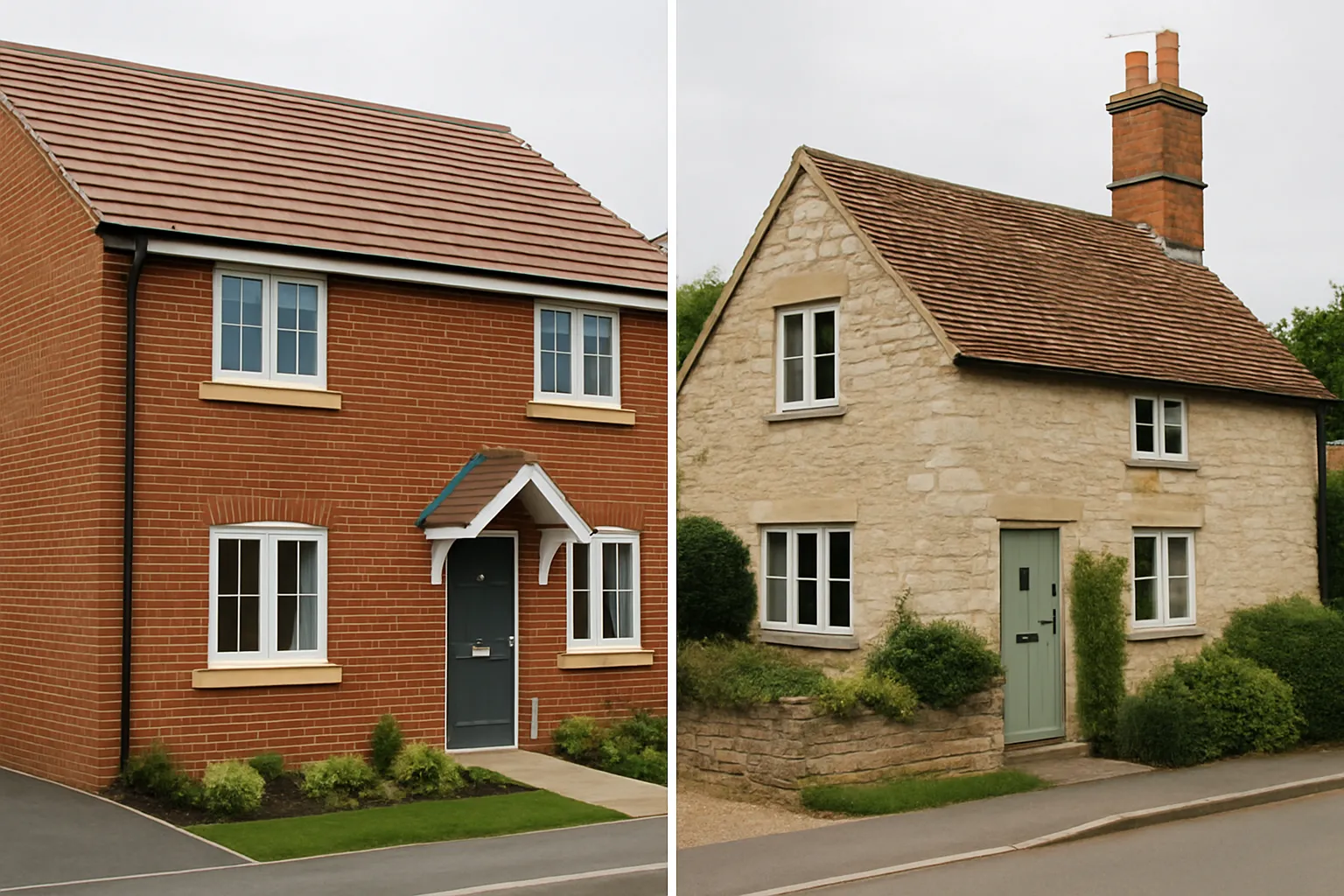
Not every old house is listed, and the distinction matters. A Victorian terrace with no statutory protection can be altered freely subject to normal planning and building control; the same terrace inside a listed designation cannot. If you are buying an older property generally rather than a listed one specifically, our guide to surveys on older and period homes covers the condition issues that apply either way.
Is It Worth Buying a Listed Building?
Here is my honest view, after years of working on them: yes, provided you go in with your eyes open and budget for maintenance rather than assuming it away.
Listed buildings are not more fragile than other houses. They are simply less forgiving of neglect and of the wrong repair. Owners who understand that tend to spend less over twenty years than owners who treat the building like a modern house and are surprised annually.
What you should not do is buy one on the assumption that the previous owner did everything properly. That assumption is the single most expensive one in this whole subject.
Frequently Asked Questions
What survey do I need for a listed building?
A RICS Level 3 Building Survey. It is the most detailed level of service and the only one designed for buildings that are old, altered or built in traditional materials. A Level 2 is intended for conventional properties in reasonable condition and is not the right tool for a listed home.
Does listed building status cover the interior?
Yes. Listing applies to the whole building, inside and out, and can extend to fixed features and to structures within the curtilage such as outbuildings and boundary walls. The idea that only the facade is protected is the most common and most costly misunderstanding.
What happens if previous owners did work without listed building consent?
Contravening the consent requirement is a criminal offence, and separately the local planning authority can serve an enforcement notice requiring the building to be restored to its former state. Because that notice concerns the building, the practical burden can fall on the current owner — which is why the question needs answering before exchange.
Can I get a mortgage on a listed building?
Generally yes, though some lenders take a closer look and will rely on the survey and the legal report. Unresolved unauthorised alterations, or an ongoing enforcement issue, are the things most likely to complicate an offer, so identifying them early protects your timetable.
Can I replace the windows in a listed building?
Only with consent, if the change would affect the building’s special character — and window replacement usually does. Sympathetic solutions such as secondary glazing or slim-profile units are often achievable, but the application comes first, not afterwards.
Buying a listed or historic property? Blue Blossom Surveys Ltd carries out RICS Level 3 Building Surveys across Peterborough, Stamford, Oakham, Grantham, Bourne and the surrounding towns. Talk to us before you commit, and you will know what you are taking on.




0 Comments