

Radon is the one property risk you cannot see, smell or hear, and the one your surveyor cannot measure on the day. The UK Health Security Agency recommends that levels be reduced where a home’s annual average exceeds 200 becquerels per cubic metre — the Action Level. Establishing whether a property is over that line takes three months of measurement, not a two-hour inspection.
That mismatch is the single most useful thing to understand about radon and your home survey. The survey tells you whether radon is a question worth asking about this building. Only a test answers it.
Key takeaways
- A RICS home survey does not test for radon. No visual inspection can.
- UKHSA’s Action Level is 200 Bq/m³ as an annual average; the Target Level is 100 Bq/m³.
- Measurement uses two detectors — one in a bedroom, one in a living room — left in place for three months.
- The free UKHSA map is area-based. Basements and cellars should be treated as higher risk regardless of what the map shows.
- Radon is generally a manageable, fixable problem — not a reason to abandon a purchase.
Does a Home Survey Test for Radon?
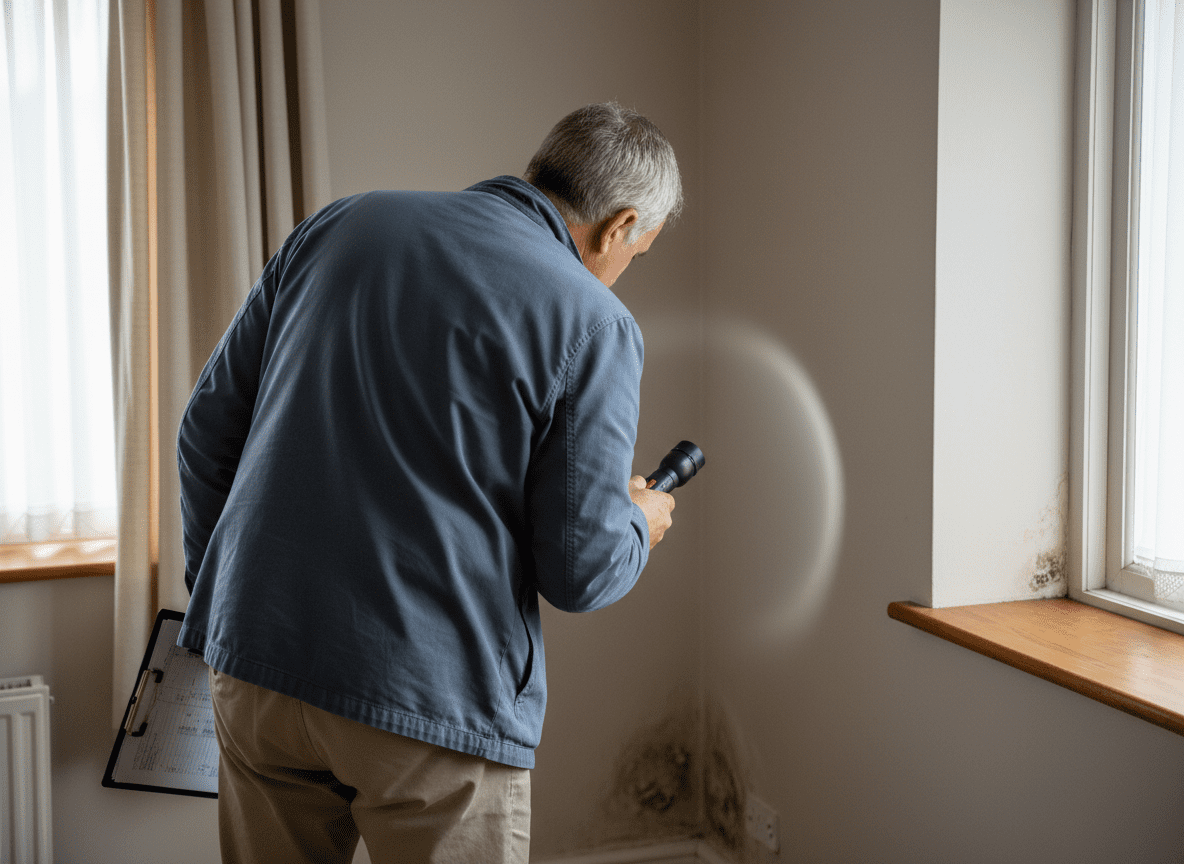
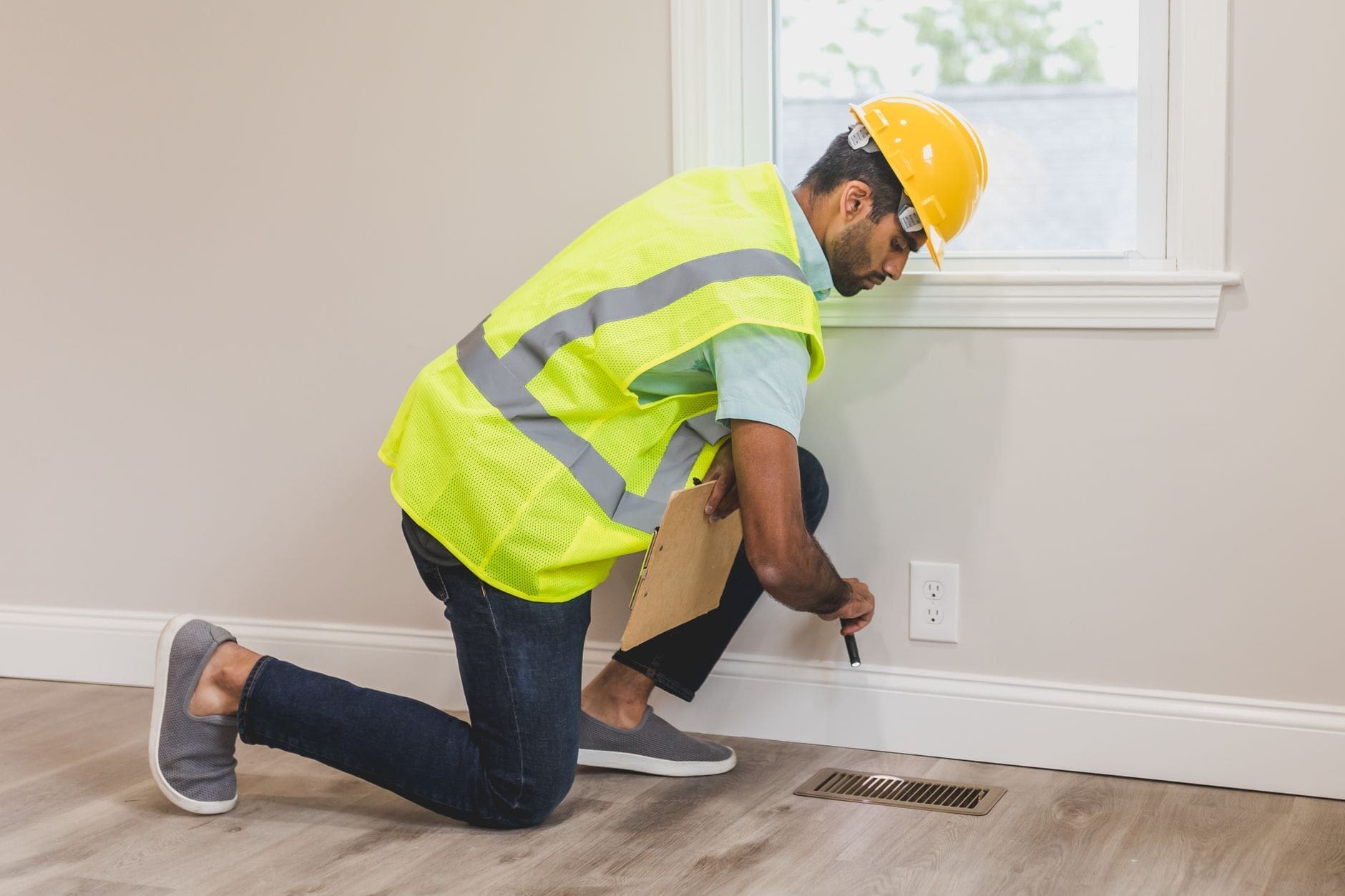
No. A RICS home survey is a visual inspection carried out over a matter of hours, and radon concentration cannot be established visually or in a single visit. What your surveyor can do is identify the features that make radon worth checking — a cellar or basement, a suspended timber floor with poor underfloor ventilation, an unsealed solid floor, or a property in an area the UKHSA map highlights — and recommend a test in the report.
This is a limitation, but an honest one, and it is worth understanding rather than resenting. Anyone who offers to tell you a property’s radon level from a walkthrough is telling you something they cannot know.
What Radon Is, in Plain Terms
Radon is a colourless, odourless radioactive gas produced by the natural decay of the small amounts of uranium present in all rocks and soils. It is everywhere. Outdoors it disperses harmlessly. Indoors it can accumulate, which is why the concern is about buildings rather than about land.
Because the gas comes up out of the ground, concentration depends on two things: the geology beneath the property, and how readily the building lets gas in and lets it out again. That second factor is why two neighbouring houses on identical ground can return very different results, and why an area map can only ever be a starting point.
Action Level and Target Level Explained
UKHSA publishes two reference figures, and buyers routinely confuse them.
| Level | Figure | What it means |
|---|---|---|
| Action Level | 200 Bq/m³ | UKHSA recommends radon levels should be reduced in homes where the annual average is above this. The recommendation is endorsed by Government. |
| Target Level | 100 Bq/m³ | The ideal outcome for remediation in an existing building and for protective measures in a new one. |
If a result falls between the two figures, UKHSA advises that action to reduce the level should be considered — particularly where there is a smoker or ex-smoker in the household, because the risks combine.
The word doing the heavy lifting in both definitions is annual. Radon fluctuates with weather, season and how the house is being used. That is why a proper assessment uses two detectors, placed in a bedroom and a living room, left for three months to average out short-term swings. A quick spot reading is not a substitute and should not be treated as one.
What most guides get wrong: they present the map as the answer. It is not. The map estimates the probability that a home in that area is above the Action Level. It says nothing about the specific building, its floor construction, or its ventilation. Two doors down the road can differ substantially.
Checking the UKHSA Radon Map
UKHSA and the British Geological Survey publish a free map showing where high radon levels are more likely, with darker shading indicating greater probability. In the white areas the chance of a high level is less than one home in a hundred; in the darkest areas it is greater than one in three.
Two things to hold onto when you look at it. First, it is a probability map for an area, not a measurement of a property. Second — and this is the caveat people miss — UKHSA states the map should not be used for basements, cellars or underground sites. Those should be treated as having an increased chance of high radon levels regardless of what colour the map shows.
If you want something address-specific rather than area-specific, UKHSA sells a radon report for an individual address which estimates the probability of that property being above the Action Level. It is still an estimate, not a measurement, but it is a tighter one.
What Your Surveyor Will Actually Do
On a RICS Level 2 Homebuyer Survey, radon appears where it is relevant: the report will note that the property lies in an area where radon may need consideration and recommend a test, alongside comment on floor construction and ventilation.
On a RICS Level 3 Building Survey the treatment goes further. The surveyor will examine floor construction in more detail, assess underfloor and general ventilation, look at any cellar or basement specifically, and discuss what mitigation would realistically involve if a test came back high.
In both cases radon sits alongside the other environmental matters a survey flags rather than tests. Our guide to what a Level 2 survey covers on asbestos and environmental risks explains that boundary more fully, and how to read your survey report will help you interpret a “further investigation recommended” note without panicking about it.

If the Level Comes Back High
Start from the right premise: this is a solvable building problem, not a structural catastrophe. Radon reduction is well-established work and the approaches are proportionate to the reading.
Broadly, remediation works along three lines:
- Increasing ventilation — improving underfloor ventilation beneath a suspended floor, or improving general ventilation in the occupied rooms
- Sealing entry routes — addressing gaps and cracks in solid floors, around service entries and at floor-to-wall junctions
- Fitting a radon sump — a small extraction point beneath or beside the building, usually with a fan, drawing gas away before it enters
Which of these suits a given house depends on floor construction and on how high the reading is. After any remediation the level should be re-measured to confirm it has actually worked, and UKHSA’s Target Level of 100 Bq/m³ is the outcome to aim for.
Commercially, a high reading during a purchase is a negotiating point rather than a dealbreaker. It is a known cost with a known remedy, which is exactly the sort of finding buyers can act on — the same territory covered in our guide to negotiating the house price after a survey.
Radon and New Build Homes
New buildings in areas where radon protection is required are built with protective measures designed in — typically a barrier across the ground floor, sometimes with provision for a sump to be activated later if needed. UKHSA frames its Target Level as the aim for protective measures in new buildings as well as for remediation in existing ones.
Two practical points for new build buyers. Protective measures only work if installed correctly, and a barrier punctured during construction or by later service runs is not doing its job. And a house being new is not, by itself, evidence that its radon level is low. If the property sits in an affected area, test it once you move in, whatever the build date.
If you are buying a new build, this belongs on the same list as everything else worth checking. Our new build snagging survey covers workmanship and finish, and a radon test covers what no inspection can see.
Buying in an area where radon has come up — around Oakham, Corby, Stamford or anywhere across our patch? Get in touch with Blue Blossom Surveys. We will tell you what the building shows, what the report means, and what to do about it. We are independent of the sale and we do not sell radon testing, so the advice is just advice.
Frequently Asked Questions
Does a RICS survey include a radon test?
No. A radon test requires detectors left in place for three months, so it cannot form part of a visual survey. Your surveyor will flag radon as a consideration where relevant and recommend testing, but the measurement itself is arranged separately.
What radon level is considered too high in a UK home?
UKHSA recommends reducing levels where the annual average exceeds 200 becquerels per cubic metre, known as the Action Level. The Target Level of 100 Bq/m³ is the ideal outcome after remediation. Between the two, action should be considered, especially where a smoker or ex-smoker lives in the home.
How long does a radon test take?
Three months. Two detectors are used — one in a bedroom and one in a living room — and left in place over that period so the result reflects an annual average rather than a short-term fluctuation.
Can I check radon risk before I make an offer?
You can check the free UKHSA area map immediately, and you can buy an address-specific radon report that estimates the probability for that property. Neither is a measurement, but both are quick enough to inform an offer. The actual test happens after you have access to the property.
Should high radon stop me buying a house?
Rarely. Radon reduction is established, proportionate work — improved ventilation, sealing entry routes, or a sump with a fan. A high reading is best treated as a costed item to negotiate over, and the level should be re-measured after any work to confirm it has come down.
Written and reviewed by the surveying team at Blue Blossom Surveys Ltd, RICS-regulated residential surveyors covering Peterborough, Cambridgeshire, south Lincolnshire, Rutland and Northamptonshire. Published 8 October 2026. Last updated 8 October 2026.





0 Comments