

What Does a RICS Level 3 Building Survey Include?
If you have been told to consider a Level 3 Building Survey, or you are weighing up whether it is the right choice for your property, this guide explains exactly what the inspection covers, what the report includes, and who it is most suited to.
A RICS Level 3 Building Survey is the most detailed home survey available under the RICS framework. It is often still called a full structural survey or building survey, though the formal name is now RICS Home Survey – Level 3 (see is a Level 3 the same as a structural survey?). Understanding what it includes — and what it does not — helps you make a more confident decision before you book.
Quick answer
A RICS Level 3 Building Survey is a detailed visual inspection of all accessible parts of a property — external, internal, roof spaces, and services. It covers the structure, construction, condition, and any defects found. The report describes what was seen, explains likely causes of problems, and gives advice on repairs and ongoing maintenance. It is most suited to older properties, properties in poor condition, or those with significant alterations.
What is a RICS Level 3 Building Survey?
A RICS Level 3 Building Survey is a comprehensive inspection of a property’s structure and condition, carried out by a qualified RICS surveyor. It is the most detailed of the three RICS home survey levels and provides a thorough picture of what a property is like, how it was built, and what — if anything — needs attention.
Where a RICS Level 2 Homebuyer Survey gives you a clear overview of condition and highlights issues that need attention, a Level 3 goes further. It examines how the property is constructed, describes the materials used, assesses the severity of defects, and provides more detailed advice on repair options and maintenance going forward.
It is a non-invasive inspection — the surveyor will not open up walls or lift fixed flooring — but it is significantly more thorough in its scope than a Level 2.
Is a Level 3 the same as a structural survey?
Usually, yes. Before RICS introduced its current naming, the most detailed home survey was widely sold as a “full structural survey”, and later as an RICS Building Survey. RICS now calls it the Level 3 survey. Estate agents, solicitors and buyers still use the old names, so a quote for a “structural survey” is almost always a quote for a Level 3.
The name is a little misleading, because a Level 3 looks at the whole building, not just the structure: roof, walls, floors, damp, joinery, the visible parts of the services, and any extensions or alterations.
Structural engineer’s report vs Level 3 survey
A structural engineer’s report is a different service. It is a targeted investigation of a specific concern, such as cracking, suspected subsidence, movement in a wall, or a plan to remove a load-bearing wall. The Institution of Structural Engineers describes engineers diagnosing cracks and movement, proposing solutions, and designing support for alterations.
| RICS Level 3 survey | Structural engineer’s report | |
|---|---|---|
| Carried out by | A RICS surveyor | A structural engineer |
| Scope | The whole property: condition, defects, repairs and maintenance | One specific element or concern |
| Typical use | Before buying an older, larger, altered or run-down property | Investigating a problem the survey has flagged, or designing structural alterations |
Most buyers need the Level 3 first. A structural engineer usually comes in afterwards, when the survey finds something that needs a closer look. If you do need one, the Institution of Structural Engineers suggests choosing an engineer who belongs to a recognised professional body, such as IStructE or the Institution of Civil Engineers, and checking they hold professional indemnity insurance.
Who is a Level 3 survey for?
A Level 3 survey is most appropriate when the property you are buying carries a higher degree of risk — because of its age, its construction type, its condition, or what you plan to do with it.
A Level 3 survey is typically recommended when:
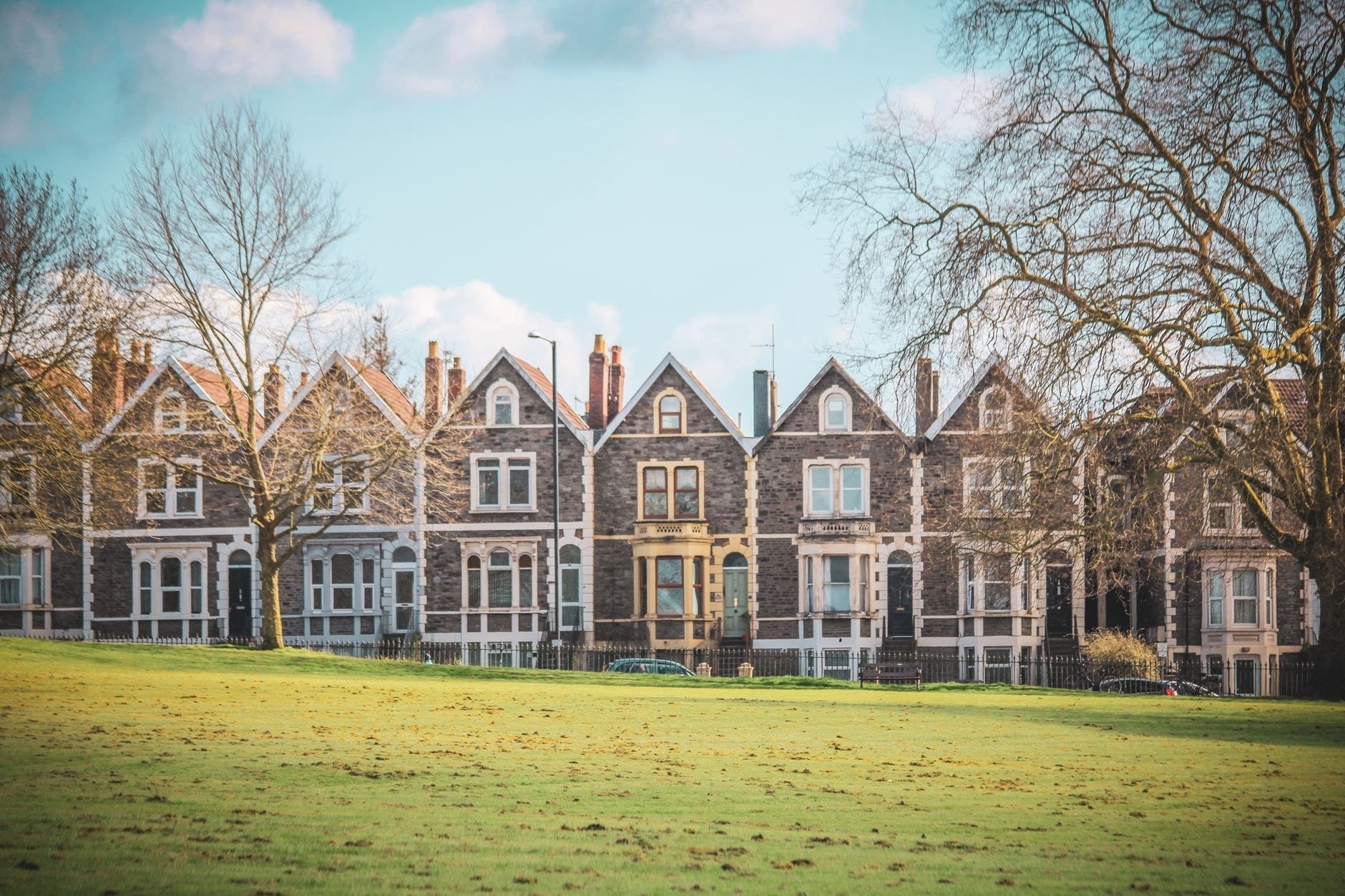
- The property is older, such as a Victorian or Edwardian home. RICS recommends a Level 3 for large, older or run-down properties
- The property is of non-standard construction, such as a timber frame, solid brick walls, or period features that require specialist knowledge to assess
- There are visible signs of concern — cracks, damp, settlement, or significant alterations that may have affected the structure
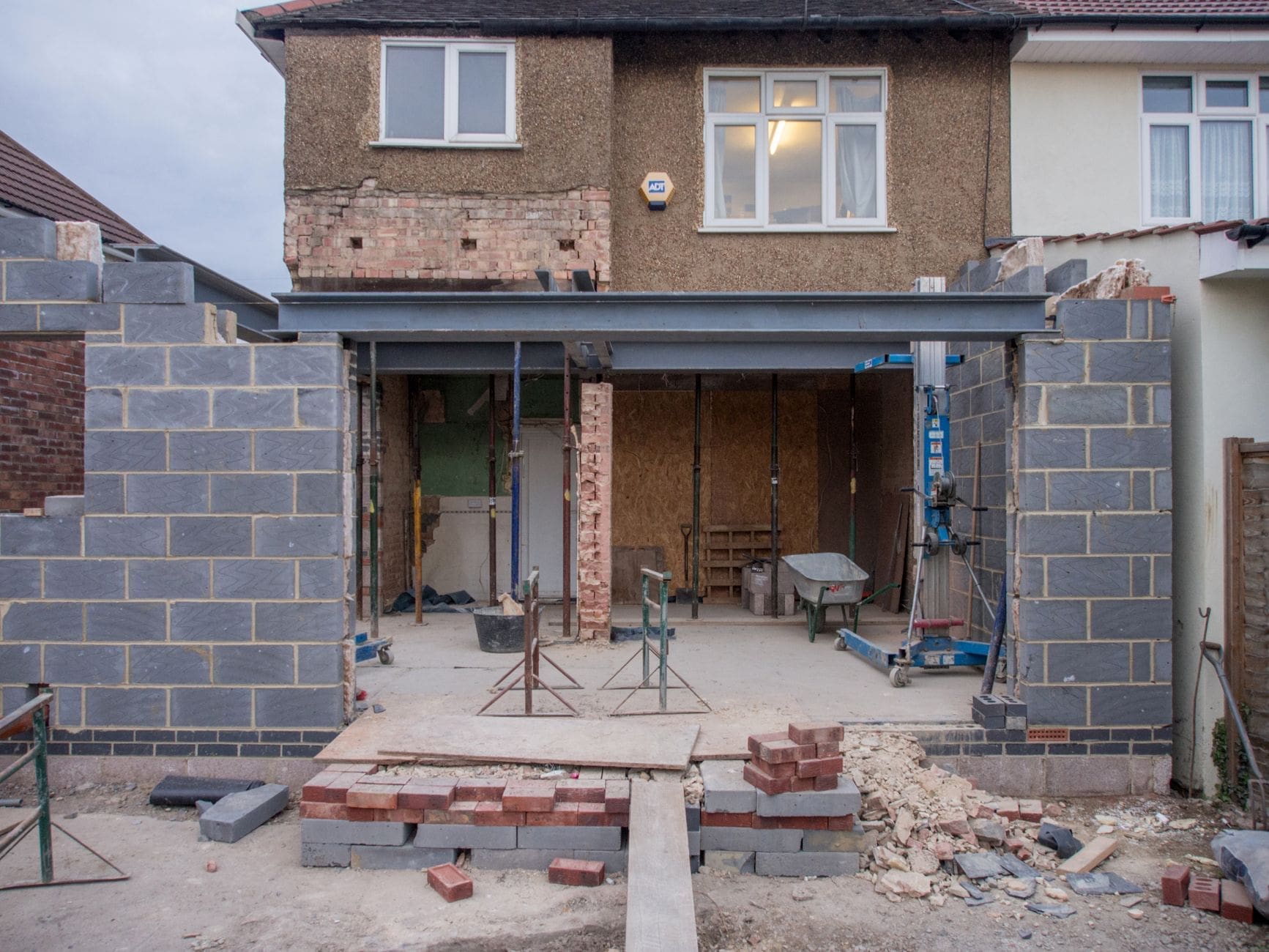
- The property has been extended or substantially altered, and you want to understand whether that work was done properly
- You are planning significant renovation work and want a clear picture of the existing condition before committing
- You simply want the most complete understanding of a property before making one of the largest financial decisions of your life
If you are unsure whether you need a Level 2 or Level 3, the age, type, and visible condition of the property are the key factors. You can explore this further on our choosing the right survey hub.
What does a Level 3 survey actually inspect?
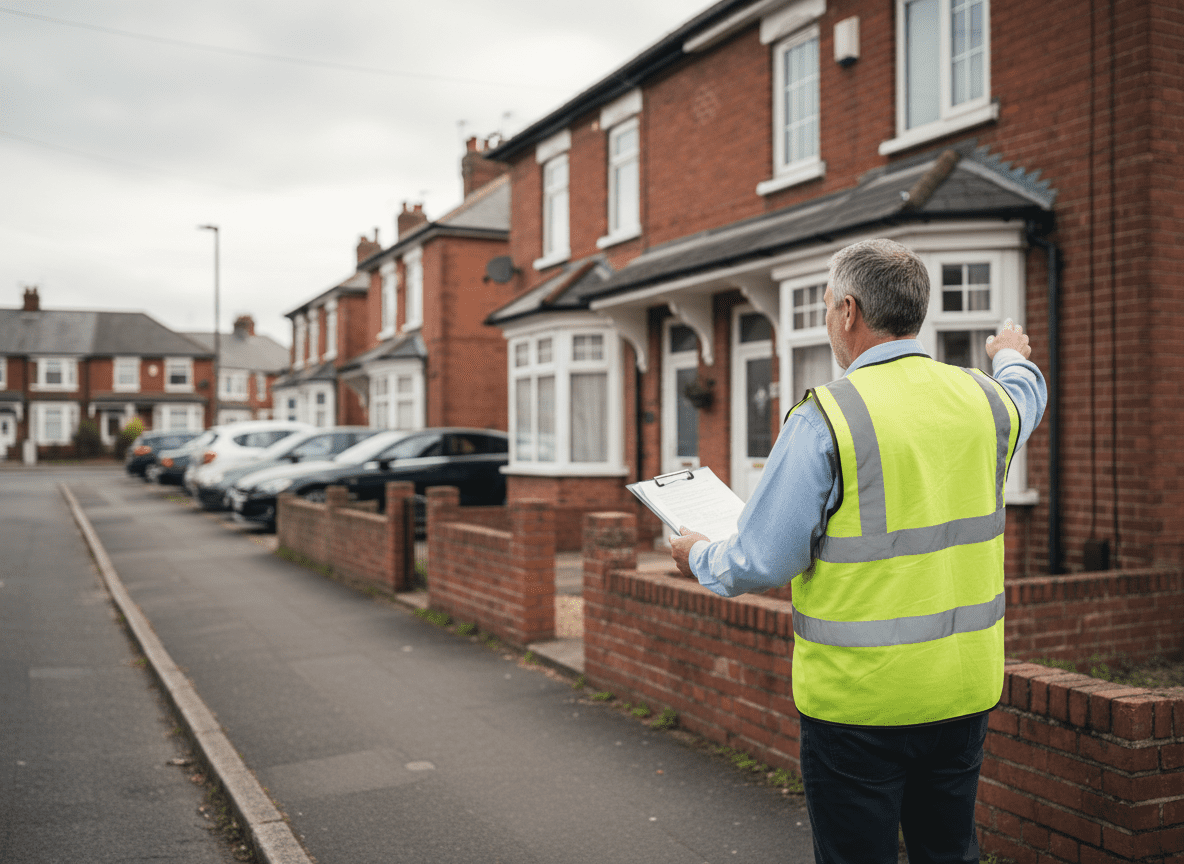
The surveyor will carry out a thorough visual inspection of all accessible parts of the property — inside, outside, and in roof spaces where it is safe and practical to do so.
External inspection
The surveyor will assess the outside of the property in detail, covering:
- Roof coverings — including tiles, slates, flat roof surfaces, and ridge lines
- Chimneys and chimney stacks
- Gutters, downpipes, and drainage at ground level
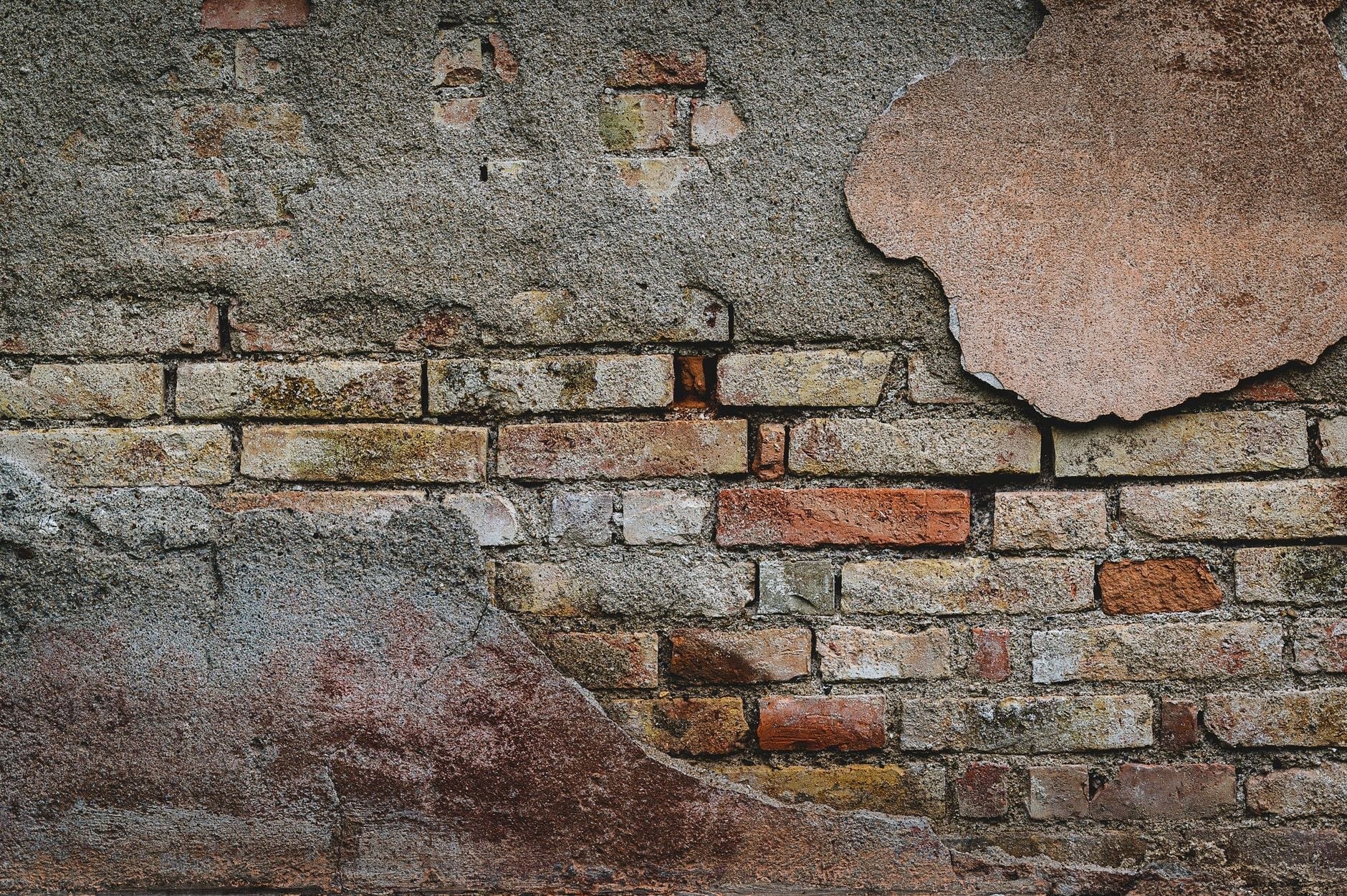
- External walls — construction, materials, condition, and any signs of movement or cracking
- Windows and external doors — condition, fit, and any visible deterioration
- Foundations and the ground immediately surrounding the property
- Outbuildings, boundary walls, and outside areas included within the inspection scope
Internal inspection
Inside the property, the Level 3 covers:
- Internal walls — condition, any signs of cracking, damp, or structural movement
- Ceilings and floors — condition, any movement or defects
- Roof space — the surveyor will enter the loft where it is safe and accessible to inspect insulation, the underside of the roof covering, and any structural timbers
- Joinery — doors, windows, staircases, and fitted elements
- Cellars or basements where they exist and are safely accessible
- Concealed areas such as cupboards and inspection chambers where safe to open
- Any loose or unfitted floor coverings, which may be lifted if it is practical to do so
Services
The surveyor will observe the visible parts of the main services. This means they will switch on and off electrical fittings, test taps, observe the heating system, and check visible drainage in normal operation. Services are observed, not tested — a Level 3 does not include a specialist electrical test or a gas safety check, but visible concerns will be noted in the report.
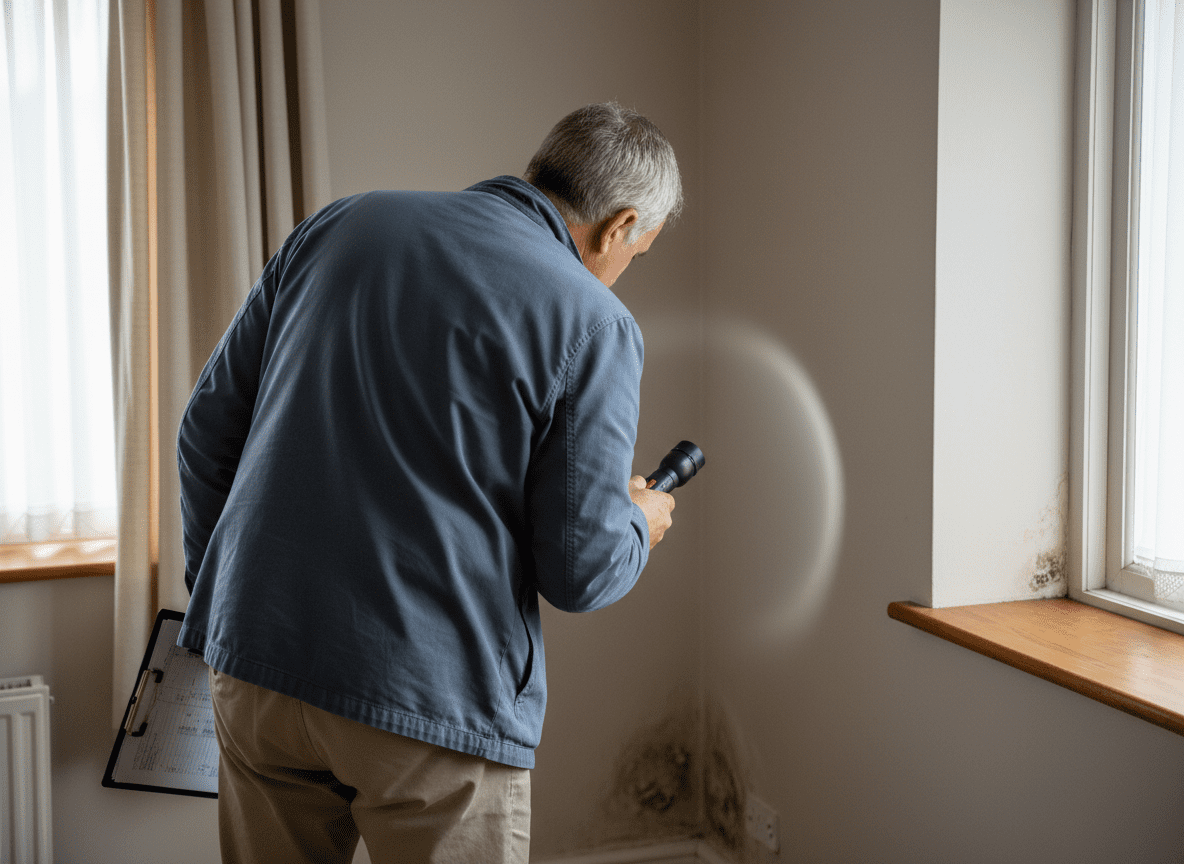
What “visual inspection” means in practice: The surveyor uses tools including a damp meter, torch, and binoculars, and will use a ladder for flat roofs and roof hatches where safe. They will look behind and under items where practical, but will not drill into walls or lift fixed floors. A Level 3 is detailed, but it is not an invasive structural investigation.
How is a Level 3 report structured?
A Level 3 report goes further than a Level 2. As well as recording condition, it describes how the property is built and explains the likely causes of any defects, the repair options and how urgent they are. That makes it longer and more detailed.
The report will typically include:
- A description of the property’s construction — the materials used and how the building has been put together
- Condition ratings for each element inspected: 3 for defects that are serious or need repairing, replacing or investigating urgently, 2 for defects that need repairing but are not serious or urgent, 1 where no repair is currently needed, and NI for anything not inspected
- Descriptions of any defects found — what was seen, what it likely indicates, and how serious it is
- Advice on remedial work — what repairs may be needed, in what order, and how urgently
- Notes on ongoing maintenance — what the owner of this type of property should be aware of going forward
- Recommendations for further specialist investigations where the surveyor cannot reach a firm conclusion from visual inspection alone
| Feature | RICS Level 2 | RICS Level 3 |
|---|---|---|
| Construction | Brief description | Describes how the property is built and the materials used |
| Depth of inspection | Visual overview of condition | Detailed review of structure, construction, and defects |
| Defect descriptions | Flagged with condition rating | Described in detail with likely cause and repair options |
| Maintenance advice | Limited | More detailed, ongoing guidance included |
| Best suited to | Modern, conventional properties in reasonable condition | Older, altered, or higher-risk properties |
What a Level 3 survey does not include
Setting honest expectations matters. A Level 3 is the most thorough standard home survey available, but there are things it cannot and does not cover.
- A market valuation. A Level 3 does not include a valuation as standard. RICS lists a market valuation as an extra service that needs separate terms, so ask if you need one.
- Full electrical or gas testing. The surveyor will observe services in normal operation and note visible concerns, but a Level 3 does not replace a specialist electrical inspection or a Gas Safe registered engineer’s check.
- Invasive or structural investigation. The inspection is visual — the surveyor will not open up walls, drill, or lift fixed floors. Where concerns require specialist investigation to confirm, the report will recommend further investigation rather than reaching a firm conclusion.
- Drainage CCTV surveys. Drainage is observed at fittings and inspection chambers, but a CCTV drain survey is a separate specialist service.
- Timber and damp specialist reports. The surveyor can identify signs of damp or potential timber issues, but a specialist timber and damp report may be recommended for chemical testing and analysis where concerns are found.
Where a Level 3 adds the most value over a Level 2 is in explaining risk — it gives you a clearer picture of what is happening, why, and what to do about it, even where further investigation is recommended.
How long does a Level 3 survey take?
The on-site inspection for a Level 3 survey typically takes longer than a Level 2, reflecting the greater depth of the inspection. Our Level 3 inspections usually take between three and five hours, depending on the size and condition of the property. Larger, more complex or significantly altered homes can take longer.
After the site visit, the surveyor writes up a detailed report. We usually send the report within 3 to 5 working days of the inspection, depending on the size and complexity of the property.
Practical note: Once your offer has been accepted, it is worth booking your survey as soon as possible. This gives you time to receive the report, consider any findings, and raise any concerns before exchange of contracts.
Level 3 vs Level 2 — which survey do you need?
The right survey depends on the property, not on a fixed rule. A Level 2 Homebuyer Survey is often appropriate for a modern, conventional home in reasonable condition where you mainly want to know whether there are any serious visible defects. A Level 3 is the better choice when the property carries more risk — because of its age, condition, construction type, or your plans for it.
Consider a Level 3 if any of these apply:
- The property is a period home, or is clearly of an older construction type
- You can already see signs of potential issues — cracks, damp patches, uneven floors, or evidence of previous repairs
- The property has been significantly extended, converted, or altered
- It is a listed building, a property in a conservation area, or uses unusual or non-standard materials
- You are planning major renovation work and need a clear baseline of the existing condition
- You have been advised by your solicitor or mortgage lender to obtain a more detailed survey
If you are comparing a Level 2 and Level 3 and are unsure which fits your property, our choosing the right survey guide can help, and you are always welcome to contact us to discuss your property before booking.
What happens after a Level 3 survey report?
Once you receive the report, you will have a clear picture of the property’s condition, any defects identified, and advice on what to do next. This puts you in a much stronger position as a buyer.
Depending on what the report shows, you may want to:
- Proceed with the purchase as planned, with a clearer understanding of any maintenance the property will need
- Obtain quotes for any repairs identified and factor these into your decision
- Use the findings to negotiate the purchase price with the seller
- Commission further specialist investigations where the report recommends them — for example, a structural engineer’s report, a timber and damp survey, or a CCTV drain survey
- Decide not to proceed if the findings reveal significant concerns you were not previously aware of
The report gives you the information. What you do with it is your decision. The goal is to make sure that decision is an informed one.
Sources: RICS, house surveys consumer guide; RICS, Description of the RICS Home Survey – Level 3; Institution of Structural Engineers, structural engineering for domestic clients.
Not sure whether a Level 3 survey is right for your property?
We can help you decide based on the type, age, and condition of the home. Blue Blossom Surveys Ltd is a Peterborough-based RICS surveyor covering Stamford, Grantham, Corby, Oakham, Spalding, Bourne, Huntingdon, Wisbech, and surrounding areas within roughly 30 miles.
Frequently asked questions
Does a Level 3 survey check for damp?
Yes. The surveyor will check for signs of damp throughout the property, using a damp meter alongside visual inspection. The Level 3 goes into more depth than a Level 2 when damp is found — it will describe the likely source, how serious it is, and what action may be needed. Where chemical testing is required to fully confirm the extent of a damp issue, the report may recommend a specialist damp and timber survey.
Does a Level 3 survey check the electrics?
The surveyor will observe the electrical installation as part of the Level 3 — checking visible fittings, switches, and consumer unit, and switching them on and off where practical. It is not a full electrical test. Where the surveyor identifies visible concerns about the installation, these will be noted in the report, and a further inspection by a qualified electrician may be recommended.
Does a Level 3 survey check the roof and loft?
Yes. Where it is safe and practically accessible, the surveyor will enter the loft to inspect the insulation, roof timbers, and underside of the roof covering. For external roof inspection, binoculars and a ladder are used for flat roofs or roof hatches no more than three metres from ground level, where safe to do so.
How long does a RICS Level 3 survey take to come back?
Our inspections usually take three to five hours, and we usually send the written report within 3 to 5 working days, depending on the size and complexity of the property. We will confirm the timescale when you book.
Is a Level 3 survey the same as a structural survey?
In most cases, yes. “Full structural survey” is the older name for what RICS now calls a Level 3 survey, and many agents and solicitors still use it. A structural engineer’s report is a separate, narrower investigation into a specific concern.
Do I need a structural engineer as well as a Level 3 survey?
Not usually. Most buyers only need a structural engineer if the Level 3 report finds something that needs closer investigation, such as significant cracking or signs of movement, or if you plan structural alterations like removing a load-bearing wall.
What is the difference between a Level 3 survey and a Level 2 survey?
Both are visual inspections carried out by a RICS surveyor. A Level 2 gives a clear overview of condition and highlights issues that need attention. A Level 3 goes into greater depth — it describes how the property is built, explains the likely causes of any defects, and provides more detailed guidance on repairs and maintenance. A Level 3 is better suited to older, altered, or higher-risk properties. You can explore both options on our choosing the right survey page.




0 Comments