

Does a Level 2 Survey Check for Damp?
If you are buying a property and damp is on your mind, it is sensible to ask this early. Damp can affect walls, ceilings, timber, decoration, air quality, and future repair plans. It can also point to wider issues such as leaks, poor ventilation, failed guttering, or defects in the building fabric.
The good news is that a Level 2 survey can comment on signs of damp. The key point is that it does not work like a specialist damp investigation. It is a visual inspection, carried out as part of a wider review of the property’s condition.
Quick answer: yes, a Level 2 survey can pick up visible signs that suggest damp may be present. These may include staining, tide marks, mould growth, damaged plaster, peeling finishes, or musty conditions. The surveyor may also comment on likely causes and recommend further checks where needed.
A Level 2 survey helps you understand the property’s condition before you commit. If the home is older, altered, or already shows more complex defects, a RICS Level 3 Building Survey may be more suitable.
Contents
What a Level 2 survey can see
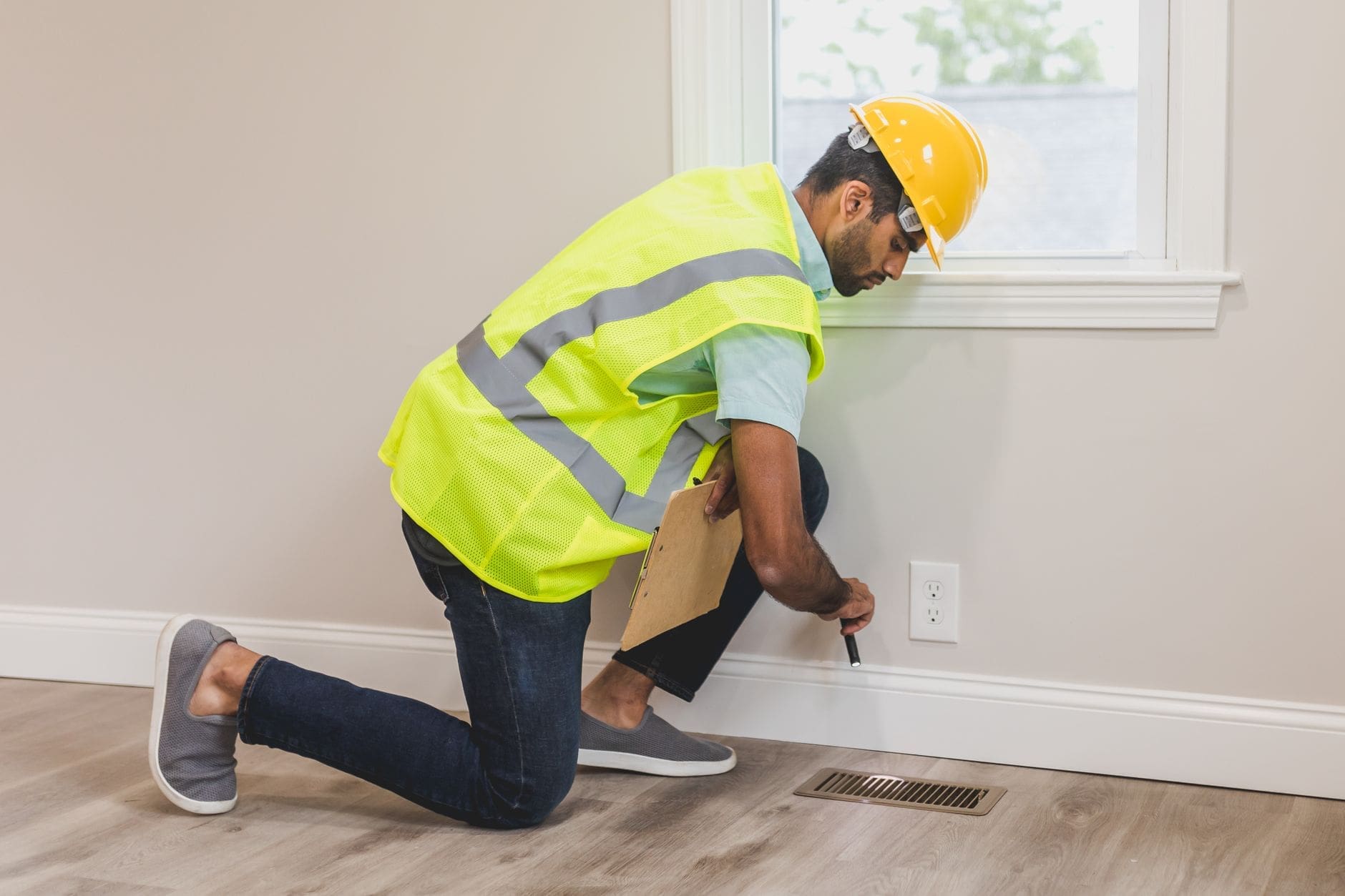
A RICS Level 2 Homebuyer Survey is designed to highlight visible issues and risks in a property that appears to be in reasonable condition. That includes defects the surveyor can see during the inspection, without opening up the building.
When it comes to damp, the surveyor is looking for evidence that moisture may be affecting the property. They may also consider whether the building has features that make damp more likely, such as blocked air bricks, high external ground levels, damaged render, cracked pointing, poor drainage, or a lack of ventilation in kitchens and bathrooms.
The surveyor may use their observations alongside moisture readings where appropriate, but the report is still based on a non-invasive inspection. In simple terms, it is about spotting warning signs and helping you understand the level of concern.
- Visible staining on walls or ceilings
- Blistering paint or peeling wallpaper
- Salt deposits or tide marks at low level
- Mould growth around cold surfaces or corners
- Musty smells in enclosed rooms or cupboards
- Rot or dampness affecting skirting boards or joinery
- Defects outside the home that may let water in
This is useful because damp is not always an isolated problem. Sometimes it is the symptom that leads you to a bigger issue, such as a leaking roof covering, defective gutters, failed sealant around openings, or poor sub-floor ventilation.
What it cannot do
This is where buyers need a clear picture. A Level 2 survey does not confirm every cause of damp with certainty. It does not involve lifting floors, opening walls, moving heavy furniture, or carrying out intrusive testing. It also does not replace a specialist report where more detailed diagnosis is needed.
That matters because damp can have more than one cause. A patch on a wall may relate to condensation, a plumbing leak, bridging from outside ground levels, penetrating water from defective masonry, or long-term moisture build-up hidden behind finishes. Some signs look similar at first glance.
A Level 2 survey is best seen as an informed first step. It helps you understand:
- whether visible signs of damp are present
- how serious those signs appear at the time of inspection
- whether related defects are visible elsewhere in the property
- whether further investigation should be arranged before you proceed
| Question | Level 2 survey | Specialist damp investigation |
|---|---|---|
| Does it spot visible signs of damp? | Yes, where signs are accessible and visible | Yes |
| Does it diagnose every cause in detail? | No, not in every case | Usually more focused on cause and remedy |
| Is it invasive? | No, it is a visual inspection | May involve more targeted checks, depending on scope |
| Does it assess the wider property too? | Yes, as part of the whole survey | No, usually limited to damp-related issues |
Common signs of damp a surveyor may note
Surveyors do not just look for one dramatic stain. Damp often shows itself through a group of clues. Some are inside the property. Some are outside. Some relate to how the building is being used and ventilated.
Inside the property
- dark staining on ceilings or high-level walls
- discoloured plaster or cracking finishes
- black mould around windows, corners, and behind furniture
- soft or damaged timber to skirtings, window boards, or flooring edges
- persistent condensation on windows in poorly ventilated rooms
Outside the property
- defective rainwater goods such as leaking gutters or downpipes
- cracked render or open joints in brickwork
- ground levels sitting too high against external walls
- blocked gullies or poor drainage close to the building
- roof defects that may let water track into ceilings or walls
A good report will tie these points together. For example, if there is mould in a bedroom and the surveyor also notes cold surfaces, limited ventilation, and no obvious leak, the report may suggest condensation is the more likely issue. If there is staining below a gutter joint and external defects are visible, the report may point towards penetrating moisture.
Different types of damp and why they matter
Buyers often use the word damp as one catch-all term, but it helps to break it down. The type of moisture problem can affect how urgent it is, how it should be investigated, and what sort of repair may follow.
Condensation
This is one of the most common forms of moisture build-up in homes. It often appears as mould around windows, on cold walls, or in areas with poor air movement. It can be linked to lifestyle, heating patterns, insulation levels, and ventilation. A Level 2 survey can often identify the signs and flag likely contributing factors.
Penetrating damp
This usually happens when water gets through the building envelope. Defective pointing, cracked render, damaged roof coverings, leaking gutters, or failed seals around windows and doors can all play a part. A surveyor may comment on both the internal signs and the outside defect that appears to be allowing water in.
Rising damp
This is a phrase buyers hear often, but it is not something that should be assumed without care. Low-level moisture staining can have different causes, including bridging from external ground levels or moisture trapped by hard finishes. A surveyor may note the pattern of dampness and recommend further checks if the cause is not clear.
The reason this matters is simple. The right next step depends on the likely source. Treating every moisture issue as the same can lead to poor decisions, unnecessary cost, or repairs aimed at the wrong problem.
When a Level 3 survey may be the better choice
A Level 2 survey is often a good fit for conventional properties in reasonable condition. But there are times when a RICS Level 3 Building Survey may give you a better level of detail.
You may want to look at Level 3 if:
- the property is older or has been heavily altered
- there are already clear signs of damp before you instruct the survey
- the home has solid walls, older construction, or a mixed repair history
- you are concerned about timber decay, hidden defects, or multiple condition issues
- you want deeper comment on defects, likely implications, and repair considerations
Level 3 is not about turning every purchase into a worst-case exercise. It is about choosing the survey that fits the building. Older and more complex homes often need a broader and more detailed review, especially when moisture-related defects may be linked to the way the building has been changed over time.
If you are still weighing this up, the Choosing the Right Survey section is a useful place to compare the main options.
What to do if damp is mentioned in the report
Do not panic, but do take it seriously. Damp in a report is not there to alarm you. It is there to help you make a better-informed decision.
Your next steps will depend on what the report says, how widespread the issue appears to be, and whether a likely cause is visible during inspection. In many cases, the most sensible route is to read the comments in context and then decide whether you need further investigation, repair estimates, or more information from the seller.
- Read the damp comments alongside other related defects in the report
- Check whether the issue appears localised or more widespread
- Note whether the surveyor has suggested further investigation
- Ask your conveyancer or adviser how best to raise relevant points with the seller
- Use the findings to judge whether the property still fits your plans and budget
It is also worth remembering that some damp-related issues are easier to resolve than buyers expect, while others point to a longer list of repairs. The value of the survey lies in helping you spot that difference before you commit.
Does a Level 2 survey check for damp in every room?
The surveyor will inspect accessible parts of the property, but there can be limits. Stored items, fixed floor coverings, fitted units, and locked areas can all reduce what is visible on the day. That is another reason why the report may refer to signs seen at the time of inspection rather than making absolute statements.
This is also why context matters. A house may show no major visible staining but still have features that increase moisture risk. Equally, a room may show mould that is linked more to condensation and ventilation than to a deeper structural defect. A balanced report helps you separate those possibilities.
Key takeaway: a Level 2 survey can check for visible signs of damp and the defects that may be contributing to it. It is a practical way to flag concern areas before you buy. Where the property is older, more complex, or already shows broader condition issues, Level 3 may be the better route.
Need help choosing the right survey?
If you are unsure whether a RICS Level 2 Homebuyer Survey or a Level 3 Building Survey fits the property, Blue Blossom Surveys Ltd can help you choose the most suitable option for the home you are buying.
FAQs
Can a Level 2 survey find damp behind furniture or under floors?
Not usually. A Level 2 survey is visual and non-invasive, so hidden areas may remain outside the scope of what can be seen during inspection.
Will a Level 2 survey tell me the exact cause of damp?
It may indicate the likely cause where the pattern is clear, but it does not replace a more targeted investigation if the source is uncertain.
Is mould always treated as a serious structural issue?
No. Mould may relate to condensation and ventilation rather than structural failure, although it should still be understood and addressed properly.
Should I choose Level 3 if I already know the house has damp?
That may be the better option where the property is older, altered, or shows wider condition concerns. The right choice depends on the type and condition of the building.
Can a survey help me decide whether to proceed with the purchase?
Yes. A survey helps you understand the property’s condition, the likely significance of defects, and what further checks or next steps may be sensible before you commit.






0 Comments