

Spray Foam Insulation and Your Survey: What the Report Will Say
Short answer: If a property has spray foam insulation in the loft, a RICS Level 2 or Level 3 survey cannot inspect the concealed roof timbers. The surveyor records this as a limitation and may assign a Condition Rating 3 to the roof structure. This does not mean the roof is definitely damaged — it means it cannot be verified. Whether that matters to your mortgage depends on your lender’s policy.
Spray foam insulation first entered UK homes in large numbers during the early 2010s, promoted as a quick retrofit for poorly insulated loft spaces. Around 250,000 UK homes are now thought to have spray foam in the roof space. If you are buying one of these properties, you need to understand what your survey can and cannot tell you — and why your lender’s reaction may be entirely separate from the survey’s findings.
Why Spray Foam Has Become a Common Survey Finding
Spray polyurethane foam was used as an affordable retrofit insulation for loft spaces, especially in older homes with limited headroom. Government energy efficiency schemes including ECO4 and the Great British Insulation Scheme funded installations across many properties.
The appeal was genuine: it insulates quickly and covers irregular surfaces. The problem is what happens to the roof structure underneath. Research by the Property Care Association (PCA) and HomeOwners Alliance found evidence of defects attributable to spray foam in around 35% of properties they assessed. The PCA published a Sprayed Foam Insulation Inspection Protocol in March 2023 to give surveyors and lenders a clearer framework — but even this requires access to areas often physically sealed by foam.
What a Level 2 or Level 3 Survey Can and Cannot Inspect

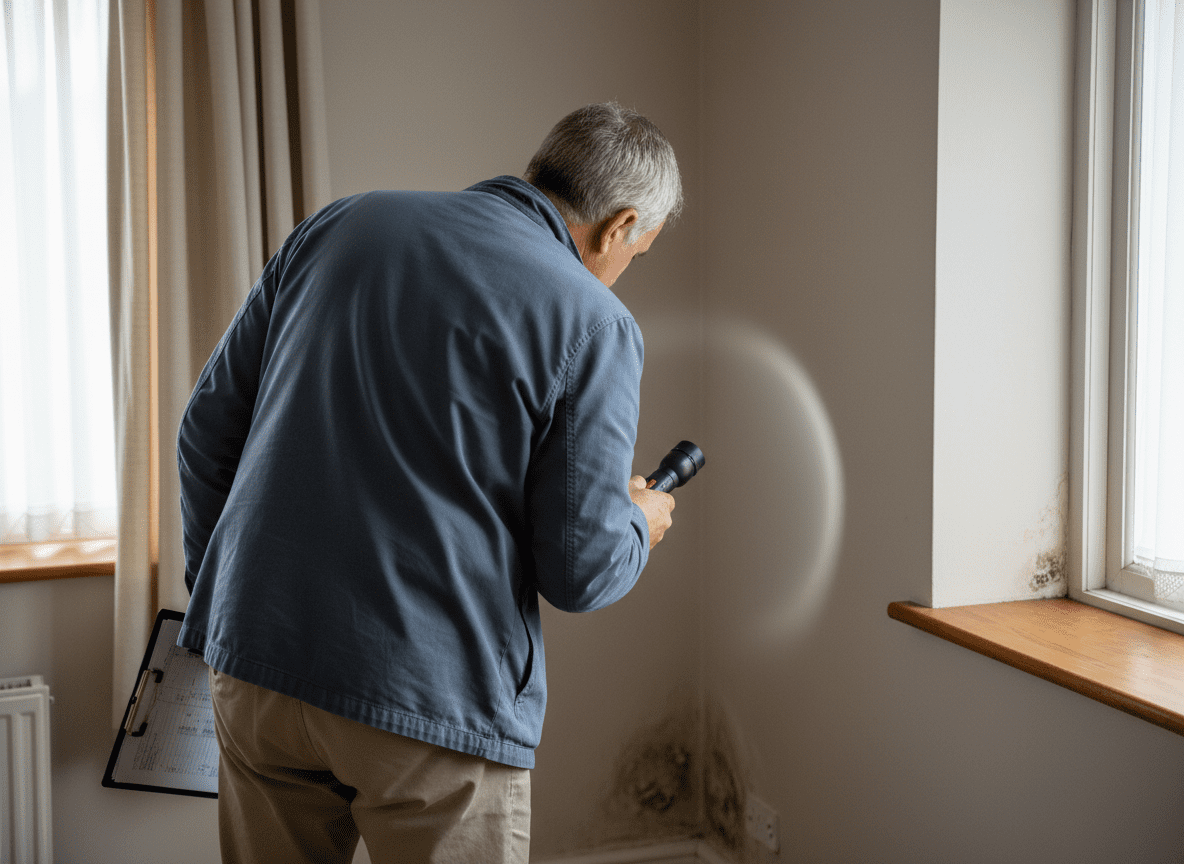
A RICS Level 2 Homebuyer Survey and a RICS Level 3 Building Survey both include an inspection of the roof space from a loft hatch. Surveyors use a torch, moisture meter, and professional judgement to assess structure, coverings, and signs of water ingress or timber decay.
With spray foam in place, that picture changes significantly:
- Roof timbers cannot be probed or tested — they are bonded to or obscured by the foam
- Moisture readings cannot be taken through the foam — the meter cannot reach the timber surface
- Signs of rot, woodworm, or fungal growth beneath the foam are invisible
- Fixings and nail plates are concealed — trussed rafter connections cannot be verified
- Roof covering condition from inside may be obscured — felt or sarking is often sealed beneath foam
A note from Blue Blossom Surveys
During a Level 2 or Level 3 survey, we always inspect the loft space where access is available. If spray foam is present, we will tell you exactly what we can and cannot see. We are not spray foam specialists — but we will record the limitation clearly in your report so you know what further steps are needed.
How Surveyors Report Spray Foam — The Condition Rating Question
RICS guidance updated in 2022 instructs surveyors to flag spray foam as a material concern requiring further investigation. This typically means one of two outcomes in your report:
- A Condition Rating 3 (requiring urgent or significant attention) on the roof structure — not because there is confirmed damage but because the condition cannot be verified
- Or a further investigation recommendation, asking you to commission a specialist before exchanging contracts
A Condition Rating 3 on a roof with spray foam does not automatically mean the roof is failing — it means the surveyor cannot confirm it is sound. A RICS Level 3 Building Survey from Blue Blossom will give you the most detailed account of what can be seen and a clear recommendation on next steps.
The Mortgage Problem Is Separate from Your Survey

In November 2024, the BBC reported that around a quarter of the UK’s biggest mortgage providers — and all equity release lenders surveyed — would not lend on homes with spray foam in the roof. Lenders including Halifax, Barclays, and Nationwide have tightened their policies as awareness has grown.
Your surveyor’s job is to report what can be inspected and flag what cannot. Your lender’s job is to decide whether the property provides adequate security for their loan. In practice:
- Your surveyor flags spray foam and notes inspection limitations
- Your lender applies its own policy — which may mean requesting a specialist survey, declining to lend, or requiring removal before completion
- Your lender’s valuer also makes their own independent assessment
If you are concerned about whether your lender accepts spray foam, check with your mortgage broker before commissioning a survey — that way you can factor the answer into your decision about whether to proceed with an offer.
What to Do If Spray Foam Appears in Your Survey Report
If your RICS Level 2 or Level 3 survey flags spray foam, there are several clear next steps:
- Check your lender’s position — confirm whether they will lend, and under what conditions
- Commission a specialist spray foam survey if your lender requires it — following the PCA 2023 protocol
- Get a removal quote — according to Checkatrade, removal from a typical three-bedroom property costs around £3,200 (range: £2,500–£6,000 depending on foam type and access)
- Use this as a negotiating point — the cost of removal is a legitimate basis for renegotiating the purchase price; our guide to negotiating after a survey covers how to approach this
For a comprehensive view of what issues surveyors flag alongside spray foam, see also our guide on house survey red flags and what the Level 3 survey checks in the roof and loft.
Frequently Asked Questions
Will a spray foam survey affect my mortgage?
A survey cannot directly affect your mortgage. What the survey does is record what it can and cannot inspect. If spray foam conceals the roof timbers, the surveyor notes this limitation. Your lender then applies its own policy. Around a quarter of major UK mortgage providers would not lend on properties with spray foam, according to BBC research published November 2024.
Can a surveyor inspect through spray foam?
No. When spray foam is bonded directly to roof timbers, the surveyor cannot access, probe, or take moisture readings from the concealed structure. The inspection is recorded as limited.
Should I get a specialist spray foam survey as well?
A specialist spray foam survey follows the Property Care Association 2023 Inspection Protocol and is separate from a RICS Level 2 or Level 3. Some lenders require one before agreeing to lend. Blue Blossom does not carry out standalone spray foam assessments but will clearly record the limitation in your RICS survey report.
How much does spray foam removal cost in the UK?
According to Checkatrade, removing spray foam from an average three-bedroom property costs around £3,200, with the range running from £2,500 to £6,000 depending on foam type, roof size, and access. The government will not fund removal under any current scheme.
Buying a property and want to know what the roof space looks like before you commit? Our RICS Level 3 Building Survey gives you the most thorough account of what can be inspected — and is honest about what cannot. Contact Blue Blossom Surveys for a quote covering Peterborough, Cambridgeshire, and Rutland.




0 Comments