

Can a Home Survey Stop a Sale? What Buyers and Sellers Need to Know
You have had an offer accepted, instructed a solicitor, and booked a survey. Then the report arrives with a long list of issues. The question that immediately follows is one that both buyers and sellers ask: can a home survey actually stop a sale?
The short answer is that a survey does not stop a sale by itself. It is a report, not a veto. But the findings in that report can and do influence decisions, negotiations, and in some cases the outcome of a transaction. Understanding what a survey can and cannot do puts you in a much stronger position.
What a survey report actually tells you
A RICS Level 2 Homebuyer Survey or a Level 3 Building Survey uses a traffic light rating system to describe the condition of each element of the property.
- Condition Rating 1 — No repair is currently needed.
- Condition Rating 2 — Defects that need repairing or replacing but are not considered urgent or serious.
- Condition Rating 3 — Defects that are serious or need to be repaired, replaced, or investigated urgently.
A survey report is an honest assessment of what the surveyor observed on the day of inspection. It is designed to inform, not to alarm. Even a report with several Condition Rating 2 items may reflect nothing more than ordinary wear and tear on an older property.

Does a survey give a buyer the right to pull out?
In England, Wales, and Scotland, no transaction is legally binding until contracts are exchanged. This means that at any point before exchange, either side can withdraw without legal penalty. A survey report that reveals serious problems gives a buyer factual grounds to reconsider their decision, but the survey itself does not trigger that outcome.
What the report does is give the buyer information they did not have before. How they act on that information — whether they continue, renegotiate, or withdraw — is entirely their own decision.
From a seller’s perspective, this means a difficult survey result does not automatically mean the sale falls through. It often opens a conversation.
Common reasons buyers reassess after a survey
Not all survey findings carry the same weight. The issues most likely to cause a buyer to pause and reconsider include:
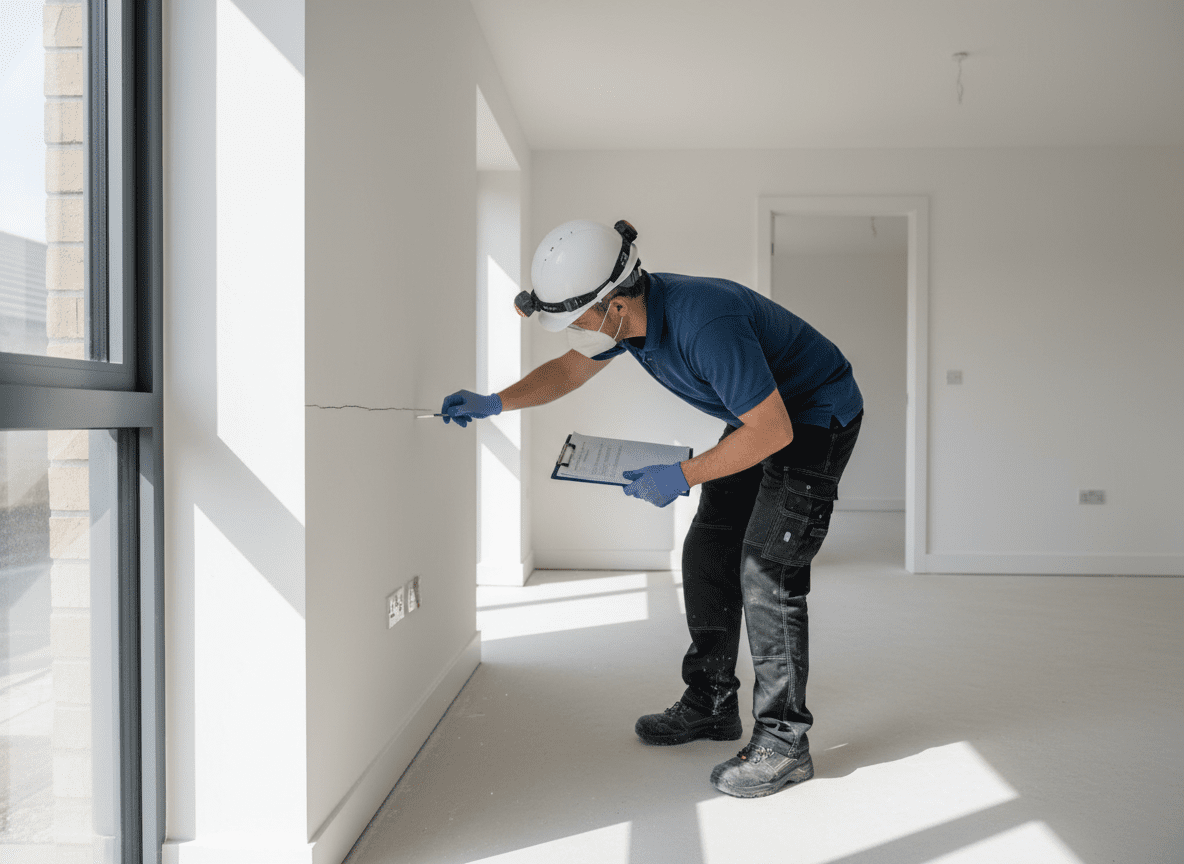
- Structural movement or subsidence — cracks, bowing walls, or evidence of ongoing movement that may require engineering investigation.
- Roof condition — a roof covering that is nearing or past its expected service life, or evidence of water ingress.
- Damp — significant rising or penetrating damp, particularly if it has gone unaddressed for some time.
- Drainage problems — blocked drains, poor falls, or evidence of below-ground issues.
- Timber decay or infestation — rot in structural timbers or evidence of active woodworm.
- Services requiring urgent attention — outdated electrical installations flagged for immediate inspection by a qualified electrician.
Minor defects — a few cracked tiles, some deteriorating pointing, or worn window sills — are common in most properties and rarely cause a buyer to withdraw. Context matters enormously.
How buyers typically respond to a difficult survey
There are generally three routes a buyer considers when a survey highlights serious issues.
Proceed as planned
If the defects are within a budget the buyer is comfortable with, or if the price already reflects the condition of the property, the buyer may choose to proceed without asking for anything further. This is common when buyers have some experience of property renovation or have already factored condition into their offer.
Renegotiate the price
The most common response to a difficult survey is a revised offer. The buyer uses the surveyor’s assessment to justify a price reduction that reflects the cost of remedial work. For this to work effectively, it helps to get at least one trade quote for the works identified so the renegotiation is grounded in evidence.
Withdraw from the purchase
If the findings are serious enough, or if the seller is unwilling to negotiate, a buyer may decide to withdraw. This is their legal right before exchange. It is rarely the first response, but it does happen — particularly when structural issues are involved or the cost of repairs is disproportionate to the value of the property.
What sellers can do when a survey raises concerns
Sellers are not passive in this process. If a buyer comes back with concerns raised by a survey, there are practical steps available.
- Get your own quotes — obtaining independent trade estimates for the work identified lets you respond to any proposed price reduction with accurate figures rather than guesswork.
- Carry out the work before completion — in some cases, particularly for smaller defects, a seller may prefer to arrange and complete the repair rather than adjust the price.
- Provide documentation — if the issue raised was previously investigated or repaired, relevant guarantees, warranties, or completion certificates can help reassure the buyer.
- Hold your position — if the price already reflects the property’s condition, or the defects are minor, a seller is under no obligation to reduce the price.
A note on transparency: Sellers are not required by law to disclose all known defects before a sale, but concealing known issues can expose them to legal claims after completion. If you are aware of a significant defect, taking proper advice before marketing is always sensible.
When a mortgage lender is involved
If the buyer is purchasing with a mortgage, the lender’s valuation is a separate process from the buyer’s survey. A mortgage valuation is carried out for the lender’s benefit and looks primarily at whether the property represents adequate security for the loan. It is not a detailed condition report.
However, if a lender’s valuer identifies a significant defect, they may retain part of the mortgage offer until that defect is investigated or remedied. This can affect the buyer’s ability to complete, even if they are willing to proceed.
This is one reason buyers who commission their own survey separately from the lender’s valuation have more information and more options — they know in advance whether issues are likely to affect their finance.
How to move forward constructively
Most property transactions that reach the survey stage do complete. The survey is not the end of the process — it is part of it. The key to moving forward is communication and accurate information.
- Read the report carefully and prioritise Condition Rating 3 items above all else.
- Ask your surveyor to clarify anything you are unsure about — they are available to answer questions about their findings.
- Obtain trade quotes for any significant work before deciding how to proceed.
- Approach any renegotiation as a practical conversation based on costs, not an adversarial demand.
Choosing the right survey from the outset is also important. A more detailed survey on an older or altered property is likely to uncover more, but the information it provides is genuinely useful — both for the purchase decision and for planning any future work.
Frequently Asked Questions
Can a surveyor advise me to pull out of a purchase?
A surveyor’s role is to report on condition, not to advise you on whether to proceed. They will flag defects and indicate their severity, but the decision to continue, renegotiate, or withdraw is always yours.
What happens if I pull out after a survey?
Before exchange, you can withdraw from a purchase without legal penalty in England and Wales. You may lose the cost of the survey and any conveyancing fees incurred, but you are not liable to the seller. After exchange, withdrawal becomes a legal breach of contract.
Does a seller have to respond to survey findings?
No. A seller is under no obligation to reduce the price, carry out repairs, or respond to concerns raised by a buyer’s survey. However, if they choose not to engage, the buyer may decide to withdraw.
How long do I have to respond after receiving my survey report?
There is no set timescale. The survey forms part of the pre-exchange process, which moves at the pace of the conveyancing. Responding promptly, however, keeps the transaction moving and reduces the risk of the other side losing confidence.
Unsure what survey is right for your property? Blue Blossom Surveys covers Peterborough and surrounding towns across Cambridgeshire, Lincolnshire, Northamptonshire, and Rutland. Contact us to discuss which survey fits your property — we are happy to help you choose before you book.






0 Comments