

Does a Level 2 Survey Check for Asbestos, Japanese Knotweed and Environmental Risks?
One of the most common questions buyers ask before booking a RICS Level 2 survey is whether it covers environmental hazards — specifically asbestos, Japanese knotweed, flooding risk, and radon gas.
The short answer is: partly. A Level 2 survey will flag visible signs of certain environmental risks, but it is not a specialist environmental assessment. Understanding what is and is not included helps you decide whether additional checks are needed before you commit to a purchase.
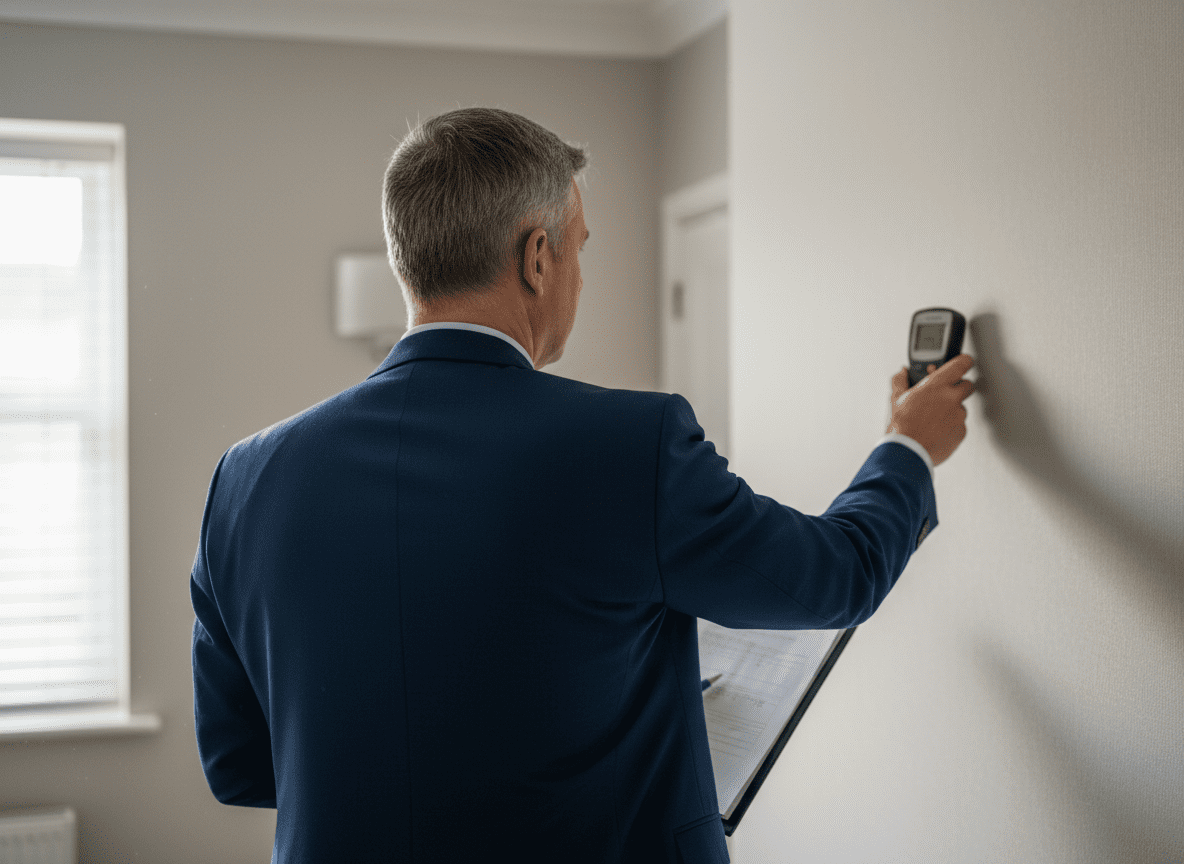
Key point: A Level 2 survey is a visual, non-invasive inspection. It can flag suspected environmental hazards but cannot test, sample, or confirm them. If a surveyor suspects an issue, they will typically recommend a specialist assessment before exchange.
Does a Level 2 Survey Check for Asbestos?
Yes — but only to a limited degree. A RICS Level 2 surveyor will visually identify materials that may contain asbestos, particularly in properties built or renovated before 2000. Asbestos was widely used in UK construction materials until it was fully banned in 1999.
What the surveyor looks for
During the inspection, the surveyor will flag areas where asbestos-containing materials (ACMs) are commonly found and may still be present. These typically include:
- Artex coatings on ceilings (common in homes built between 1960–1980)
- Floor tiles and the adhesive beneath them
- Roof sheets and soffits, particularly on garages and outbuildings
- Pipe lagging, boiler flues, and cistern panels
- Textured wall coatings
- Cement products such as gutters, downpipes, and roofing sheets
What the surveyor cannot do
A Level 2 surveyor cannot confirm whether a material contains asbestos. They will not take samples or carry out laboratory testing. They will note the presence of materials that may pose a risk and recommend a specialist asbestos survey if appropriate.
The crucial thing to understand is that the presence of asbestos is not automatically a deal-breaker. Asbestos that is in good condition and left undisturbed presents minimal risk. It only becomes dangerous when disturbed — during renovation, drilling, or demolition.
Practical guidance: If a Level 2 report notes possible asbestos-containing materials, you have the option to commission a specialist asbestos management survey before exchange. This confirms whether ACMs are present and advises on management or removal.
Does a Level 2 Survey Check for Japanese Knotweed?
Yes — the surveyor will visually inspect accessible external areas and note any signs of Japanese knotweed if it is visible during the inspection. However, this is limited to what can be seen during a single visit at the time of year the survey takes place.
Why Japanese knotweed matters
Japanese knotweed is an invasive plant that can cause significant structural damage. Its root system can extend several metres from the visible plant, forcing through building foundations, drains, and walls. Mortgage lenders take it seriously, and many require a specialist report and management plan before agreeing to lend.
Limitations of the visual check
Japanese knotweed may not be visible year-round. Surveys carried out in winter or early spring may not identify it if the plant has died back. The surveyor can only flag what is visible on the day.
If knotweed is suspected or found nearby — in neighbouring gardens or communal land — your surveyor may recommend a specialist Japanese knotweed survey. A specialist can assess the extent of the problem and produce a management plan that may satisfy lenders.
Does a Level 2 Survey Check for Flooding Risk?
A Level 2 survey may make general observations about the property’s drainage, ground conditions, and any visible signs of past flooding — such as tide marks on walls, staining at low level, or poorly maintained drainage. However, it does not include a formal flood risk assessment.
What flood risk assessment involves
A proper flood risk assessment looks at the property’s proximity to rivers, catchment areas, and historical flood data. This goes beyond what a RICS surveyor is qualified or tasked to do in a Level 2 inspection.
How to check flood risk independently
You can check the Environment Agency’s flood risk maps online for free. Your solicitor may also carry out flood risk searches as part of conveyancing. If the property is in a flood risk zone, you may want to consider the impact on insurance premiums and future saleability.
Does a Level 2 Survey Check for Radon Gas?
No. A Level 2 survey does not check for radon. Radon is a naturally occurring radioactive gas that rises from the ground in certain geological areas of the UK. It cannot be seen or smelled, and detecting it requires specialist testing over a period of weeks using measurement devices placed in the home.
Should you be concerned about radon?
Radon risk varies significantly by location. Certain parts of the UK — including areas of Devon, Cornwall, Northamptonshire, and parts of the East Midlands — have elevated radon levels. The UK Health Security Agency provides radon maps to help identify higher-risk areas.
If you are purchasing in an area with known radon risk, your solicitor may flag this through environmental searches, or you can commission a radon assessment separately.
Other Environmental Risks: What Else May Be Noted?
A Level 2 surveyor may also comment on the following where visually apparent:
| Risk | What the surveyor does | Specialist report needed? |
|---|---|---|
| Subsidence | Notes visible cracking patterns and movement; recommends structural engineer if serious | Possibly |
| Ground contamination | May note if property was previously industrial or commercial use; cannot test soil | Yes, if suspected |
| Oil tanks / underground storage | Notes visible tanks or evidence of previous removal; cannot assess soil contamination | Yes, if concern |
| Overhead power lines | May note proximity; does not assess electromagnetic risk | Not usually |
| Tree roots | Notes mature trees close to foundations; recommends drain survey if subsidence suspected | Sometimes |
When Should You Get a Specialist Environmental Report?
Your Level 2 surveyor will indicate in the report whether a specialist follow-up is recommended. As a general rule, consider commissioning additional reports if:
- The property was built or significantly renovated before 2000 and will be refurbished (asbestos survey)
- The surveyor notes possible Japanese knotweed on or adjacent to the site
- The property is near water or in a known flood risk area
- The property is in a region with elevated radon risk
- Environmental searches flagged by your solicitor highlight contamination
- The property was previously used for commercial or industrial purposes
Most specialist surveys can be arranged and completed before exchange, giving you time to factor the findings into your decision and, if appropriate, use them to renegotiate.
Good to know: Additional specialist surveys are an investment in certainty before you commit. The cost of a specialist asbestos or Japanese knotweed survey is typically far lower than the cost of dealing with a problem after you complete.
What Does This Mean for Your Purchase?
A RICS Level 2 Homebuyer Survey provides a thorough visual assessment of the property’s condition. It will flag likely environmental concerns where they are visible, and your surveyor will recommend further investigation if anything needs specialist attention.
The key is not to assume the Level 2 covers everything. Think of it as the first filter — it identifies what needs closer examination, and your surveyor will tell you clearly what additional checks are worth considering before you exchange.
For older properties with more complex construction histories — former commercial premises, older Victorian or Edwardian homes, or properties with known ground issues — a Level 3 Building Survey may provide a more detailed analysis that goes beyond the standard Level 2 remit.
Not sure which survey is right for your property? We can help you choose. Get in touch to discuss the property type, age, and any specific concerns before you book.
Frequently Asked Questions
Will my Level 2 surveyor take asbestos samples?
No. A RICS Level 2 survey is a visual, non-invasive inspection. The surveyor will flag materials that may contain asbestos but cannot confirm this through sampling. A specialist asbestos management survey is needed for confirmation.
What happens if Japanese knotweed is found?
The surveyor will note it in the report and typically recommend a specialist Japanese knotweed survey. Most mortgage lenders require a professionally prepared management plan before they will lend on a property with knotweed present.
Can a Level 2 survey pick up flood damage from previous floods?
The surveyor may note visible signs consistent with past flooding — such as tide marks, staining, or salt residue on lower walls. However, they cannot confirm the cause without further investigation, and they do not assess future flood risk.
Is a radon check part of conveyancing searches?
Not automatically. Your solicitor may include environmental searches that highlight radon risk areas. If the property is in a designated radon-affected area, a separate radon assessment (usually a detector placed for 3 months) is the most reliable way to measure actual levels.
Should I be worried if asbestos is mentioned in my survey report?
Not necessarily. Asbestos that is intact, undisturbed, and in good condition is generally considered low risk. The main concern is during renovation work, when materials could be disturbed. A specialist report will clarify what is present and what management approach is appropriate.
Does the Level 3 survey cover more environmental risks?
A Level 3 Building Survey provides more detailed analysis of the building fabric, but it is still a visual inspection and does not include specialist environmental testing. It will, however, give more detailed commentary on areas where risks may exist.
Who should I contact for a specialist asbestos survey?
Look for a UKAS-accredited asbestos surveying company. They can carry out management surveys (low-disruption, to identify and assess ACMs) or refurbishment surveys (for properties about to be renovated). Your RICS surveyor can advise on the type most relevant to your circumstances.
Can I still buy a property with Japanese knotweed?
Yes, in many cases. The key is understanding the extent of the infestation and having a specialist management plan in place. Some lenders are more flexible than others, so it is worth checking with your mortgage advisor early in the process.






0 Comments