

Many buyers assume a mortgage valuation and a home survey are the same thing. They are not — and this confusion is one of the most common reasons buyers end up with unexpected repair bills after moving in.
The valuation satisfies your lender. The survey protects you. They serve completely different purposes, they are carried out by different people, and they produce entirely different outcomes.
This guide explains the difference clearly, covers what a mortgage valuation typically misses, and helps you decide which type of survey fits your purchase.
The short version: A mortgage valuation confirms the property is worth what you’re paying — for the lender’s benefit. A home survey assesses condition, identifies defects, and explains risks — for your benefit. One protects the bank. The other protects you.
What Is a Mortgage Valuation?
A mortgage valuation is arranged by your lender as part of the loan approval process. Its sole purpose is to confirm that the property is worth enough to serve as security for the mortgage.
The valuation protects the lender, not you. If you defaulted on the mortgage and the lender needed to repossess and sell the property, they need confidence the sale would cover the loan. That is what the valuation is checking.
In practice, many mortgage valuations are brief. Some are completed in under 30 minutes. Some are carried out from the street. Increasingly, lenders use automated desktop valuations that compare recent sale prices nearby — no visit to the property at all.
Important: Even if you pay for the lender’s mortgage valuation, the report belongs to the lender. You may receive a copy, but it is not produced in your interests and you cannot rely on it as professional advice about the property’s condition.
What Does a Mortgage Surveyor Look For?
The person carrying out your lender’s valuation is often called a mortgage surveyor. They are a qualified valuer, but they are working to a very narrow brief: establish what the property is worth, and flag anything that would make it hard for the lender to sell.
In practice a mortgage surveyor checks:
- Market value — what comparable properties nearby have recently sold for.
- Property type, age and construction — standard brick and tile is straightforward; non-standard construction such as timber frame, concrete or steel frame may affect lending.
- Size and layout — number of rooms, floor area, and whether the layout is conventional enough to resell.
- Obvious major defects — visible subsidence, serious roof failure, or significant damp that would affect value.
- Anything that makes the property unmortgageable — no kitchen or bathroom, Japanese knotweed, short lease, spray foam insulation, or known structural movement.
- Location factors — flood risk, proximity to commercial premises, and local market demand.
Just as importantly, here is what a mortgage surveyor does not do. They do not test services, lift carpets, look in the loft, move furniture, check drains, or investigate the cause of anything they notice. They are not producing a list of things for you to fix. If a defect does not threaten the lender’s security, it will usually go unmentioned.
That is the single most misunderstood point in the whole process: a clean mortgage valuation is not a clean bill of health. It means the lender is satisfied with its security, nothing more.
In short: a mortgage surveyor answers one question for your lender — is this property worth the money. A building surveyor answers a different question for you — what condition is it in, and what will it cost you.
What Does a Home Surveyor Do?
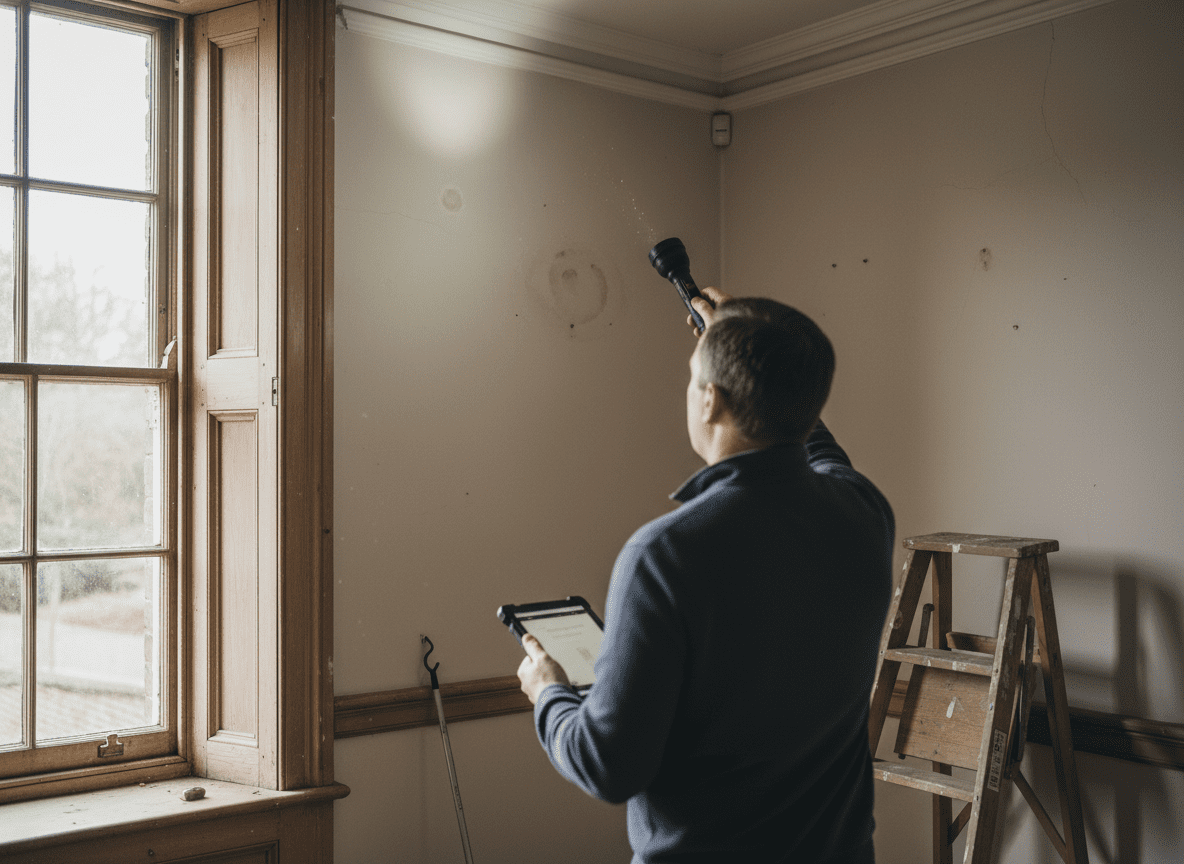
A home surveyor works exclusively for you. Their role is to assess the condition of the property, identify visible defects, explain risks, and give you information that allows you to make an informed decision before you exchange contracts.
Unlike a valuation, a survey takes time. A Level 2 survey typically involves several hours at the property. A Level 3 survey on a more complex property may take considerably longer. The surveyor looks at how the building is constructed, how it has aged, where defects are developing, and what maintenance is likely to be needed.
The resulting report is detailed, structured, and written for you — not for a bank’s credit department.
RICS Level 2 Homebuyer Survey
A RICS Level 2 Homebuyer Survey suits most conventional homes in reasonable condition — typically post-1900, standard construction, no major alterations. It covers all accessible and visible parts of the property using the RICS traffic-light rating system, so you can see at a glance what needs urgent attention and what is routine maintenance.
RICS Level 3 Building Survey
A RICS Level 3 Building Survey provides greater depth — covering construction methods, long-term behaviour of defects, and a more detailed analysis of any areas of concern. It suits older, listed, heavily altered, or structurally complex properties where a more thorough understanding is appropriate.
Mortgage Valuation vs Home Survey: Full Comparison
Here is how a mortgage valuation compares to a Level 2 and Level 3 survey across the factors that matter most to buyers.
| Factor | Mortgage Valuation | Level 2 Survey | Level 3 Survey |
|---|---|---|---|
| Who commissions it | Your lender | You | You |
| Who it protects | The lender | You | You |
| Purpose | Confirm property worth for loan security | Assess condition and identify defects | Detailed structural and condition analysis |
| Time at property | Minutes to 30 min (sometimes desktop only) | 2–3 hours typically | 3–6+ hours depending on property |
| Checks roof condition | Only if obvious defect affects value | ✓ Visual inspection from ground | ✓ Detailed — may use binoculars or access |
| Checks damp | ✗ Not typically | ✓ Moisture meter readings | ✓ More thorough investigation |
| Reviews services (boiler, electrics) | ✗ Not included | ✓ Visual review only | ✓ Visual review with more detail |
| Identifies structural movement | Only if severe and affects value | ✓ Visible cracks and distortion | ✓ Detailed assessment of cause and risk |
| RICS condition ratings | ✗ | ✓ Traffic-light system | ✓ Detailed condition commentary |
| Supports renegotiation | ✗ Not its purpose | ✓ Clear evidence base | ✓ Strongest evidence base |
| Suitable for older properties | Yes (for lending purposes only) | Sometimes — depends on condition | ✓ Recommended for older or complex homes |
| Written report for buyer | Sometimes — not always in your interest | ✓ Full report produced for you | ✓ Full detailed report produced for you |
What a Mortgage Valuation Typically Does Not Check
This is where buyers are most often caught out. Because the valuation is brief and focused on market value, there is a long list of conditions it will not identify unless they are severe enough to affect the lending decision on that specific day.
- Roof condition: Slipped tiles, failed flashings, or worn ridge tiles are not flagged unless the roof is clearly failing and obviously depressing the value.
- Damp and moisture: Rising damp, penetrating damp, and condensation problems are rarely picked up in a short visit with no moisture meter.
- Internal structural concerns: Cracking from movement, sagging floors, and wall distortions may be missed if they are not severe enough to immediately affect value.
- Quality of alterations and extensions: Poor workmanship, unpermitted work, or structural changes carried out without building regulations approval are not assessed.
- Drainage and ventilation: Blocked gullies, poor surface drainage, or inadequate ventilation causing condensation are not covered.
- Maintenance issues affecting future cost: Items that are functioning but approaching end of life — boilers, flat roofs, timber windows — are not commented on.
- Services in detail: The age or condition of the electrical installation, heating system, or plumbing is not assessed.
The key point: If a defect is not severe enough to affect the property’s market value on the day of the valuation, it may not appear in the valuation at all — even if it will cost you thousands to repair after you move in.
Why Relying on a Valuation Alone Is Risky
Relying on a mortgage valuation as your only pre-purchase check means accepting a significant number of unknowns at the point of exchange. Once contracts are exchanged, the risks transfer to you.
Hidden defects you didn’t know about
Cosmetic presentation hides a lot. Fresh paint, new carpets, and staged interiors can disguise damp, movement, or workmanship issues that would be obvious to a trained surveyor looking carefully at the building’s structure rather than its surface. A valuer looking primarily at comparable sales prices has no incentive to look past presentation.
Overpaying for a property that needs work
If you don’t know the roof needs replacing or the damp course has failed, you can’t factor those costs into your offer. Buyers who skip surveys often end up paying the full asking price for a property that, with survey findings in hand, would have been negotiated down — or walked away from entirely.
Losing negotiation leverage
Without a survey, you have no independent, professional evidence to support a price reduction request. Your solicitor has nothing to work with. Survey findings — especially red-rated items — are commonly used to negotiate price reductions or request that sellers complete repairs before exchange. That leverage disappears if you don’t commission one.
Emergency costs after moving in
The financial impact of discovering a serious defect after you’ve moved in is compounded by the fact that you’ve already used your savings on the deposit and purchase costs. Roof repairs, drainage works, damp treatment, or rewiring that cost £5,000–£20,000+ are considerably harder to absorb once you’re a homeowner.
How a Survey Supports Negotiation
A professional survey report provides independent, documented evidence of defects. That evidence is valuable at the negotiating table in a way that a buyer’s verbal concerns are not.
Estate agents and sellers are more likely to take a red-rated structural issue or a flagged damp problem seriously when it appears in a RICS surveyor’s written report than when a buyer simply raises it informally. Solicitors can also use survey findings to raise formal enquiries with the seller’s solicitor.
Common outcomes from using survey findings in negotiation include:
- Price reductions reflecting the cost of identified repairs
- Sellers completing specific repairs before exchange
- A contribution to remedial costs through a reduced purchase price
- Decisions to walk away from purchases that carried more risk than the price reflected
Many buyers find that the cost of the survey is recovered through negotiation — sometimes many times over.
Common Myths About Valuations and Surveys
“The lender’s valuation protects me”
It doesn’t. The valuation exists to protect the lender’s investment, not yours. The surveyor instructed by the lender owes their duty of care to the lending institution, not to you as the buyer.
“A valuation checks the property’s condition”
Not in any meaningful sense. A valuation checks whether the price is broadly in line with market comparables. Condition is only relevant if a defect is severe enough to affect that headline figure.
“Surveys slow things down”
A survey typically takes a few hours and the report follows within a few working days. In a transaction that takes weeks or months, this is rarely the cause of delays. What surveys do is help buyers avoid the much longer disruption of dealing with unexpected defects after moving in.
“New-build homes don’t need a survey”
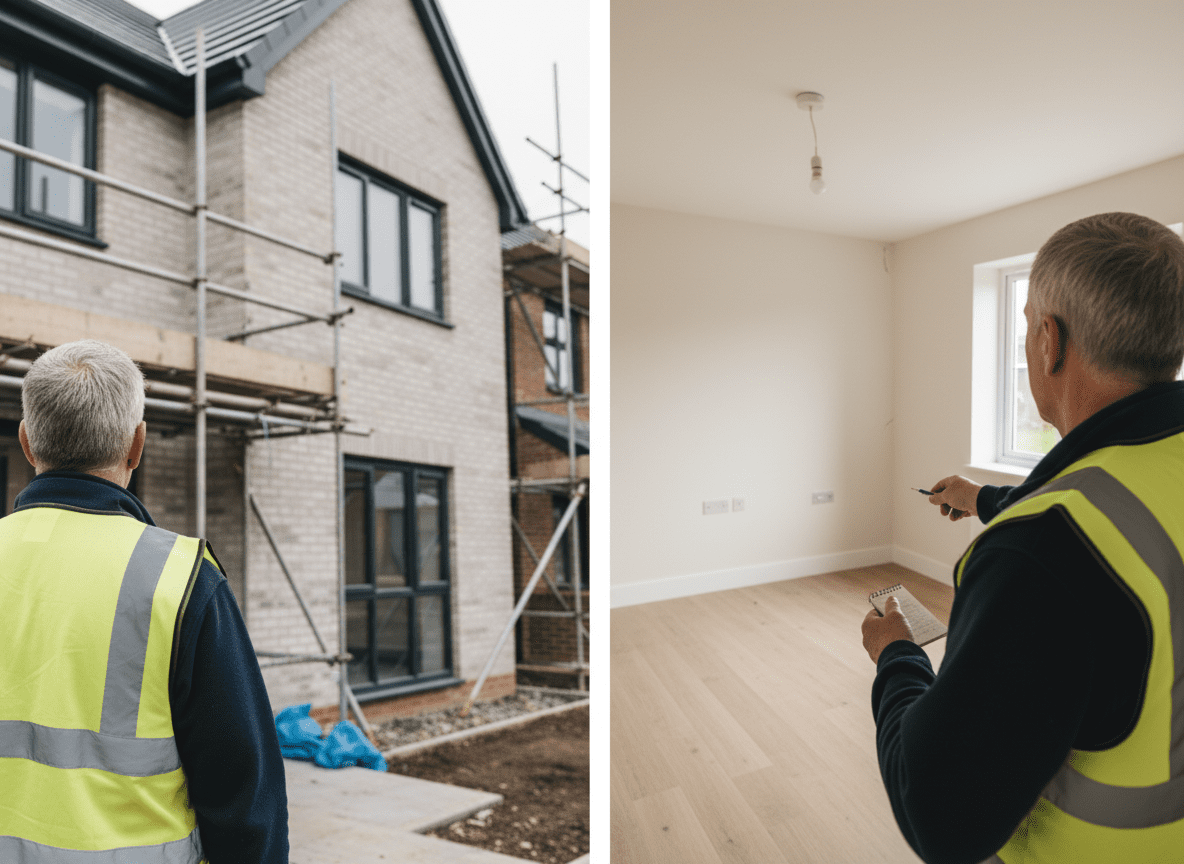
New builds are not exempt from workmanship issues, ventilation problems, or early defects. A pre-completion inspection is the appropriate route for new builds — it identifies defects while the developer is still responsible for remedying them.
When Should You Book a Survey?
The best time to book is shortly after your offer is accepted and before you incur significant legal costs. This gives you the maximum opportunity to act on the findings — whether that means renegotiating, requesting repairs, commissioning further investigation, or reconsidering the purchase.
Delaying the survey until later in the transaction leaves you with less time to respond to findings and more financial and emotional pressure to proceed regardless.
If you are unsure which survey level is right for your property, the Choosing the Right Survey guide covers the key factors — property age, construction type, condition, and how much detail you need.
Home Survey vs Mortgage Valuation: FAQs
What does a mortgage surveyor look for?
Market value first and foremost, based on comparable local sales, plus the property type and construction, its size and layout, any obvious major defect that would affect value, and anything that would make the property unmortgageable. They do not test services, inspect the loft, check drains or investigate the cause of problems they notice.
Is a mortgage surveyor the same as a building surveyor?
No. A mortgage surveyor is a valuer instructed by your lender to confirm the property is adequate security for the loan. A building surveyor is instructed by you to inspect the condition of the property and report on defects, risks and likely costs. They answer different questions for different clients.
Is a mortgage valuation the same as a home survey?
No. A mortgage valuation is arranged by your lender to confirm the property is worth enough to secure the loan. It protects the lender. A home survey is commissioned by you and assesses the condition of the property — it protects your interests, not the bank’s.
Do I need a survey if my lender is arranging a valuation?
Yes, in most cases. The mortgage valuation is not a condition survey. It will not reliably identify damp, structural movement, roof defects, or maintenance issues unless they are severe enough to affect market value on that specific day. A separate home survey gives you the independent professional assessment the valuation does not.
Can I use the lender’s valuation report to renegotiate?
Rarely. The valuation report belongs to the lender and is written for their purposes. It does not typically contain the detail needed to support a negotiation conversation with a seller. A RICS survey report, with specific condition ratings and documented defects, is a much stronger basis for renegotiation.
What happens if both the valuation and survey flag issues?
If the valuation flags an issue, the lender may reduce the loan offer or apply conditions. If your survey also flags issues, you have a stronger basis for renegotiating the purchase price or requesting repairs. In some cases, buyers decide to pull out — the survey findings provide the evidence to support that decision too.
Which survey level is right for my property?
For most conventional homes built after 1900 that appear to be in reasonable condition, a Level 2 Homebuyer Survey provides the right balance of detail and cost. For older, listed, or structurally complex properties — or where you already have specific concerns — a Level 3 Building Survey is the more appropriate choice. If you are unsure, contact us before booking and we can advise based on the property.
Is a home survey worth it if the property looks fine?
Yes. Presentation can disguise defects. Fresh decoration, new flooring, and well-staged interiors can hide damp, movement, or poor workmanship. Surveyors are trained to look past surface finishes and assess how the building itself is performing — not how it has been presented for sale.
How long does a home survey take?
A Level 2 survey typically takes 2–3 hours at the property, depending on size. A Level 3 survey on a more complex property can take considerably longer. The written report usually follows within a few working days of the inspection.
Can I get both a valuation and a survey at the same time?
Some surveyors offer combined reports that include both a RICS valuation and a survey. However, these are less common than they once were. In most cases, the mortgage valuation is handled by the lender separately, and you commission your home survey independently. Both can happen around the same time in the transaction.
Buying a property in Peterborough or the surrounding area?
A RICS Level 2 Homebuyer Survey gives you independent, professional insight into the condition of the property before you commit. For older or more complex homes, a Level 3 Building Survey provides the depth you need.
Not sure which is right for your purchase? Visit our Choosing the Right Survey guide or get in touch before booking.



0 Comments