

How Do Surveyors Value a Property? The Valuation Process Explained
When you apply for a mortgage, the lender will arrange for a surveyor to value the property. Many buyers want to understand what that actually involves — what the surveyor looks at, how they reach their figure, and what the valuation means for the purchase.
This guide explains how surveyors value a property, what a mortgage valuation covers, and how it differs from a structural survey. Understanding the distinction can help you make better decisions about what additional due diligence you might need before you commit.
Key takeaways
- A property valuation is carried out for the mortgage lender, not for you.
- Valuers assess market value using recent comparable sales and a brief property inspection.
- A valuation does not assess the structural condition of the property in detail.
- If the valuation comes in below the agreed purchase price, it can affect your mortgage offer.
- A RICS structural survey is separate and gives you an independent assessment of condition.
What is a property valuation?
A property valuation is an assessment of a property’s current market value — in other words, what it is likely to sell for in the open market at a given point in time. When carried out for a mortgage lender, the primary purpose is to confirm that the property is worth at least as much as the loan being secured against it.
Valuations are carried out by qualified valuers, many of whom are RICS-registered. In the context of a mortgage, the lender commissions the valuation, and the resulting report is prepared for the lender’s use. As a buyer, you may pay for the valuation as part of your mortgage application costs, but the report is written to serve the lender’s interests.
Some lenders now use automated valuation models (AVMs) for straightforward properties, which estimate value using algorithms and comparable sales data without a physical visit. However, for most residential transactions, a valuer will visit the property in person.
What does a valuation surveyor assess?
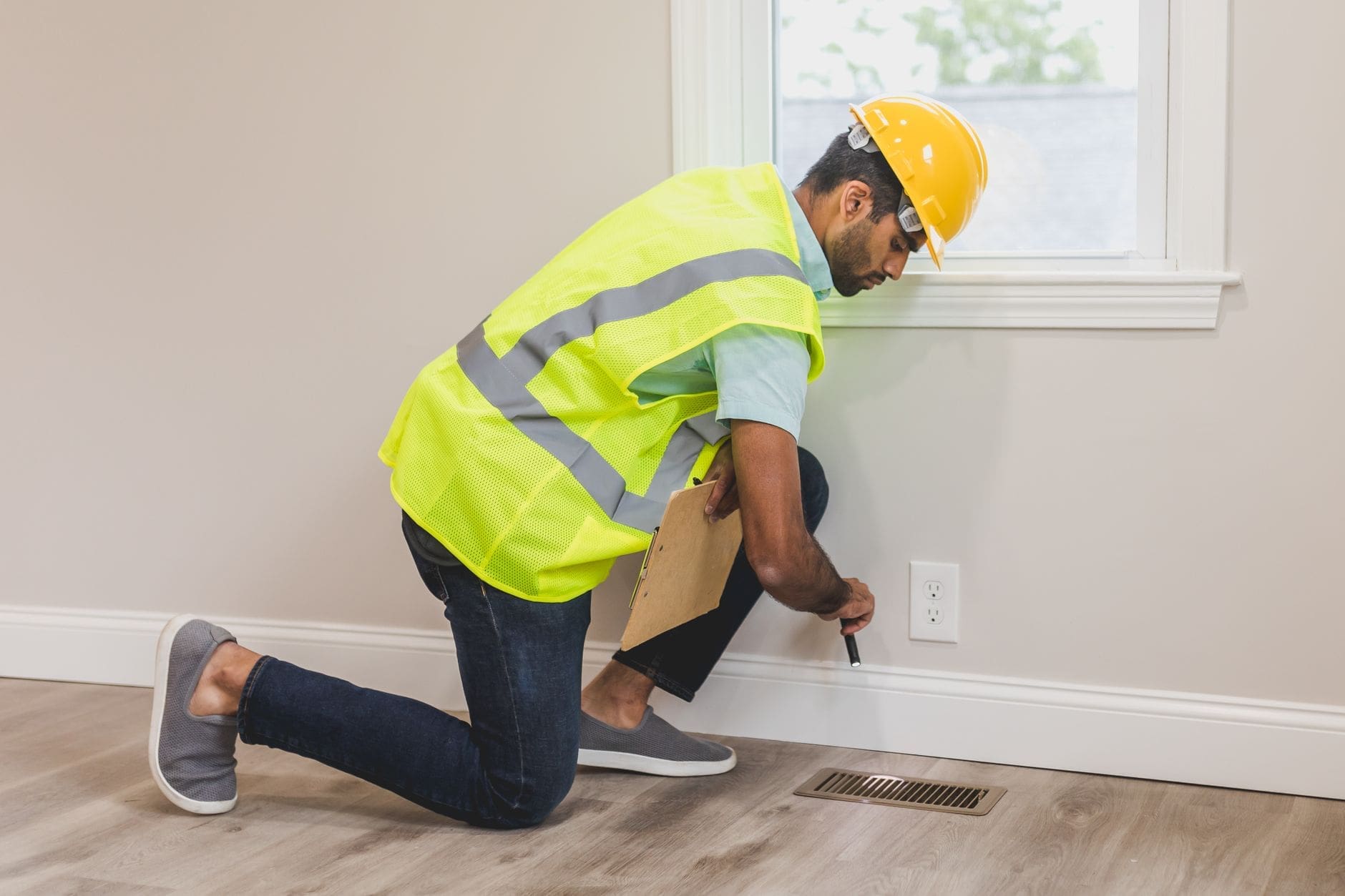
When a valuer visits a property, their inspection is focused on gathering enough information to support a market value opinion. It is not an in-depth assessment of the building’s physical condition.
Property type and construction
The valuer will note the type of property — detached, semi-detached, terraced, flat — and the construction type. Unusual or non-standard construction (such as timber frame, prefabricated concrete, or steel frame) can affect both value and mortgageability.
Size, layout, and accommodation
The number of rooms, the overall floor area, and how the property is arranged all influence value. A valuer will walk through the property to assess its layout and condition in broad terms.
Location and immediate environment
Location is one of the most significant factors in property value. The valuer considers the property’s position within its street, local amenities, transport links, and any features of the immediate environment that might affect desirability — including proximity to noise sources, flood risk, or industrial land.
Condition (in general terms)
While a valuer is not carrying out a structural survey, they will note any obvious visible defects that could affect the property’s value or saleability. A roof in very poor condition, significant external cracking, or clear signs of major damp may be noted if they are highly visible. However, they will not investigate these issues in detail.
Recent improvements and features
Extensions, loft conversions, updated kitchens and bathrooms, and other improvements can all add value. The valuer will consider the benefit of any recent works when arriving at their figure.
Important: A valuation visit is typically brief — sometimes as short as 15 to 30 minutes for a standard residential property. It is an assessment of market value, not a detailed inspection. Many defects that would be identified in a structural survey will not be visible or within scope during a standard valuation.
How do surveyors calculate a property’s value?
Property valuation is not an exact science. It combines data analysis with professional judgement, and two valuers assessing the same property might arrive at slightly different figures.
Comparable evidence
The primary method for residential valuations is the comparable sales approach. The valuer looks at recent sales of similar properties in the same area — ideally within the last six to twelve months and as close to the subject property as possible in terms of type, size, age, and condition.
Not all comparables are equal. A recently sold detached house three streets away may be a better comparable than a semi-detached house on the same road. The valuer applies judgement to adjust for differences between the comparable properties and the subject property.
Adjustments for condition and features
Once comparable sales are identified, the valuer makes adjustments to account for differences between the comparables and the property being valued. A property with a recently extended kitchen, an additional bedroom in the loft, or a south-facing garden may be valued higher than an otherwise similar property without these features. Conversely, a property needing significant work may be valued below comparable sales of well-maintained homes.
Market conditions
The state of the local property market matters. In a rising market with strong demand, valuers may take a more confident view of value. In a slower market with more uncertainty, they may be more cautious — particularly when the lender’s exposure is significant relative to the purchase price.
Professional judgement
Valuation is ultimately a professional opinion. The valuer draws on their knowledge of the local market, their experience with similar properties, and the data available to form a view. Where there are limited comparables or significant uncertainty, the report may note the limitations of the evidence.
How long does a mortgage valuation take?
The physical inspection for a standard residential mortgage valuation typically takes between fifteen minutes and an hour, depending on the size and complexity of the property. The valuer then needs time to research comparables and write the report, which is usually returned to the lender within a few working days of the visit.
The time between instructing the valuation and receiving the mortgage offer can vary depending on how busy the lender’s valuation panel is and how quickly your mortgage application is processed. For most buyers, the valuation visit happens relatively smoothly within the application process, and the mortgage offer follows within one to three weeks of the valuation being returned.
Why does the valuation figure matter?
The mortgage valuation figure determines how much the lender is prepared to lend. If the valuation comes in at or above the agreed purchase price, the mortgage application proceeds normally.
If the valuation comes in below the purchase price — sometimes called a “down valuation” — it can create a problem. The lender will only lend based on the lower valuation figure, which means the buyer either needs to make up the shortfall from their own funds, renegotiate the purchase price with the seller, or in some cases walk away from the purchase.
Down valuations are more common in fast-moving markets where agreed prices have risen ahead of what comparables can support, or in unusual properties where comparables are limited. If you receive a down valuation, it is worth discussing the report with your solicitor and, if appropriate, requesting a review with additional comparable evidence.
| Scenario | What typically happens |
|---|---|
| Valuation matches or exceeds purchase price | Mortgage application proceeds normally |
| Valuation below purchase price | Lender limits offer to the lower figure; buyer may need to renegotiate or increase deposit |
| Lender flags major defect or construction concern | May require specialist report or impose conditions on mortgage offer |
What a valuation doesn’t cover — and why a structural survey is different
One of the most important things buyers need to understand is that a satisfactory mortgage valuation says nothing meaningful about the physical condition of the property. It simply tells you that the lender considers the property worth the agreed price as security for the loan.
A RICS structural survey takes a fundamentally different approach. Where a valuation is brief and focused on market value, a survey is a detailed inspection focused on the property’s condition — identifying defects, assessing their significance, and giving you practical information about what might need attention.
The key differences are substantial:
- A survey inspects accessible roof spaces, underfloor areas, and structural elements that a valuation does not cover.
- A survey identifies damp, rot, structural movement, and defects in services that would not appear in a valuation report.
- A survey report is written for you, giving you findings and recommendations you can act on.
- A survey may recommend specialist investigations where the surveyor identifies potential issues needing further assessment.
For most buyers, arranging a RICS Level 2 Homebuyer Survey or a RICS Level 3 Building Survey alongside the mortgage valuation is a sound decision. The valuation protects the lender. The survey protects you.
Which survey do you need? The right survey depends on the age, type, and condition of the property. A Level 2 is suitable for most standard properties built after around 1900 in reasonable condition. A Level 3 is recommended for older homes, properties with visible defects, or anything you plan to significantly alter. If you are unsure, contact us and we can help you choose based on your specific property.
Get a clear picture of your property’s condition
Blue Blossom Surveys Ltd provides RICS Level 2 and Level 3 surveys across Peterborough, Stamford, Grantham, Corby, Spalding, and the surrounding area. We give you a practical, evidence-led report — so you know what you are buying before you commit.
Contact us to discuss your survey | Choosing the right survey
Frequently asked questions
How do surveyors value a property for a mortgage?
Mortgage valuers primarily use recent comparable sales in the local area to estimate market value. They adjust for differences between the comparables and the subject property, factoring in condition, size, location, and any recent improvements. The valuation is a professional opinion informed by market data.
Can I challenge a low mortgage valuation?
Yes. If the valuation comes in below the purchase price, you can ask your lender to review it, particularly if you can provide comparable sales evidence that supports a higher figure. The outcome is not guaranteed, but lenders will sometimes reassess if additional relevant evidence is provided.
Does the valuer check inside the property?
Usually, yes. In most residential mortgage valuations, the valuer will visit and walk through the property. However, the visit is focused on confirming that the property broadly matches its description and assessing value — not on inspecting the building’s fabric in detail.
What does a valuation surveyor do differently from a structural surveyor?
A valuation surveyor’s role is to form an opinion on market value for the lender. A structural surveyor’s role is to assess the condition of the property for the buyer. They have different purposes, different inspection scopes, and produce different reports for different clients.
Does a high valuation mean the property is in good condition?
Not necessarily. A property can be valued at or above the purchase price and still have significant structural defects, damp problems, or other issues that only a structural survey would identify. Value and condition are separate matters.
How accurate is a mortgage valuation?
Valuations are professional opinions based on available evidence, and they may vary between valuers. In active markets with strong comparable evidence, most valuations will be close to the agreed price. In quieter markets or for unusual properties with limited comparables, there is more scope for variation.
Should I get a survey as well as a mortgage valuation?
For most buyers, yes. The mortgage valuation is not designed to protect your interests — it is designed to protect the lender’s. A RICS Level 2 or Level 3 survey gives you independent information about the property’s condition that the valuation simply does not provide. Contact us to discuss which survey is right for your property.







0 Comments