

Buying a Victorian or Period Property? Here’s Why You Need a Level 3 Survey
Period properties — Victorian terraces, Edwardian semis, 1930s detached houses — account for a significant share of the UK’s housing stock. They’re charming, often spacious, and frequently better built in certain respects than modern homes. But they also come with a very different set of risks than a house built in the last 30 years.
If you’re buying a period property and considering a Level 2 homebuyer survey, there’s a strong case that it won’t give you the depth of information you actually need. Here’s why age changes everything when it comes to surveying a home — and what a Level 3 building survey can tell you that a Level 2 can’t.
What Counts as a Period Property?
There’s no single definition, but the term “period property” generally refers to homes built before the mid-20th century — roughly pre-1940. For surveying purposes, the key categories are:
- Victorian (1837–1901): Solid brick construction, high ceilings, bay windows, often terraced. Very common in towns like Peterborough and across Cambridgeshire.
- Edwardian (1901–1910): Similar construction to Victorian but often larger plots and more natural light. Bay fronted semis are typical.
- Interwar (1918–1939): Includes both solid wall and the first cavity wall properties. Art Deco influences appear later in this period. More varied construction quality.
- Pre-Victorian: Older properties (Georgian, Regency, or earlier) require the most specialist knowledge and almost always warrant a Level 3.
Properties from the late 1930s onward began to use cavity wall construction and more standardised materials, which is why the 1930s is often cited as the informal boundary for when a Level 2 becomes more appropriate.
Why Older Homes Are Surveyed Differently
The construction methods, materials, and design principles used in Victorian and Edwardian homes are fundamentally different from modern building standards — and many of those differences create specific risks that a surveyor needs to understand in context.
Solid Wall Construction
Most Victorian and Edwardian homes have solid external walls — one or two courses of brick thick, without the air gap (cavity) that was introduced from the 1920s onward. Solid walls behave very differently from cavity walls. They’re susceptible to penetrating damp, harder to insulate, and can develop specific patterns of cracking and movement that require interpretation by someone who understands the construction type.
Lime Mortar and Lime Plaster
Older properties were built with lime-based mortars and plasters, which are softer and more flexible than modern cement-based products. This is actually an asset — lime allows the building to breathe and flex. The problem comes when well-meaning but poorly informed repairs have used hard cement products, trapping moisture and accelerating decay.
Timber Floors and Suspended Ground Floors
Victorian houses typically have suspended timber ground floors — joists suspended above a void beneath the floor boards. This is a sensible design that allows air circulation and prevents moisture damage to the timber. But if the airbricks providing that ventilation are blocked (by raised paths, garden debris, or overpainted surfaces), the void becomes damp and rot can take hold in the floor joists.
Alterations and Extensions
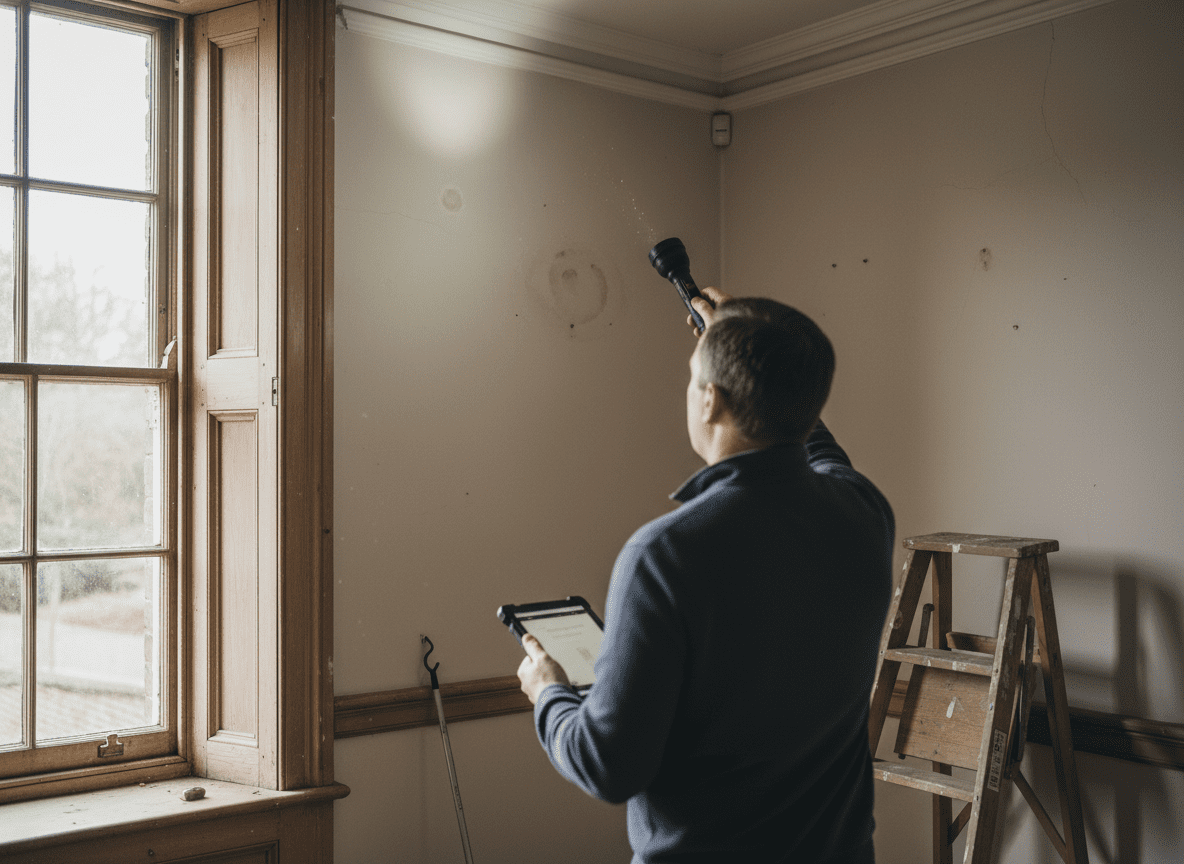
A Victorian property that’s 120 years old has almost certainly had work done to it — sometimes carefully, sometimes not. Rear extensions, loft conversions, removal of chimney breasts, and changes to the drainage layout all need scrutiny. A surveyor needs to assess whether these changes were done to a reasonable standard and whether they’ve affected the structural integrity of the original building.
Why a Level 2 Survey Often Falls Short for Older Properties
A RICS Level 2 homebuyer survey is designed for “conventionally constructed” modern properties in reasonable condition. The RICS guidance itself makes clear that Level 2 is not appropriate for older or non-standard properties where a more detailed investigation is needed.
In practice, a Level 2 surveyor will note that a property is older and flag areas of concern — but they won’t provide the depth of structural analysis that a Level 3 includes. Specifically:
- A Level 2 will comment on visible cracks; a Level 3 will analyse their likely cause, whether they’re active or historic, and what they mean structurally.
- A Level 2 will flag damp readings; a Level 3 will explore the probable cause, investigate further where accessible, and provide context on the construction type.
- A Level 2 will note the presence of a chimney stack; a Level 3 will assess the chimney breast, the flaunching, the lead flashings, and the structural implications of any alterations to it.
- A Level 2 will report what’s visible; a Level 3 will — within reason — access areas like loft spaces, cellars, and sub-floor voids to gather a more complete picture.
What a Level 3 Survey Finds That Level 2 Won’t
In a Victorian or period property, the additional analysis in a Level 3 can make a material difference to your purchase decision. Key areas where Level 3 adds value include:
Structural Analysis of Defects
Rather than just noting that cracks are present, a Level 3 surveyor will assess the type of crack, its width, its direction, and whether it suggests movement, settlement, or subsidence. They’ll provide a view on whether further investigation (e.g., a structural engineer’s report) is needed and why. This analysis can save you significant money — either by confirming the cracks are historic and benign, or by flagging a serious issue before you commit.
Investigation of Sub-Floor and Roof Spaces
A Level 3 surveyor will access the loft and, where possible, sub-floor voids — areas a Level 2 may record but not fully explore. In Victorian properties, this access is essential. Loft timbers, joists, wallplates, and chimney stack conditions can only be properly assessed by physical inspection.
Assessment of Alterations and Their Implications
A Level 3 will consider whether alterations have been carried out to an appropriate standard and what their structural implications are. A removed chimney breast without a properly supported chimney stack above is a serious structural defect — common in Victorian houses — and needs specialist attention.
Specialist Material Identification
In pre-1985 properties, a Level 3 surveyor will note the likely presence of asbestos-containing materials (ACMs) and advise on where specialist investigation is needed. This is particularly relevant in Artex-coated ceilings, floor tiles, pipe lagging, and outbuilding roofs of this era.
More Detailed Damp Investigation
In solid wall construction, damp requires careful interpretation. A Level 3 surveyor will distinguish between rising damp, penetrating damp, condensation, and the effects of previous cement repairs — each of which requires a different response. A Level 2 may flag elevated moisture readings without providing this diagnostic context.
Common Issues Found in Victorian and Edwardian Properties
These are the findings that appear most regularly in Level 3 surveys of older properties:
| Issue | Why It’s Common in Period Properties | Typical Action |
|---|---|---|
| Blocked sub-floor ventilation | Airbricks covered by raised paths, paving, or vegetation over time | Clear or reinstate airbricks; check joists for rot |
| Cement repairs to lime mortar joints | Well-intentioned but damaging past repairs | Rake out cement and repoint with appropriate lime mortar |
| Unsupported chimney breast removal | Common DIY or low-cost alteration to create more space | Structural engineer to assess; may require significant intervention |
| Lead pipes or early copper plumbing | Victorian properties often retain original pipework | Plumber to assess and replace if lead supply pipes remain |
| Poor loft conversion work | Loft conversions often done without proper structural calculations in older properties | Structural engineer to assess; building control records to check |
| Failed or absent damp-proof course | Victorian properties used slate DPCs which can crack and fail; some had no DPC at all | Specialist damp survey; consider modern DPC injection if indicated |
| Old wiring (rubber sheathed or aluminium) | Electrical installations may not have been updated for decades | EICR from qualified electrician; budget for rewire if needed |
Should You Get a Level 3 Survey?
The RICS guideline is straightforward: if the property is old, large, in poor condition, or has been significantly altered, a Level 3 is the appropriate survey. For period properties, this is the default recommendation — not an upgrade for the faint-hearted.
The additional cost of a Level 3 over a Level 2 is typically £150–£300 depending on the property size. Against the backdrop of a property purchase of £200,000 or more, this is a small investment in a significantly more comprehensive picture of what you’re buying.
For buyers who are specifically concerned about renovation, structural integrity, or planning future works, a Level 3 is not just advisable — it’s essential. The detailed, section-by-section analysis gives you a far more reliable basis for planning and budgeting what comes next.
Buying a period property in Peterborough, Cambridgeshire or Rutland? Our RICS surveyors specialise in older homes and provide thorough Level 3 building surveys with clear, plain-English analysis of what we find — so you know exactly what you’re taking on.
Frequently Asked Questions
At what age should I consider a Level 3 instead of Level 2?
The general guideline is pre-1930 for a Level 3. Some surveyors recommend it for any property pre-1945. If a property of any age has been significantly altered, extended, or is in poor condition, a Level 3 is the more appropriate choice regardless of age.
Is a Level 3 worth it for a 1950s property?
Possibly. Post-war properties (1945–1960) include a range of non-standard construction types — prefabs, no-fines concrete, system-built homes — that require specialist knowledge. If your property uses non-standard construction, a Level 3 is strongly recommended. For a conventional 1950s brick house in reasonable condition, a Level 2 may be sufficient, though your surveyor can advise based on what they observe.
Will a Level 3 survey find everything?
No survey can find everything — it remains a visual, non-invasive inspection. A Level 3 is more thorough and provides more structural analysis, but it doesn’t involve opening walls, lifting every floorboard, or specialist testing. It will, however, tell you where further investigation is needed and why.
My Victorian house has been recently renovated — do I still need a Level 3?
Yes, in most cases. Renovation conceals what’s beneath. The quality of recent renovation work is itself something a surveyor needs to assess — and what’s hidden behind new plasterboard in a Victorian house may be more significant than what’s visible.
How long does a Level 3 survey take on a period property?
Longer than a Level 2. A 3-bedroom Victorian terrace might take 3–4 hours on site; a larger detached period property could take 5 hours or more. The additional access to roof spaces, sub-floor voids, and the more detailed analysis all take time. Budget for a full morning or full day for larger properties.
Can I get a Level 3 survey in Peterborough or Cambridgeshire?
Yes. Blue Blossom Surveys provides RICS Level 3 building surveys across Peterborough, Cambridgeshire, Rutland, Oakham, Corby, and the surrounding area. We’re familiar with the local housing stock, including the Victorian and Edwardian terraces common throughout the region.
What if the Level 3 survey finds major problems?
You’re in a much stronger position than if a Level 2 had missed them. A Level 3 finding gives you clear evidence to renegotiate the price, request specialist investigation at the seller’s cost, or make an informed decision to withdraw from the purchase before exchange.



0 Comments