

Can You Negotiate House Price After a Survey? What Buyers Need to Know
You’ve had your survey back, and it’s flagged problems. Now you’re wondering: can you actually use this to negotiate the price down — or is the sale already set in stone?
The good news is yes, you can negotiate house price after a survey. In fact, a survey report is one of the most powerful tools a buyer has before exchange of contracts. Here’s how it works, what’s realistic to ask for, and how to approach the conversation without losing the sale.
Can You Negotiate House Price After a Survey?
Legally and practically, yes. Until contracts are exchanged, no one is legally committed to the sale. The agreed offer price is just that — an agreement in principle, not a binding contract. This means that if your survey reveals problems, you are within your rights to go back to the seller and renegotiate.
Sellers know this. Most estate agents will tell you that post-survey renegotiations are extremely common, especially in the current market. A seller who wants to move the sale forward will often accept a reduced price rather than start the whole process again with a new buyer who will — in all likelihood — find the same problems.
What Changes After a Survey?
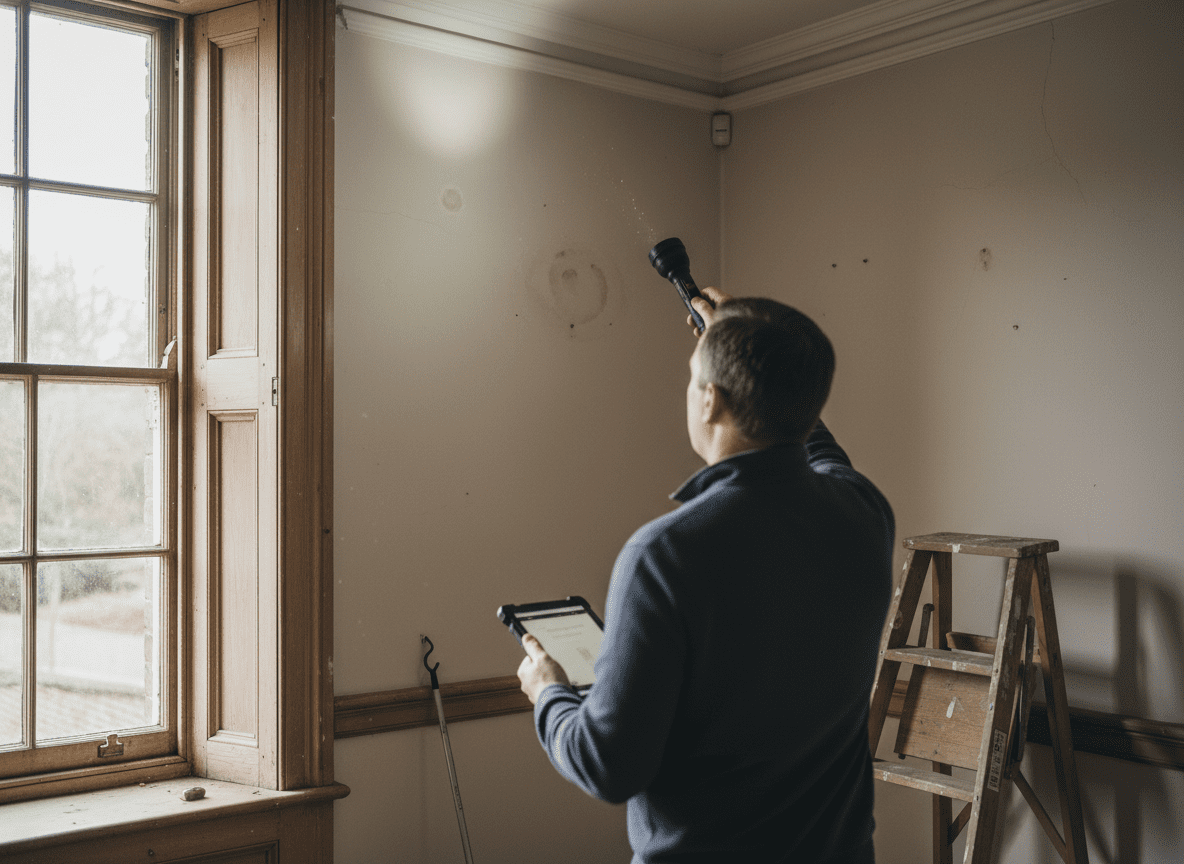
Before the survey, your offer was based on what you could see at viewing: the layout, condition on the surface, location. After the survey, you have a professional, independent assessment of what’s actually there — including what’s hidden behind walls, inside the loft, under the floors, and in the services.
If the survey finds issues that weren’t apparent at viewing, the property is objectively worth less than you agreed to pay. Renegotiating isn’t opportunistic — it’s a rational response to new information.
What Survey Findings Justify a Price Reduction?
Not every survey finding warrants going back to the seller. Minor issues — a dripping tap, a cracked tile, a loose fence panel — are part of normal wear and tear and won’t move the needle on price. But certain findings can and should prompt a renegotiation:
Major Structural Issues
- Subsidence or ground movement: This is a serious issue. Specialist structural engineers, underpinning, and monitoring can cost tens of thousands of pounds.
- Significant wall cracks: Horizontal or diagonal cracks in external walls, or cracks showing recent movement, warrant further investigation and potentially major remedial work.
- Roof structure problems: Sagging ridgeline, failing timbers, rotten rafters — all expensive to repair properly.
Damp and Moisture Problems
- Rising damp: Requires specialist treatment, a damp-proof course, and often replastering. Typical costs: £2,000–£8,000 depending on extent.
- Penetrating damp: Usually caused by failed pointing, cracked render, or guttering issues. Costs depend on the root cause but can be significant if ignored long-term.
- Dry rot: A fungal attack on timber that spreads and causes structural damage. Treatment and affected timber replacement can run to thousands.
Services in Poor Condition
- Old or failing boiler: Replacement costs £1,500–£4,000 for a new combi or system boiler. If the survey flags imminent failure, that’s a direct cost you’ll face.
- Outdated electrical systems: Rewiring a 3-bedroom house costs £3,000–£5,500. Old fuse boxes, unprotected circuits, or unsafe wiring are legitimate negotiating points.
- Drainage problems: If a CCTV drain survey (often recommended after a survey flag) reveals collapsed or blocked drainage, repairs can be significant.
Roof Condition
- Missing or broken slates/tiles: A full re-roof costs £5,000–£15,000+ depending on size and materials.
- Failed flashings: Water ingress around chimneys, dormers, or extensions leads to internal damage over time.
- Flat roof at end of life: These need regular replacement. A failing flat roof can cost £1,000–£3,000+ to replace properly.
How to Approach the Negotiation
The way you raise the negotiation matters almost as much as the substance of what you’re asking for. Done well, it moves the sale forward. Done badly, it can cause the seller to dig in or feel offended and consider other buyers.
Step 1: Get Specialist Quotes First
Before going back to the seller with a number, get actual repair quotes from qualified tradespeople. This gives you a concrete basis for your request — not a figure you’ve guessed or plucked from a search engine. A surveyor saying “the roof needs attention” isn’t the same as a roofer quoting £7,500 for a full replacement.
Step 2: Be Specific About the Issues
Reference your survey report directly. Point to the specific section, the condition rating (red/amber), and the surveyor’s recommendation. This shows you’re raising a legitimate, evidenced concern — not just fishing for a cheaper price.
Step 3: Make a Reasonable Request
There are two approaches: a price reduction equal to the repair cost, or a request for the seller to carry out repairs before completion. Either can work, but a price reduction is usually simpler — it avoids disputes about the quality of work done.
Step 4: Go Through the Estate Agent
In almost all cases, the estate agent is the right channel. They manage seller expectations on your behalf and can present your request professionally. Avoid going directly to the seller, especially if emotions are running high.
Step 5: Put It in Writing
Follow up any verbal discussion with an email confirming the specific issues raised and the adjusted price (or repairs requested). This creates a clear record and avoids later confusion.
How Much Can You Realistically Ask For?
This depends heavily on the property market in your area, how long the property has been on the market, and how motivated the seller is. As a general guide:
| Issue Found | Typical Repair Cost | Reasonable Negotiation |
|---|---|---|
| Rising damp (one room) | £2,000–£5,000 | £2,000–£3,000 off, or full repair cost quote |
| Boiler replacement needed | £2,000–£4,000 | £1,500–£3,000 off asking price |
| Partial roof re-tile | £1,500–£4,000 | £1,000–£3,000 off, or seller to repair first |
| Full re-wire | £3,000–£6,000 | £2,500–£5,000 off asking price |
| Structural investigation (subsidence flag) | £500–£1,500 for investigation alone | Negotiate further reduction once scope is confirmed |
| Multiple amber/minor issues | £500–£2,000 combined | £500–£1,500 off, presented as combined repair cost |
Be realistic. Asking for a reduction equal to 10% of the purchase price for a cracked tile will not land well. Ask for what’s proportionate to the repair cost identified — and ideally, have a quote from a specialist to back it up.
What If the Seller Won’t Budge?
Sellers sometimes refuse price reductions, especially in competitive markets or if they’ve already reduced the price. If the seller is unwilling to move, you have a few options:
Ask for Repairs Instead
Some sellers prefer to arrange repairs themselves rather than reduce the price — they may have tradespeople they trust, or feel the repair cost you quoted is too high. This is a legitimate solution if you’re confident the work will be done properly before completion.
Ask for a Credit at Completion
A legal credit (a sum retained from the completion balance) can achieve the same outcome as a price reduction without formally changing the agreed price. Your solicitor can arrange this.
Accept and Budget for Repairs Yourself
If the property is priced fairly even with the issues, and you have the funds to address them after completion, you may decide to proceed. Make sure you’ve obtained proper repair quotes first so you know exactly what you’re taking on.
Request a Retention
In some cases, your solicitor can hold back a sum (a “retention”) at completion until specified works are completed. This is more common in commercial transactions but can sometimes be used in residential sales.
When to Walk Away
Sometimes, the right answer is to withdraw from the purchase. Before exchange, you can do this without losing your deposit (though you will lose any survey or legal fees already paid). Consider walking away if:
- The survey has identified subsidence or major structural failure that the seller won’t price in
- The repair costs would make the property unaffordable even at the reduced price
- The seller refuses any negotiation despite clear, evidenced defects
- The scope of problems suggests the property has been poorly maintained throughout
- Your lender withdraws the mortgage offer based on the survey findings
Walking away is never an easy decision — especially when you’ve built an emotional attachment to a property and already spent money on surveys and legal fees. But proceeding with a property that has serious unfixed problems, at a price that doesn’t reflect them, is a far more costly mistake.
Need a clear, actionable survey report? Our RICS surveyors in Peterborough and Cambridgeshire provide plain-English findings with condition ratings and repair guidance — giving you everything you need to negotiate confidently.
Frequently Asked Questions
Can I negotiate after a survey in a seller’s market?
Yes, though it’s harder. In a competitive market, sellers have more leverage and may refuse to budge — or accept a higher offer from another buyer. Your negotiating position is strongest when the defects are serious, well-documented, and the property has been on the market for some time.
Does the seller have to agree to a price reduction?
No. The seller can refuse, and you cannot force them to reduce. However, you also cannot be forced to proceed at the original price. If you can’t reach agreement, you can withdraw from the purchase before exchange.
Will renegotiating affect my relationship with the seller?
Most sellers understand that post-survey negotiation is part of the process — especially if you’ve obtained proper quotes and presented the issues professionally. Go through the estate agent to keep things factual and unemotional.
Can I negotiate if I had a basic mortgage valuation rather than a full survey?
Technically yes, but you’ll have much less evidence to work with. A lender’s valuation is brief and often doesn’t identify the specific issues a full survey would. Without a proper report, it’s hard to make a credible case for a price reduction.
How long do I have to renegotiate before exchange?
You can raise renegotiation at any point before exchange of contracts. The sooner the better — especially if you need specialist quotes, which can take a week or two to obtain.
What if the survey was done but I didn’t get a copy?
If you commissioned an independent survey, you own the report and should have received it. If only a mortgage valuation was done, the report belongs to the lender and you may not have access to it.
Should I share the full survey report with the seller?
You don’t have to. Many buyers share specific sections relevant to the negotiation rather than the full report. This keeps the focus on the issues at hand and avoids giving the seller more information than necessary.
Can I negotiate if the seller is a developer or estate?
Yes, though the dynamics differ. Developers tend to negotiate on extras (upgrades, inclusions) rather than price. Estates (selling a deceased person’s property) are often more willing to reduce price to achieve a clean sale.
Related reading: Home Survey for a Leasehold Flat: What Buyers Need to Know.



0 Comments