

Many homebuyers assume a mortgage valuation and a home survey are the same thing. The terms sound similar, and both happen during the buying process, so it’s easy to see why the confusion exists. But these two assessments couldn’t be more different. One protects the lender. The other protects you. Understanding the difference early prevents costly surprises later and helps you move forward with clarity and confidence.
Home Survey vs Mortgage Valuation: Why They’re Not the Same
If you’re comparing “home survey vs mortgage valuation”, you’re already ahead of most buyers. Many people don’t realise that a valuation is not a survey. It doesn’t look for defects, doesn’t check condition and doesn’t tell you what the home will cost to put right. The valuation exists to reassure the lender, not the buyer.
That leaves thousands of people each year believing their home has been inspected properly when, in reality, only a brief assessment was made to confirm the property is worth the loan amount.
This guide explains the difference between valuation and survey, why relying on a valuation alone is risky, and how Level 2 and Level 3 surveys provide the protection a mortgage valuation cannot. For a shorter overview, you can also read our companion article: Mortgage valuations vs RICS surveys. If you want help choosing between survey levels, see our hub on choosing the right survey.
What a Mortgage Valuation Actually Is
Mortgage valuations are often misunderstood. They are not detailed inspections. They are not designed to protect you. They do not identify hidden issues. And they are not a substitute for a survey.
The valuation is a quick assessment commissioned by the lender to ensure the property is worth the amount being borrowed. It may be done:
- In person (brief visit).
- From the roadside.
- Through online data and photographs.
- Through automated valuation models (AVMs).
In many cases, the surveyor never enters the property. And even when they do, the inspection is short and focused on value, not condition.
What Valuations Typically Include
- Market comparison with similar homes.
- Basic check on sale price vs value.
- Confirmation the property is suitable security.
- High-level notes on obvious defects (from a value perspective only).
That’s it. No loft inspection, no damp readings, no service checks, no internal structure review and no long-form written report.
What a RICS Home Survey Actually Is
Unlike a valuation, a RICS survey is a detailed assessment of condition. It exists to protect your money, your decision and your long-term understanding of the home. The two most common options are a Level 2 survey and a Level 3 survey.
Level 2 Survey
A Level 2 Homebuyer Survey checks the main visible elements of the home and highlights defects using the traffic-light system. It suits most modern houses, flats and properties with no major alterations. You can learn more about this service on our Level 2 survey page.
Level 3 Survey
A Level 3 survey goes deeper. It explains risks in more detail, comments on materials, age, structure and repair options, and is ideal for older homes, cottages, listed buildings and heavily altered properties. More detail is available on our Level 3 Building Survey page.
Unlike valuations, both Level 2 and Level 3 surveys use structured reporting, photographs, clear findings and practical advice for buyers.
Mortgage Valuation vs Home Survey: Key Differences
The differences between valuations and surveys are significant. They are not just different documents; they serve different purposes, protect different people and offer different levels of detail.
| Assessment Type | Purpose | Who Instructs | Time on Site | Level of Detail | Typical Fee Band |
|---|---|---|---|---|---|
| Mortgage Valuation | Protect the lender’s loan | Lender | 0–20 minutes | Very limited | Often included or £0–£80 to the buyer |
| Level 2 Survey | Assess visible condition for the buyer | Buyer | 1–2 hours | Moderate detail | Varies by size and property type |
| Level 3 Survey | Detailed condition, materials, risks and defects | Buyer | Several hours | High detail | Higher due to depth and time required |
Once you see the comparison clearly, it becomes obvious why relying on a valuation alone puts buyers at risk. A valuation cannot identify damp, movement, roof issues, timber decay, outdated wiring or hidden defects. A survey can.
Why Relying on a Mortgage Valuation Can Be Risky
Many buyers believe the valuation is enough because the lender “wouldn’t approve a risky property.” Unfortunately, that’s not how valuations work. A lender only cares whether the property is worth the loan amount. Condition is only relevant if it affects value.
This means serious defects can go unnoticed for years if the buyer doesn’t commission a proper survey.
Why This Matters
- You cannot negotiate repairs based on valuation notes.
- You receive no photos or explanations of defects.
- You carry the risk, not the lender, if repairs are needed.
- You might buy a home with hidden issues that cost thousands to fix.
Surveyors often meet buyers after completion who say, “I didn’t realise the valuation wasn’t a survey.” By then, the repair bill is theirs alone.
Realistic Examples: When Relying on a Valuation Alone Causes Problems
Below are anonymised-style situations that show how important the distinction is.
Example 1: Damp Behind Fresh Paint
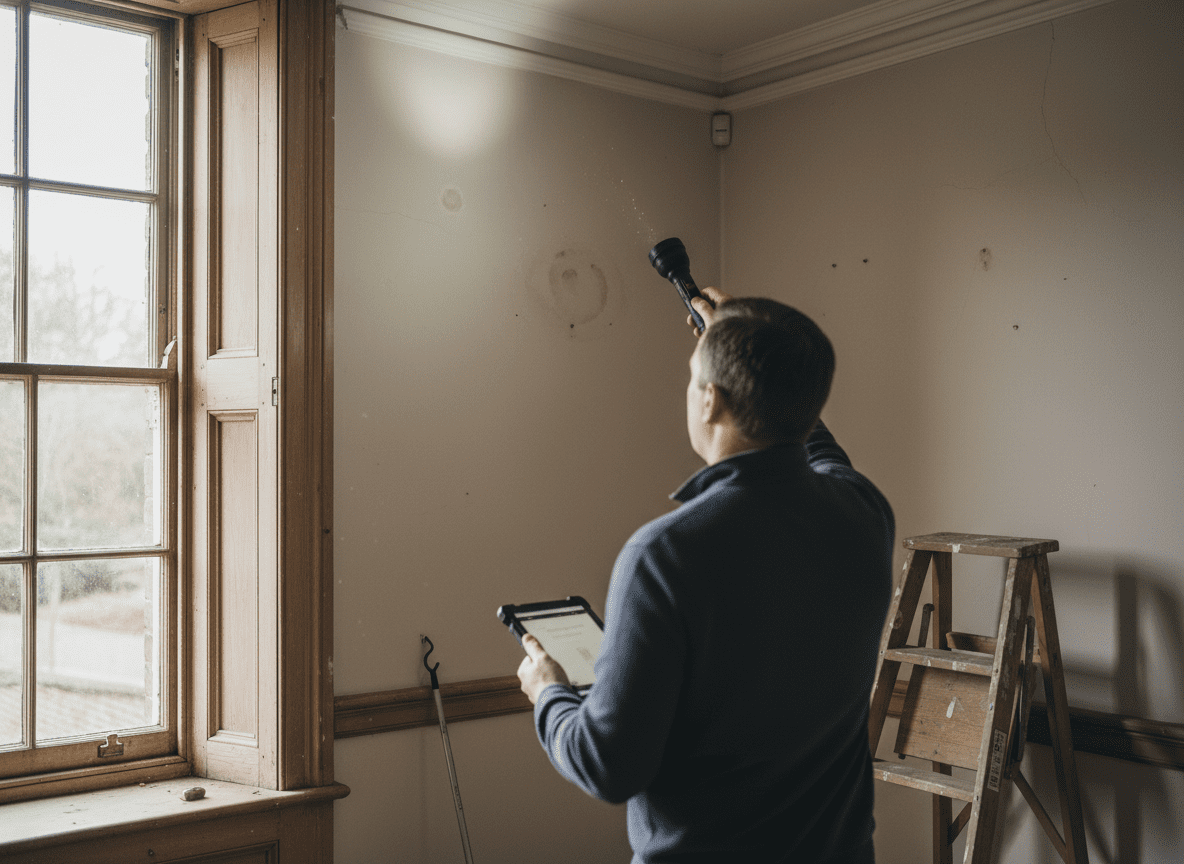
A valuation reported nothing unusual in a 1930s semi. A Level 2 survey months later (commissioned after issues appeared) found high damp readings behind newly painted walls. The cause was damaged pointing and an overflowing gutter. Repairs cost over £2,000. A Level 2 survey would have identified the problem before purchase.
Example 2: Undiscovered Roof Defects
A buyer purchased a home in good cosmetic condition, believing the valuation was sufficient. Months later, water staining appeared in the loft. A full survey at that stage revealed slipped tiles and decayed flashing that had been visible from ground level. Repairs exceeded £1,500. The valuation had never examined the roof.
Example 3: Movement Not Noted at Valuation
Another buyer relied on a valuation alone for a Victorian terrace. Interior cracks began widening after completion. A later survey found signs of past movement around a side extension. The valuation noted none of this because the surveyor never entered the property.
These cases are common. They’re also preventable with the right survey before exchange.
Situations Where a Valuation Alone Is Especially Risky
There are situations where relying solely on the valuation creates a much higher chance of unexpected costs.
- Buying an older property (built before the 1980s).
- Buying anything with visible cracks or uneven floors.
- Buying a home with extensions or structural changes.
- Buying a property that has been recently renovated.
- Buying near trees or clay-rich ground.
- Buying a home that looks freshly decorated throughout.
- Buying a rural or non-standard construction home.
- Buying a property where the seller cannot provide full documentation.
In all of these cases, a survey gives you essential clarity that a valuation simply cannot provide.
Questions to Ask Your Lender and Your Surveyor
If you want to understand what you’re actually getting, these questions help you cut through the confusion.
Ask Your Lender
- Will the valuation involve entering the property?
- How long will the valuer spend inspecting it?
- Does the valuation include checking the roof or damp?
- Can I rely on the valuation to understand the home’s condition?
Ask Your Surveyor
- Which survey level suits my property?
- How do you check for damp, timber decay and roof condition?
- Will the report include photos and clear next steps?
- Can I discuss the findings with you afterwards?
These conversations help clarify that the survey is for your benefit, while the valuation remains a lender requirement only.
If you want reassurance about survey quality, you can read our client testimonials from across the region.
FAQ: Mortgage Valuation vs Home Survey
1. Is a mortgage valuation enough?
No. It only checks the property’s value. It does not assess condition or defects.
2. Does a valuation look for damp or structural issues?
No. These are outside the scope of the valuation.
3. Will my lender tell me if the home needs repairs?
Only if those repairs affect the property’s value significantly.
4. Who benefits from the valuation?
The lender. Not the buyer.
5. What survey should I get instead?
A Level 2 survey for most modern homes, or a Level 3 for older or altered homes.
6. Will a survey help me negotiate?
Yes. Survey findings give you clear evidence to discuss price or repairs.
7. Can I ask for both a valuation and a survey?
Yes. The lender handles the valuation, and you instruct the survey separately.
8. Does a survey delay the buying process?
Not usually. It often prevents delays later by identifying problems early.
Don’t Rely on the Mortgage Valuation — Protect Your Purchase
A valuation protects the lender. A survey protects you. If you want a clear picture of the home’s condition, hidden issues and likely maintenance needs, a full survey is the safest route.
You can explore your options for a Level 2 Homebuyer Survey or a more detailed Level 3 Building Survey. If you’re unsure which level suits your property, our hub on choosing the right survey gives clear guidance.
If you’d like tailored advice for your property, share the listing link or a few basic details and we’ll recommend the most suitable survey. A good survey saves stress, protects your investment and prevents unexpected repair costs after you move in.



0 Comments