

Homes across Peterborough and the surrounding towns share a number of recurring defects. Whether you’re buying in the city centre or in nearby areas such as Bourne, Wisbech, Oakham, Stamford, Spalding, Grantham, Huntingdon or Corby, the housing stock tends to show predictable patterns of damp, movement, roof wear and ageing services. This regional guide explains the issues we encounter most often and what they mean for buyers who want to move forward with confidence.
Common Home Survey Defects in Peterborough and Nearby Areas
Buyers often search for “common survey defects Peterborough” because they want to know what to expect before committing to a home. Across Cambridgeshire and nearby counties, many homes share similar risks due to age, construction styles, renovations and weather exposure. Understanding these issues early helps you plan realistically and decide whether the property suits you.
This guide draws on real-world examples from Peterborough and surrounding towns. It also links to our hidden defects guide for buyers who want a deeper look at the issues that often appear during surveys. If you want a structured Level 2 survey designed to identify these concerns, see our Level 2 Homebuyer Survey. For older or more complex homes, our Level 3 Building Survey may offer better clarity.
Damp and Condensation Issues
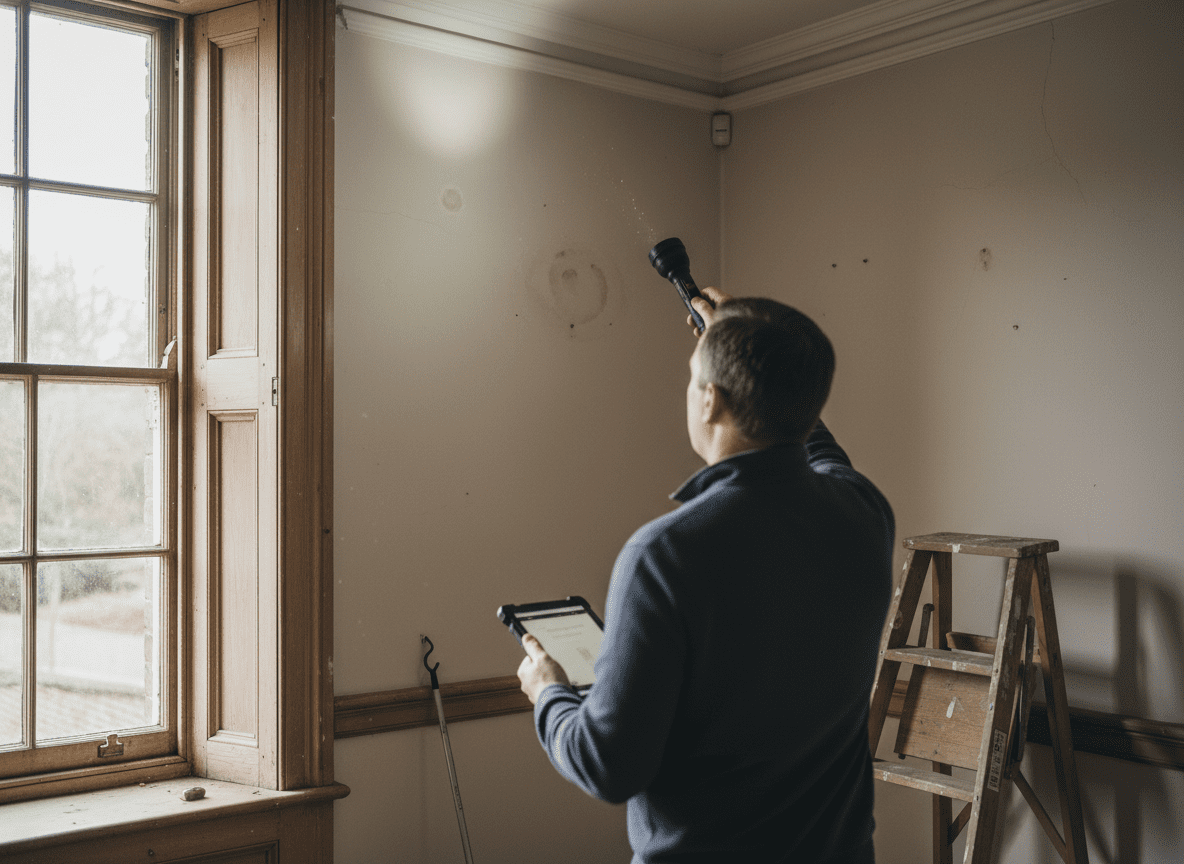
Damp is one of the most common home survey issues in Cambridgeshire. Many homes built between the 1930s and 1980s have solid walls, weak insulation and outdated ventilation. Rural villages like Stamford, Bourne and Oundle often contain older cottages with thick stone or brick walls that behave differently from modern materials.
Damp can arise from poor airflow, leaking pipework, missing pointing, failed seals, rising moisture, or cold bridging in corners and window reveals. Condensation is also widespread due to lifestyle factors and older windows.
Why It’s Common Locally
The region’s climate, older stock and a mixture of renovations carried out over decades all contribute to damp patterns. Homes in nearby areas such as Spalding and Wisbech also show higher moisture levels due to ground conditions and drainage challenges.
What It Means for Buyers
Damp does not always mean the property has a serious defect. Sometimes the fix is small and affordable. In other cases, deeper investigation is needed to avoid ongoing deterioration.
Signs Buyers May Notice
- Mould on windows or bathroom ceilings.
- Damp smells in corners or behind furniture.
- Cold patches or dark staining on walls.
- Peeling paint or lifting wallpaper.
- Condensation pooling on sills.
Roof Problems: Pitched, Flat and Chimneys
Roof defects appear frequently in pre-2000 homes across Peterborough and nearby towns. Many houses built between the 1960s and 1990s use concrete tiles that wear differently over time. Older homes in Oakham and Stamford often have natural slate or clay tiles with different failure patterns.
Pitched Roof Issues
Pitched roofs often show slipped tiles, cracked ridges, worn flashing or mortar failure. Over time, ventilation can weaken, increasing condensation in the loft. Weathering plays a large role in rural areas such as Grantham and Huntingdon.
Flat Roof Issues
Flat roofs are common on garages, extensions and older conversions. Felt and bitumen coverings degrade, leading to ponding water and poor drainage. Fibre-glass roofs also fail where joints are poorly formed.
Chimney Concerns
Chimneys in older properties show deterioration due to weather exposure. Mortar failure, loose pots, spalled bricks and weak flashings are all common findings.
Signs Buyers May Notice
- Water staining on ceilings.
- Damp patches around chimney breasts.
- Moss build-up on tiles.
- Visible gaps around lead flashing.
- Ponding water on flat roof surfaces.
Movement and Cracking
Movement is a common concern in areas with clay soil, which expands and contracts with changes in moisture. This affects many homes across Peterborough and places such as Corby, Bourne and Huntingdon.
What Movement Includes
Movement can be historic or ongoing. Most homes show some degree of past settlement, especially older terraces and semi-detached houses. Active movement, however, needs deeper evaluation and sometimes specialist review.
Why It’s Common Locally
Clay-rich ground conditions create seasonal movement. Tree roots close to foundations increase the risk, especially in suburban areas. Extensions built on different foundations also create stress points.
What It Means for Buyers
Not every crack is serious. Some are cosmetic, others require monitoring, and some need structural assessment. A Level 3 survey is often recommended for homes with visible cracking, especially older cottages or heavily altered properties. This is particularly true in older rural homes found in surveys in Oakham.
Signs Buyers May Notice
- Diagonal cracks near doors or windows.
- Cracks wider than a few millimetres.
- Doors catching or sticking.
- Uneven floors.
- Previous crack repairs visible under paint.
Timber Decay and Rot
Timber defects frequently appear in houses older than 40 years, especially in areas such as Stamford, Bourne and Grantham where period homes are common. Homes with suspended timber floors or traditional roof structures are more likely to develop rot or beetle activity.
Why It Happens
Rot appears where moisture is present for long periods. Leaks, poor ventilation and damp foundations all contribute. Woodworm and beetle infestation also occur in older timbers, especially in lofts and underfloor spaces.
What It Means for Buyers
Most timber issues are treatable but require prompt action. Severe decay may require replacing beams or joists. Level 3 surveys often include deeper comments on timber condition.
Signs Buyers May Notice
- Timber that feels soft or crumbly.
- Small round holes in loft beams.
- Warped skirting boards or door frames.
- Damp smells near timber floors.
- Movement in timber floors when walked on.
Services Concerns: Electrics, Heating and Drainage
Services defects are common across all areas of Cambridgeshire. Many homes contain older consumer units, dated plumbing and incomplete heating upgrades. Renovation projects often replace visible fittings but leave older pipework or wiring hidden behind surfaces.
Electrical Concerns
Outdated wiring, old consumer units and limited safety upgrades appear frequently in surveys. Homes with recent decoration can hide older electrical installations behind new plaster or fittings.
Heating Systems
Many homes still rely on older boilers or outdated radiator layouts. Systems may work but lack efficiency. Poor installation, incorrect flue positioning or weak circulation also appear in many reports.
Drainage Issues
Blocked drains, collapsed pipes, or missing access points occur in both old and modern homes. Properties in Wisbech and Spalding sometimes show drainage challenges due to ground conditions.
Signs Buyers May Notice
- Flickering lights or loose sockets.
- No evidence of electrical certification.
- Low water pressure.
- Slow draining sinks or baths.
- Boiler noise or irregular heating.
- Damp patches near heating pipes.
Summary Table: How Common Defects Compare
This table gives a quick overview of how surveyors typically categorise regional defects across Peterborough and nearby towns.
| Defect Type | Typical Severity | How Often We See It Locally | Likely Next Step |
|---|---|---|---|
| Damp and condensation | Low to moderate | Very common | Monitor or seek damp specialist |
| Roof problems | Moderate | Common | Repair flashing, tiles or coverings |
| Movement and cracking | Moderate to high | Common in older homes | Structural advice if active movement suspected |
| Timber decay | Low to high depending on location | Common in period homes | Treat or replace affected timbers |
| Services defects | Low to moderate | Very common | Qualified electrician or heating engineer |
Home surveys are non-invasive. Surveyors do not open walls, lift floors or carry out specialist testing. Findings are based on what can be seen and accessed safely on the day.
FAQ: Common Defects and What Surveyors Can Do
1. Are these defects serious?
Some are minor, others need early attention. The survey report explains urgency clearly.
2. Can surveyors confirm the cause of damp?
They can identify likely sources, but deeper testing may require a specialist.
3. Do all cracks mean subsidence?
No. Many cracks relate to age, shrinkage or past movement rather than structural failure.
4. Will the survey check electrics and plumbing?
These are reviewed visually. Testing must be carried out by qualified engineers.
5. Should I avoid homes with roof issues?
Not necessarily. Most roof problems are repairable, but you should understand the cost.
6. Can a Level 2 report find hidden issues?
It highlights visible concerns. For older or complex homes, a Level 3 survey provides deeper review.
7. Are timber issues expensive to fix?
Some treatments are affordable. Severe decay may need larger repairs, which a survey will flag.
8. What if the surveyor cannot access an area?
The report will clearly state limitations and suggest next steps if needed.
Book a Home Survey in Peterborough and Nearby Areas
If you want clarity before committing to a property, we offer Level 2 and Level 3 surveys across Peterborough, Wisbech, Bourne, Oakham, Stamford, Grantham, Corby and surrounding towns. You can start with our Level 2 service or choose a deeper Level 3 inspection for older homes.
Explore more examples of regional issues in our hidden defects guide. If you’d like tailored advice, share the property link or a few details and we’ll guide you toward the right level of survey.



0 Comments