

Pre-Completion Inspection: What to Expect on the Day
A pre-completion inspection is one of the most practical steps you can take when buying a new-build property. It takes place before you receive the keys and gives you the opportunity to identify issues while the developer is still responsible for putting them right.
Knowing what happens during the inspection — and what to do with the findings — helps you approach completion day with confidence.
In this guide
What Is a Pre-Completion Inspection?
A pre-completion inspection is a structured check of a newly built property, carried out before you legally complete on the purchase. It is sometimes called a new-build inspection or a pre-handover inspection.
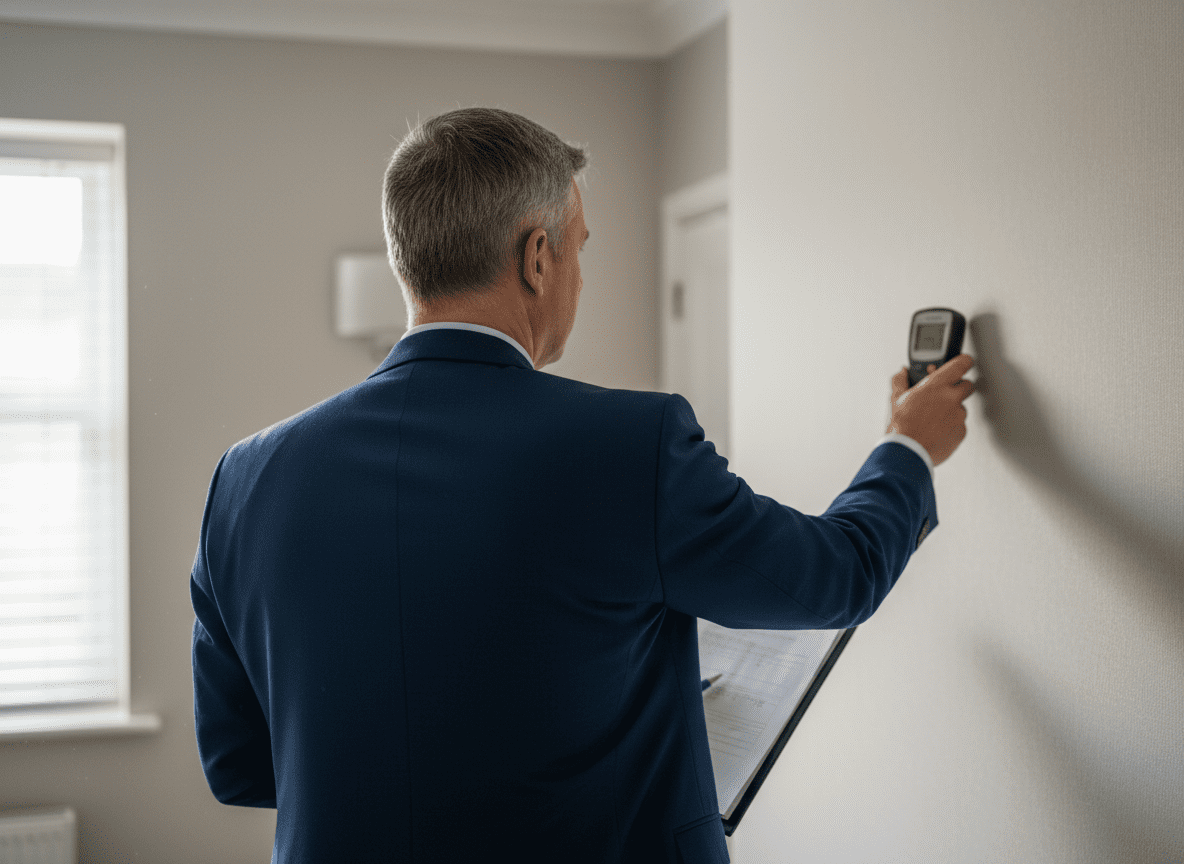
The inspection is carried out by an independent RICS-qualified surveyor — not by the developer’s site team or sales representative. That independence is important: the surveyor’s job is to identify issues on your behalf, not to confirm the developer’s own sign-off.
The result is a clear report listing any defects, incomplete items, or areas of concern, presented in a format that you can share with the developer to request remedial work before you take ownership.
Why it matters: Once you complete and receive the keys, you take on responsibility for the property. Issues discovered after completion are harder to resolve, and developers may be less responsive once you have moved in.
When Does a Pre-Completion Inspection Happen?
The inspection is carried out after the property is substantially complete but before legal completion takes place. In practice, this is usually a few days to a couple of weeks before your planned completion date.
Timing is important. The property needs to be sufficiently finished for a meaningful inspection — but if you wait until the last moment, there may not be enough time to address any issues found before completion.
It is worth booking the inspection as soon as you have a confirmed or estimated completion date, to make sure access can be arranged with the developer in good time.
Practical note: Most developers will accommodate a pre-completion inspection request if given reasonable notice. If you encounter resistance, speak to your solicitor — you are entitled to inspect a property before you are legally committed to buying it.
What Is Checked During a Pre-Completion Inspection?
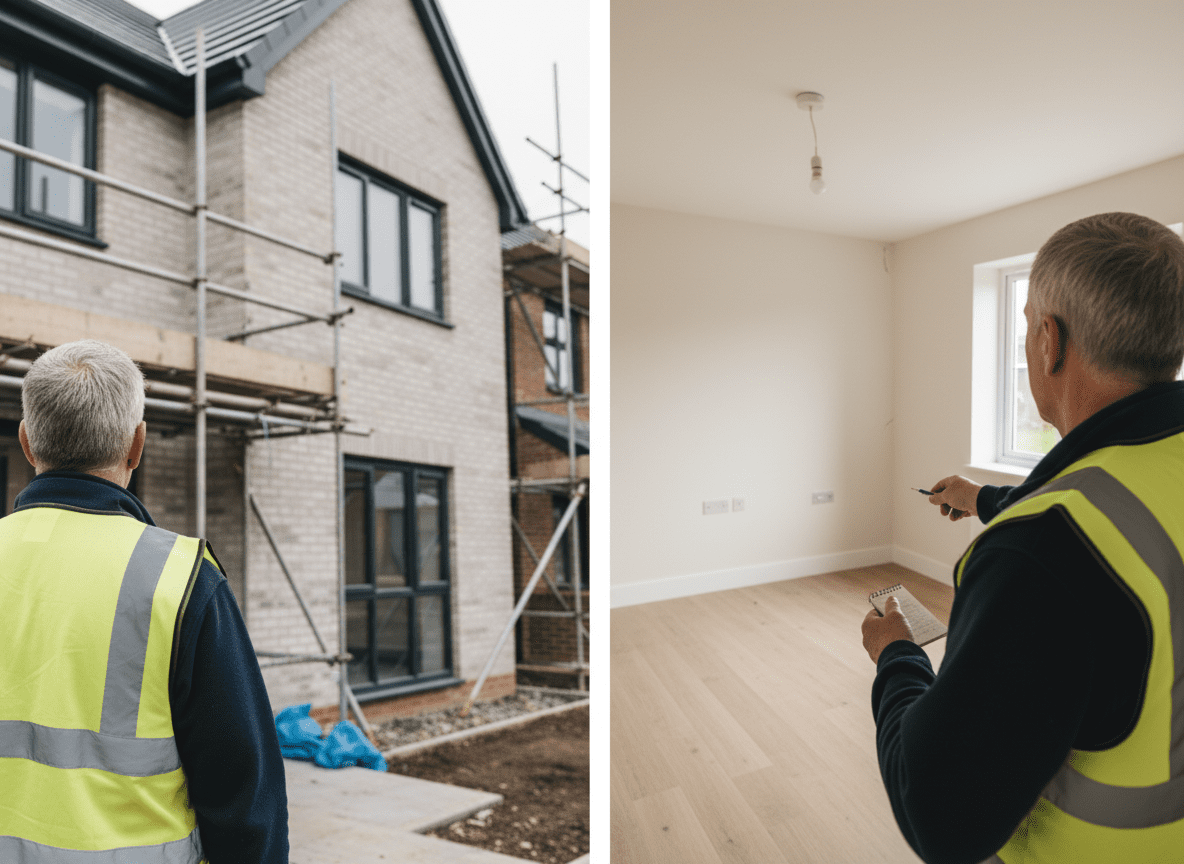
The inspection covers both the inside and outside of the property in a systematic way. The surveyor works through each area methodically, noting defects, incomplete items, and anything that does not meet the expected standard for a new build.
External checks
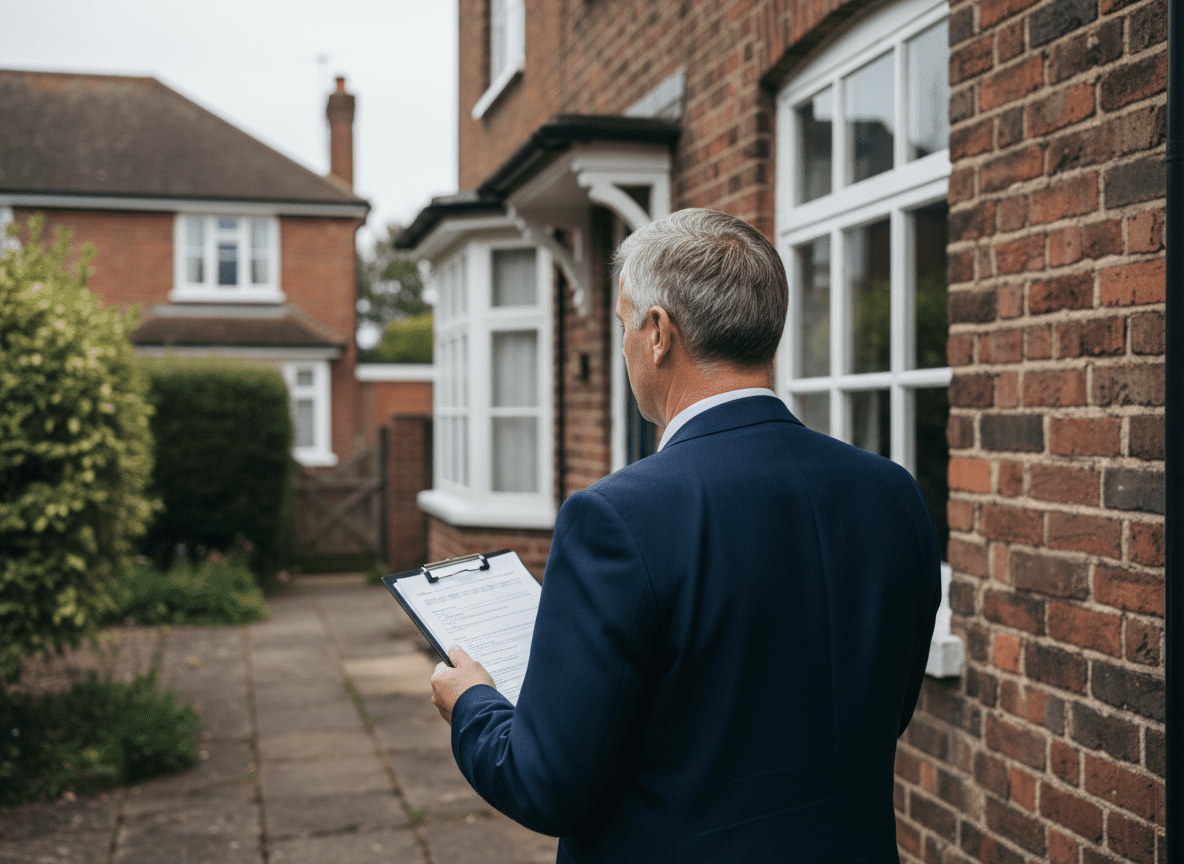
The external inspection includes:
- Brickwork and render — looking for cracks, inconsistencies, and poor pointing
- Roof tiles and ridge — checking for missing, broken, or misaligned tiles
- Guttering, fascias, and soffits — checking for secure fixing and correct fall
- Windows and external doors — assessing fit, locking mechanisms, and glazing seals
- Driveways, paths, and external drainage — looking for falls that may cause water pooling
- Garden areas, fencing, and boundary structures if included in the purchase
Internal checks — room by room
The internal inspection works through each room systematically. Common items checked include:
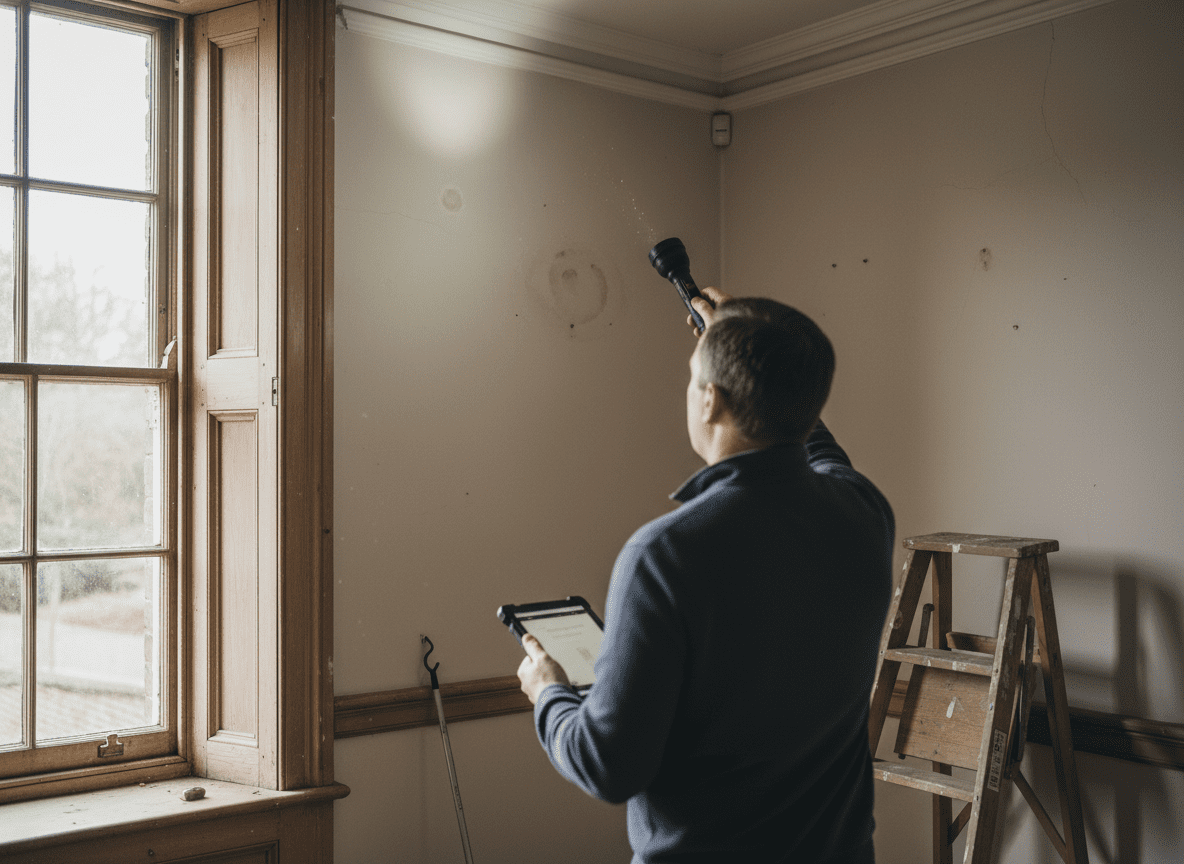
- Walls and ceilings — looking for cracking, tape joints, poor plastering, and paint finish
- Flooring — checking for squeaks, uneven boards, and poorly finished junctions
- Doors and internal joinery — assessing fit, operation, and finish of all doors and frames
- Skirting boards, architraves, and trims — checking for gaps, poor mitres, and fixings
- Staircases — checking for movement, squeaking, and balustrade security
Kitchen and bathrooms
These rooms typically generate more findings than others, as there are more components to check:
- Units, worktops, and appliances — checking fit, finish, and operation
- Tiling — looking for uneven or cracked tiles, inconsistent grout lines, and poor pointing around baths and showers
- Silicone seals — checking for completeness and finish around wet areas
- Sanitary ware — checking operation of taps, flushing, and drainage
- Extractor fans — testing operation and checking duct connections
Services and building systems
The surveyor will also note visible elements of the building’s services, including:
- Heating system — checking visible components and testing where possible
- Electrical fittings — checking socket positions, spur covers, and light fittings
- Ventilation — checking trickle vents and extractor provision
- Loft access — inspecting accessible roof spaces where safe to do so
The inspection is visual and non-destructive. The surveyor will not open up floors or walls, but will note any areas where further investigation may be warranted.
What Happens After the Inspection?
Following the inspection, you will receive a written report. This sets out the findings clearly, typically organised by area of the property, and identifies items that should be addressed before or shortly after completion.
Findings are usually categorised by priority — distinguishing between items that should be resolved before completion and those that may be acceptable to address shortly after moving in as part of the developer’s warranty process.
You can share the report with the developer to request that identified issues are rectified. Most developers have a snagging and defects process, and a clear report from an independent surveyor carries more weight than a verbal list of concerns.
Tip: Keep a copy of the report and any correspondence with the developer. This record can be useful if issues are disputed or if warranty claims become necessary later.
What If Issues Are Found?
It is quite normal for a pre-completion inspection to find a range of issues. New builds are complex projects, and minor defects and finishing items are common even in well-built developments.
The inspection report helps you prioritise what matters most. Items that affect the structural integrity, weatherproofing, or safety of the property are the most important to resolve before completion. Cosmetic issues and minor snags may be acceptable to address after moving in through the developer’s warranty process.
Your solicitor can advise on what recourse is available if significant issues are identified and the developer is unwilling to address them before completion.
In most cases, having an independent report makes it easier to have a constructive conversation with the developer’s customer care team, because the issues are documented clearly and professionally.
Do You Need a Pre-Completion Inspection?
A pre-completion inspection is not a legal requirement, but for most new-build buyers it is a worthwhile step. The cost of commissioning an independent inspection is typically modest compared to the cost of the property, and the inspection happens at a point when the developer still has a clear responsibility to put things right.
It is particularly worth considering if:
- You are buying off-plan and have not seen the finished property before agreeing to purchase
- You have heard concerns about the developer’s quality record
- The property is in a large development where individual attention to finish may be variable
- You are not familiar with what to look for yourself
- You want documented evidence of the property’s condition at the point of handover
Blue Blossom Surveys carries out pre-completion inspections for new-build buyers across Peterborough and surrounding towns including Stamford, Corby, Bourne, Spalding, Huntingdon, Oakham, Wisbech, and many other locations within a 30-mile radius.
Frequently Asked Questions
Can I be present during the inspection?
Yes, and many buyers choose to attend. Being present allows you to see any issues first-hand and ask questions as the inspection progresses. It is also a useful opportunity to familiarise yourself with the property before completion.
How long does a pre-completion inspection take?
This depends on the size and complexity of the property. A typical two or three-bedroom house may take two to three hours. A larger property or one with more extensive external areas will take longer.
What if the developer refuses access?
This is uncommon, and most developers understand that buyers have the right to inspect a property before completion. If access is refused or significantly restricted, speak to your solicitor. In most cases, a polite, formal request through the appropriate channel resolves the issue.
Will the developer fix everything on the list?
Not necessarily, and not all items need to be fixed before completion. Minor cosmetic issues are often addressed through the developer’s after-sales process in the weeks following handover. The most important items — those affecting weatherproofing, safety, or major systems — should typically be resolved before you take ownership.
Is a pre-completion inspection the same as a snagging survey?
They are closely related but not identical. A pre-completion inspection takes place before you receive the keys. A snagging survey typically takes place after you have moved in. Both serve a similar purpose — identifying defects and unfinished items in a new build — but timing affects what action can be taken as a result. See our page on post-completion surveys for more information.
Do new builds still need a survey?
New builds are not covered by a standard RICS Level 2 or Level 3 survey. Pre-completion inspections and snagging surveys are the products designed specifically for new-build buyers. Your mortgage lender will still require a valuation, but this is separate from a buyer-focused inspection.
Book a Pre-Completion Inspection
If you are buying a new-build property and would like an independent inspection before completion, we can help. Contact us to discuss the property, location, and timing — we will let you know what to expect and arrange access with the developer on your behalf.






0 Comments