

What Does a Level 2 Survey Check in Detail? Your Questions Answered
A RICS Level 2 Homebuyer Survey covers a lot of ground. The surveyor works through every accessible part of the property in a methodical order — but buyers are often unsure exactly what falls within scope and what does not.
This guide breaks down what a Level 2 survey checks element by element, including specific answers to common questions about damp, electrics, the roof, and more. If you want a broader overview of the survey process, visit our RICS Level 2 Homebuyer Survey page.
Quick answer: A Level 2 survey checks the visible and accessible condition of the structure, roof, walls, floors, windows, doors, plumbing, drainage, and electrics (visually only). It does not test systems or open up areas that are concealed behind fixed finishes.
External Checks: What the Surveyor Looks at Outside
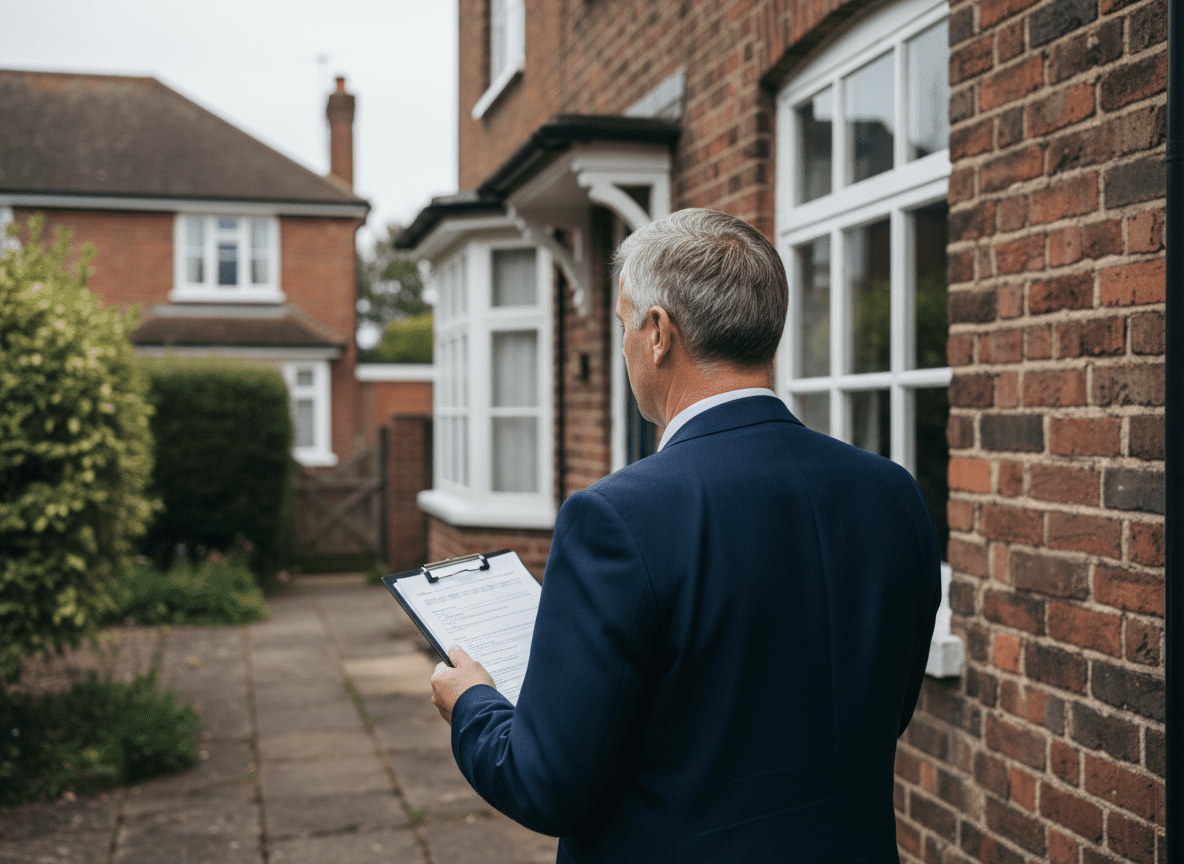
The external inspection is where many issues first become visible. Rainwater ingress, wall movement, and poor maintenance often show their earliest signs on the outside of a property before causing problems indoors.
Roof covering
The surveyor inspects the roof covering from ground level and from other safe vantage points. They look for missing, slipped, or damaged tiles or slates, signs of deterioration at ridge and hip points, and evidence of patch repairs.
They will also consider the age and condition of the roof covering as a whole. An older roof may appear intact but be near the end of its service life, which is worth knowing before you commit to a purchase.
Where there is a flat roof section — to a bay window, extension, or outbuilding — this is also included in the inspection where visible.
External walls and pointing
The surveyor assesses the condition of external walls, looking at brickwork, stonework, or render as appropriate. They check mortar joints for erosion or failure, and look for signs of movement such as cracking or distortion.
Not all cracks are serious, but the surveyor will assess the pattern and location of any cracking to identify whether it may indicate underlying structural movement. Stepped cracking through brick joints tends to be more significant than hairline surface cracking in render.
Windows, doors, and external joinery
Windows and external doors are checked for condition, fit, and signs of deterioration. The surveyor looks at frame condition, glazing type, and any evidence of water penetration around frames.
Poorly fitting doors or windows can indicate building movement or ongoing moisture exposure, so these are taken in context with the rest of the inspection.
Gutters, downpipes, and drainage
Rainwater goods are inspected for condition, alignment, and evidence of leakage. Blocked or poorly connected gutters are one of the most common causes of damp in UK homes — they are easy to overlook but often responsible for penetrating damp on external walls and around window reveals.
The surveyor also looks at how drainage connects at ground level and checks for any signs of standing water or ground saturation close to the building.
Does a Level 2 Survey Check for Damp?
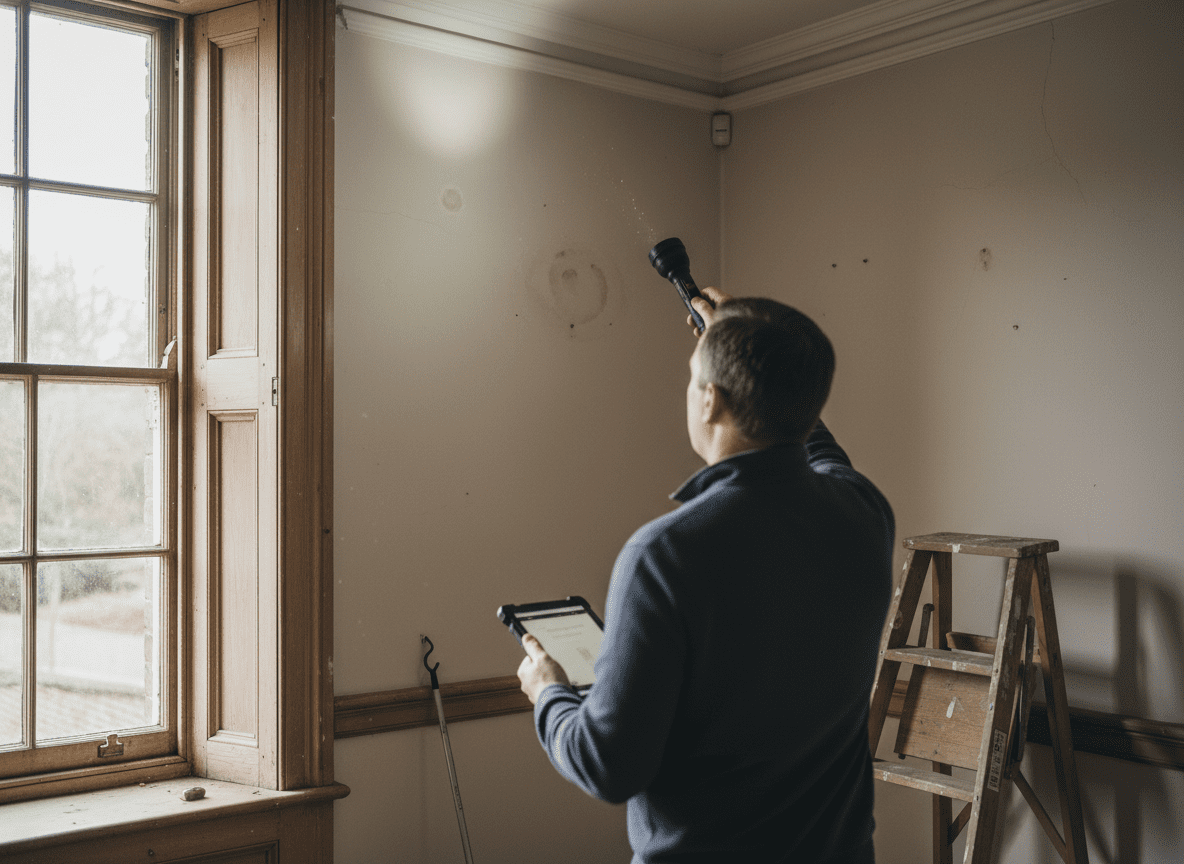
Yes — checking for damp is one of the core elements of a Level 2 survey. The surveyor uses a moisture meter alongside visual inspection to identify areas of elevated moisture in walls, floors, and ceilings.
They distinguish between three main types:
- Rising damp — moisture travelling upward through a wall from the ground, often associated with a failed or absent damp-proof course
- Penetrating damp — moisture coming through from outside, typically linked to roof defects, failed pointing, or leaking gutters
- Condensation — moisture forming on cold surfaces, usually related to ventilation and lifestyle rather than building defects
The surveyor records the likely source and extent of any damp they identify, and assigns a condition rating. Where damp is found in a hidden or inaccessible area, they may recommend further investigation by a specialist.
Important: A Level 2 survey checks for damp in all visible and accessible areas, but it cannot open up floors, remove wall finishes, or access areas behind fitted furniture. If there are signs of hidden damp, the surveyor will flag this and recommend further investigation before you exchange contracts.
Does a Level 2 Survey Check Electrics?
A Level 2 survey includes a visual inspection of the electrical installation, but it is not a full electrical test. The surveyor looks at the visible parts of the system — the consumer unit (fuse board), visible wiring, and the general age and apparent condition of the installation.
They are looking for obvious signs of age, poor condition, or installations that fall significantly outside current standards. Common things noted include:
- Old-style fuse boards without residual current device (RCD) protection
- Older wiring types such as rubber-insulated or aluminium wiring
- Single-core wiring in bathrooms or other high-risk areas
- Signs of DIY or non-professional modifications
Where the surveyor identifies concerns, they will typically recommend that the electrical installation is tested by a qualified electrician before exchange. This is a separate process to the survey, but the survey gives you a clear indication of whether that additional check is worth arranging.
The surveyor does not carry out a full electrical installation condition report (EICR), test individual circuits, or operate light switches and sockets as part of the Level 2 inspection.
Does a Level 2 Survey Check Heating and Plumbing?
The heating system is inspected visually as part of a Level 2 survey. The surveyor looks at the boiler type, its apparent age and condition, the visible pipework, and any accessible radiators or heating controls.
They do not operate the boiler, bleed radiators, or carry out a gas safety check. If the boiler appears old or there are visible signs of concern — such as signs of leakage or corrosion — the surveyor may recommend a service and inspection by a Gas Safe engineer before you proceed.
Plumbing is similarly checked visually. The surveyor looks at pipework condition in accessible areas — under sinks, in airing cupboards, and where pipes are exposed — and notes any signs of previous leaks or inadequate installation.
Water pressure and drainage flow are not tested as part of the survey. If drainage or plumbing concerns are identified, a CCTV drain survey or specialist plumber inspection may be recommended as a next step.
Does a Level 2 Survey Check the Loft and Roof Structure?
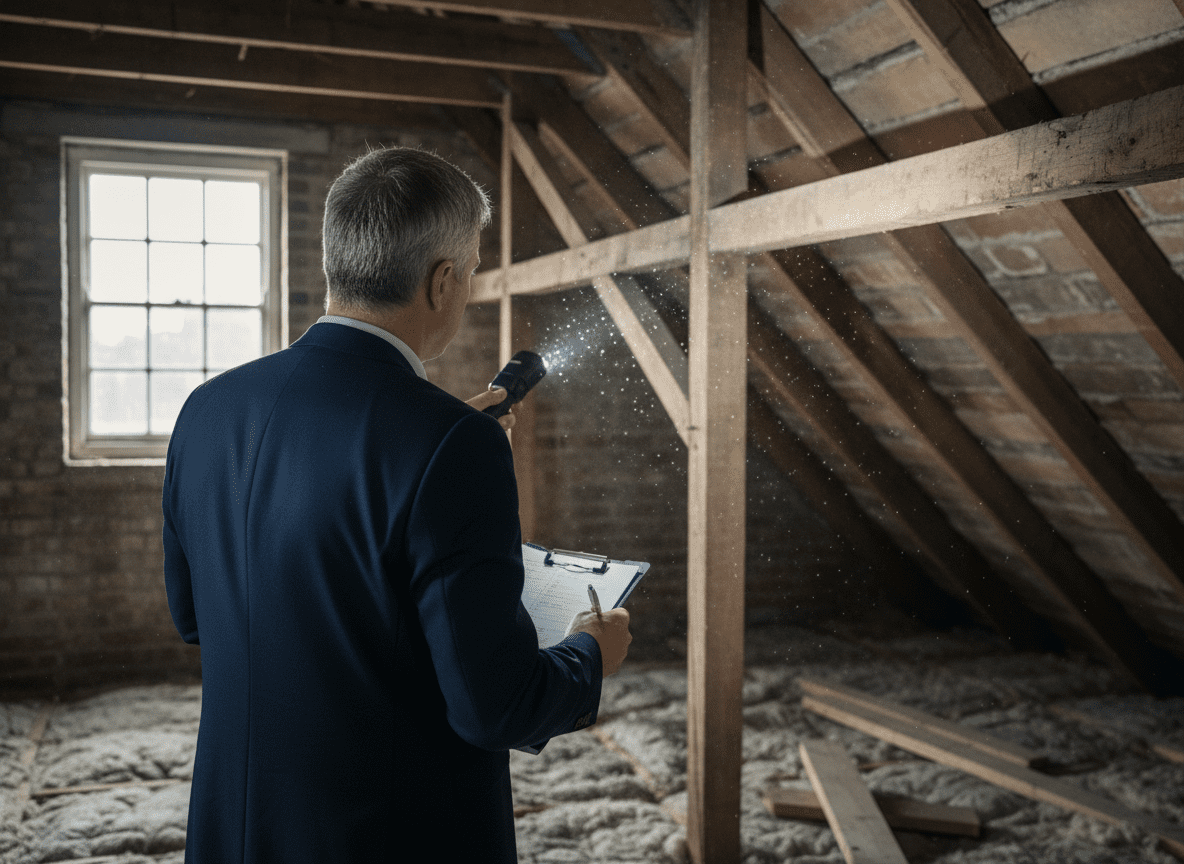
If the loft is accessible — and most are, via a hatch — the surveyor will inspect the roof structure from inside. This is one of the most informative parts of the inspection, as the underside of the roof often reveals issues that are not visible externally.
The surveyor checks:
- The condition and integrity of roof timbers — rafters, purlins, and ridge board
- Signs of deflection, distortion, or previous repairs
- Evidence of past or current water ingress — staining, rot, or damp timbers
- The condition of any felt underlay where present
- Insulation type and depth (though they do not assess its thermal performance in detail)
- Ventilation and any signs of condensation
If stored items block access to a large portion of the loft, the surveyor will note what they were unable to inspect. This is worth bearing in mind if you are planning a viewing before the survey — clearing the loft of boxes helps the surveyor do a more thorough inspection.
Internal Checks: Condition Inside the Property
Inside the property, the surveyor moves through each room systematically. They look at ceilings, walls, and floors for signs of movement, damp, cracking, or deterioration.
Key things they assess internally include:
- Ceilings — cracking, staining, or sagging that may indicate water ingress above
- Walls — cracking patterns, damp staining, and moisture readings
- Floors — condition of the visible floor surface; springiness or unevenness in timber floors where accessible
- Fireplaces and chimneys — internal condition where visible, and the chimney externally
- Bathroom and kitchen areas — signs of water damage around baths, showers, basins, and sinks; tile and sealant condition
- Cellars and basements — where accessible, for signs of damp or structural concern
The surveyor uses a condition rating system in their report — C1 (no action needed), C2 (attention recommended), and C3 (urgent or significant defects) — to help you prioritise findings.
What a Level 2 Survey Does Not Check
Understanding the limits of a Level 2 survey is just as important as knowing what it covers. The inspection is visual and non-invasive — the surveyor does not open up the fabric of the building, test hidden systems, or access concealed areas.
| Not included in a Level 2 survey | What you can do instead |
|---|---|
| Full electrical test (EICR) | Arrange separately with a qualified electrician |
| Gas safety check or boiler service | Arrange with a Gas Safe registered engineer |
| CCTV drain survey | Arrange separately, especially for older properties |
| Areas behind fitted furniture or under fixed floors | Flag to surveyor before appointment if you have concerns |
| Areas that require moving or removing to inspect | May be noted as limitations in the report |
| Outbuildings or detached structures (not always included) | Confirm scope with your surveyor in advance |
If the property you are buying is older, has undergone significant alterations, or has visible structural concerns, a RICS Level 3 Building Survey may be more appropriate. A Level 3 survey is more in-depth, covers more elements in greater detail, and gives you a fuller picture of the building’s condition.
Have questions about what a Level 2 survey covers for the property you’re buying?
We’re happy to talk through whether a Level 2 or Level 3 survey is the right choice for your situation. Contact us and we’ll help you decide before you book.
Frequently Asked Questions
Does a Level 2 survey check for damp under floors?
The surveyor will take moisture readings from floor surfaces and check accessible sub-floor voids where possible — for example, via airbricks or accessible ground floor boards. However, under solid concrete floors or beneath fitted flooring, a Level 2 survey cannot assess what lies beneath. If damp is suspected at floor level, the surveyor may recommend further investigation.
Does a Level 2 survey check the boiler?
The boiler is visually inspected for age, condition, and obvious concerns — but it is not operated, serviced, or safety checked as part of the survey. If you want confirmation the boiler is working safely, a Gas Safe engineer should carry out a separate check. Your surveyor will recommend this if they have concerns about the boiler’s condition or age.
Does a Level 2 survey check the garage?
Attached garages are typically included in a Level 2 survey. Detached garages and outbuildings may or may not be covered depending on the agreed scope — it is worth confirming this with your surveyor before the appointment.
Does a Level 2 survey check insulation?
The surveyor will note the presence and approximate depth of loft insulation during the loft inspection. They do not assess its thermal performance in detail, test cavity wall insulation, or inspect floor insulation. If energy efficiency is a priority, an independent assessor producing an Energy Performance Certificate (EPC) is a more appropriate starting point.
Can the surveyor check behind furniture or inside built-in wardrobes?
No — the inspection is visual and non-invasive. Furniture, fixtures, and stored items are not moved. If you have specific concerns about an area that is likely to be obscured, you can flag this before the survey. In some cases it may be possible for the seller to provide access, but this is not always practical.
Does a Level 2 survey check the roof from above?
The roof covering is inspected from ground level and other safe vantage points. The surveyor does not physically access the roof or walk on it. Where drone inspection is used, this would be confirmed at the time of booking. The roof structure is inspected from inside the loft where accessible.






0 Comments