

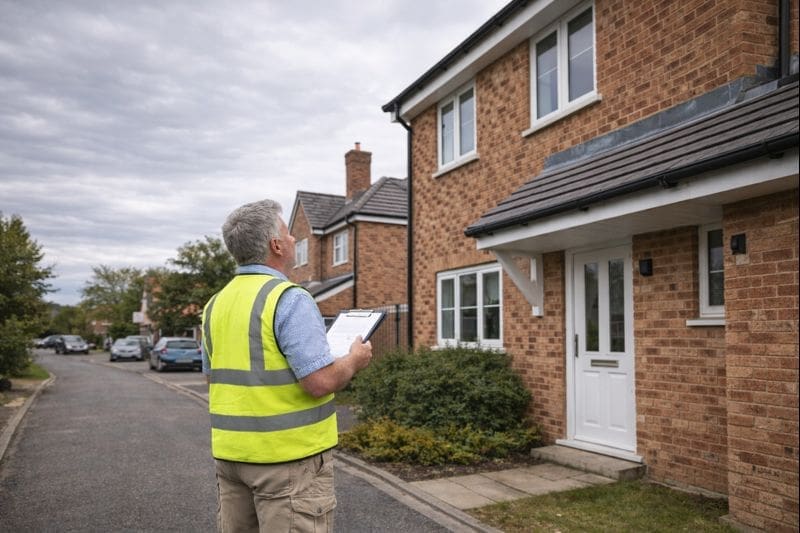
If you are buying a home, a Level 2 survey is often described as the sensible middle ground. It sits between a basic valuation and a full structural survey, offering practical insight without unnecessary complexity.
Also known as a RICS Homebuyer Survey, it is one of the most commonly booked survey types in the UK. Yet many buyers still book one without fully understanding what is included, what is not, and how to use the findings properly.
This guide explains exactly what a Level 2 home survey includes, how it is carried out, and how it helps you make confident decisions before you commit to a purchase.
Across Peterborough and surrounding areas, most Level 2 surveys follow this exact structure, allowing buyers to understand risk quickly and make informed decisions before exchange.
Level 2 Home Survey – What’s Included (At a Glance)
- Structure: Walls, floors, ceilings and overall structural movement.
- Roof: External roof coverings, chimney stacks and visible defects.
- Damp & Moisture: Signs of rising damp, penetrating damp and condensation.
- Services (visual check only): Heating, electrics and plumbing systems inspected visually, not tested.
- Windows & Doors: Condition, operation and signs of decay or failure.
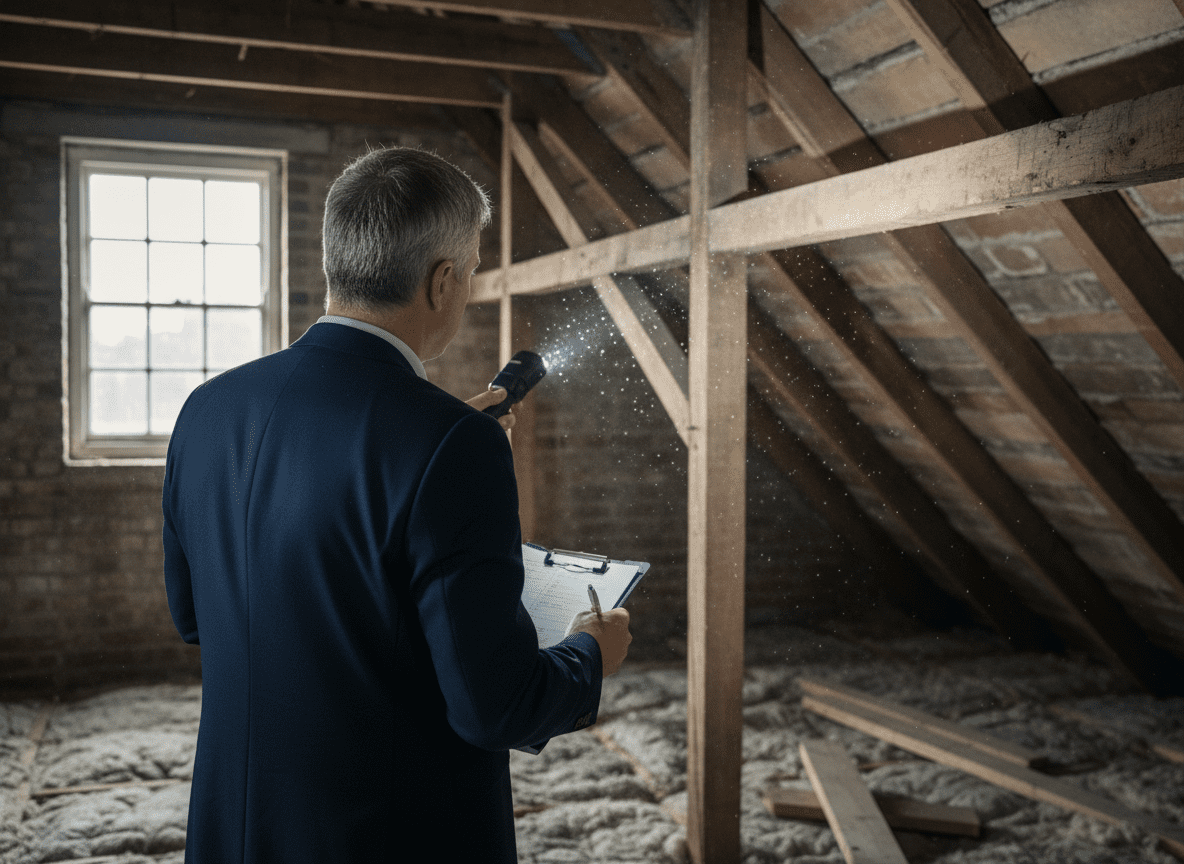
- Loft Space: Insulation levels, ventilation and visible timber condition.
- Grounds & Drainage: External paths, driveways and drainage risks.
- Condition Ratings: Clear RICS traffic-light system showing urgent, recommended and minor issues.
What Is a Level 2 Home Survey?
A Level 2 home survey is a visual inspection of a property carried out by a qualified RICS surveyor. It is designed for homes that appear to be in reasonable condition and are built using standard construction methods.

The survey focuses on identifying visible defects, assessing risks, and highlighting issues that could affect your decision to buy. It does not involve invasive testing, but it goes far beyond a lender’s valuation.
The aim is not to overwhelm you with technical language. Instead, the report explains what matters, why it matters, and what you should do next.
In short: a Level 2 survey helps you understand the condition of the home you are buying, before legal commitment, so you can proceed with clarity.
Who Is a Level 2 Survey Suitable For?
A Level 2 survey is typically recommended if:
- The property was built after around 1900
- The construction is standard, such as brick walls and tiled roofs
- The home appears to be in average or good condition
- There are no obvious signs of major alteration or structural movement
- You want reassurance without the depth or cost of a Level 3 survey
It is particularly popular with first-time buyers and those purchasing relatively modern homes who want professional reassurance without unnecessary detail.
What Buyers Commonly Misunderstand About Level 2 Surveys
Many problems arise not because buyers skip a survey, but because they misunderstand what a Level 2 survey is designed to do. Clearing up these assumptions early helps you use the report properly and avoid disappointment.

“A Level 2 survey is the same as a mortgage valuation”
This is one of the most common misconceptions. A mortgage valuation exists to protect the lender. It confirms the property is worth the loan amount, not that it is free from defects.
A Level 2 survey is commissioned by you. Its purpose is to assess condition, highlight risk, and explain issues that could affect your decision to buy.
“If the survey doesn’t flag anything serious, the house has no problems”
No survey can guarantee that a property is defect-free. A Level 2 survey reports on visible and accessible areas only.
The value lies in identifying issues that are already present or developing, not predicting every future fault. The report helps you understand risk, not eliminate it entirely.
“A Level 2 survey checks everything”
A Level 2 survey is visual and non-invasive. It does not include lifting floors, opening walls, or testing services.
Where potential issues are identified, the surveyor explains what further checks may be sensible. This staged approach avoids unnecessary cost while still protecting you.
“Newer homes don’t need a survey”
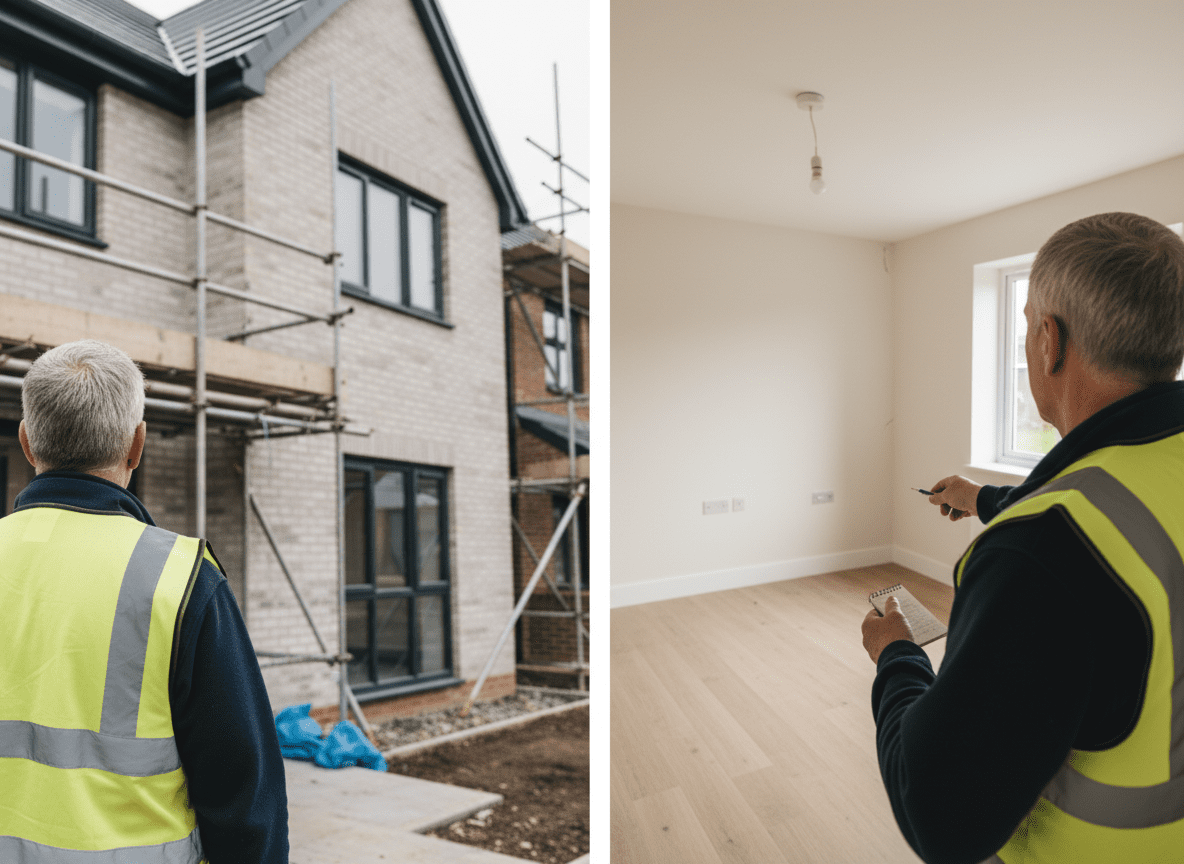
Newer properties can still suffer from workmanship issues, poor ventilation, or early signs of damp. A survey is often the first independent check a new build receives.
While some buyers opt for snagging inspections on new homes, a Level 2 survey can still be appropriate depending on age, layout, and condition.
“The survey tells me whether I should buy or not”
The survey does not make decisions for you. Instead, it gives you the information needed to make an informed choice.
Some buyers proceed after understanding repair costs. Others renegotiate or walk away. The value lies in clarity, not instruction.
What Does a Level 2 Survey Include?
A Level 2 survey follows a structured format set by RICS. The surveyor inspects all accessible and visible parts of the property and records findings clearly.
Below is a detailed breakdown of what is included.
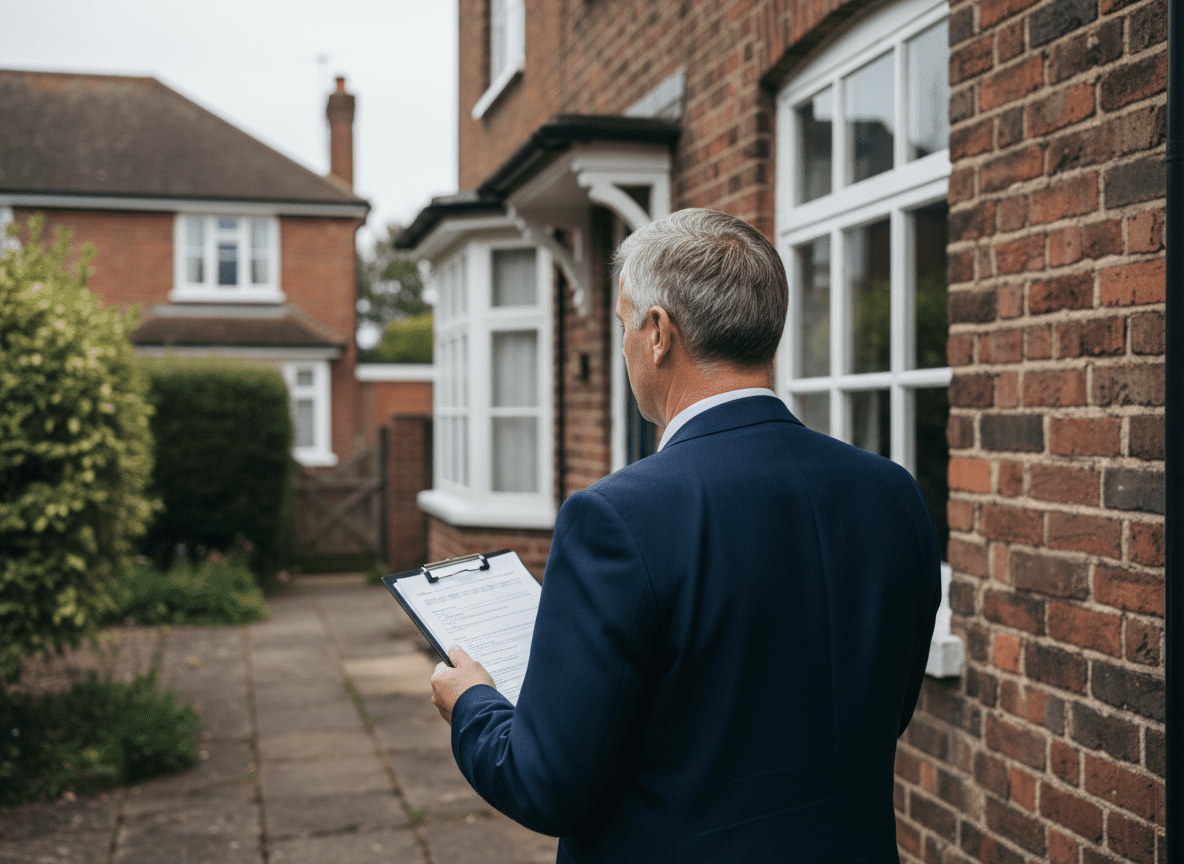
External Inspection
The external inspection sets the foundation for the rest of the report. The surveyor assesses the condition of the building envelope and highlights risks that could affect long-term maintenance.

Included:
- Roof coverings, visible slopes, and general condition
- Chimneys, flashings, and visible leadwork
- External walls, brickwork, render, cladding, and pointing
- Signs of cracking, distortion, or movement
- Gutters, downpipes, and rainwater drainage
- Windows, doors, lintels, and sills (visible condition)
- Ventilation openings and air bricks
Not included:
- Accessing high roofs with ladders
- Opening up walls or roof coverings
- Drone surveys unless arranged separately
- Invasive testing of materials
Internal Inspection
The internal inspection focuses on the areas you will live with every day. This helps identify defects that are easy to miss during viewings.

Included:
- Internal walls, ceilings, and partitions
- Floors and floor finishes
- Internal doors, frames, and staircases
- Fireplaces and chimney breasts (visible elements)
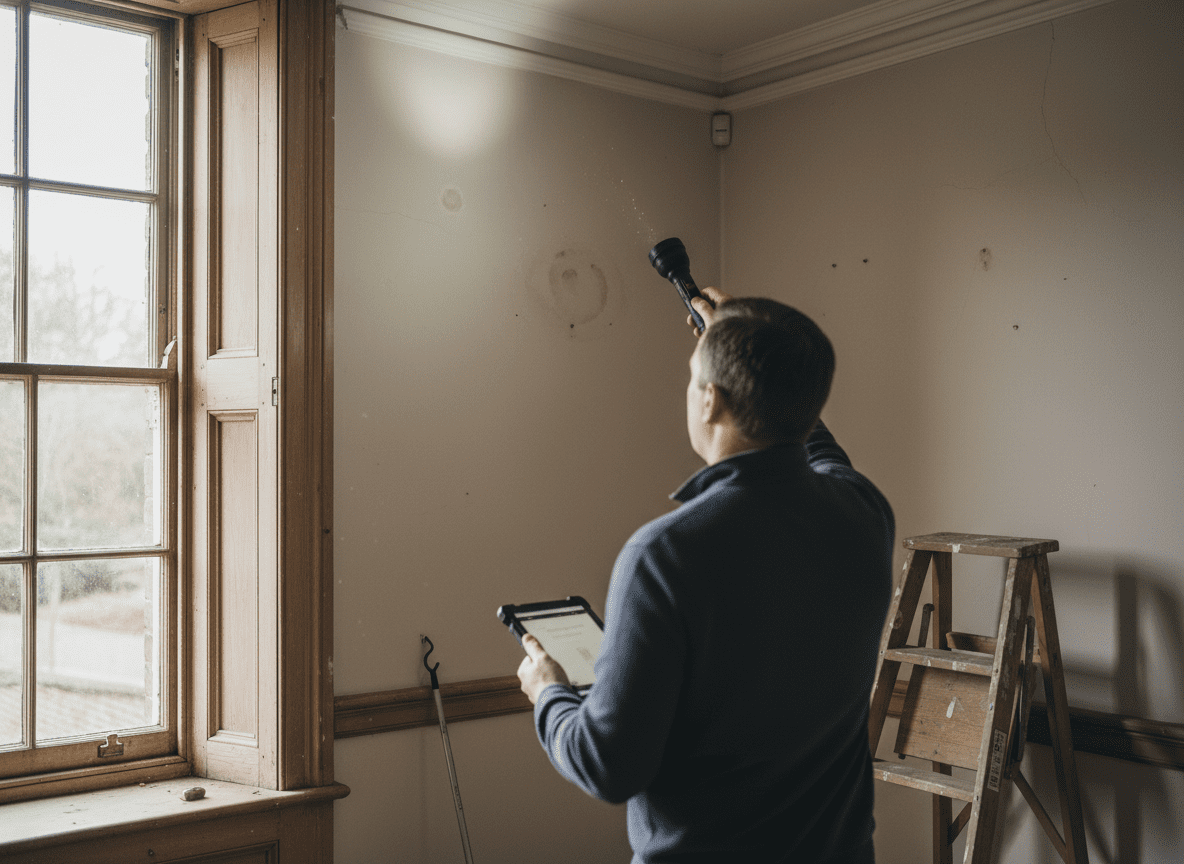
- Signs of damp, staining, or leaks
- Accessible roof spaces if safe
Not included:
- Lifting carpets or floorboards
- Moving heavy furniture
- Entering unsafe lofts
- Opening concealed voids
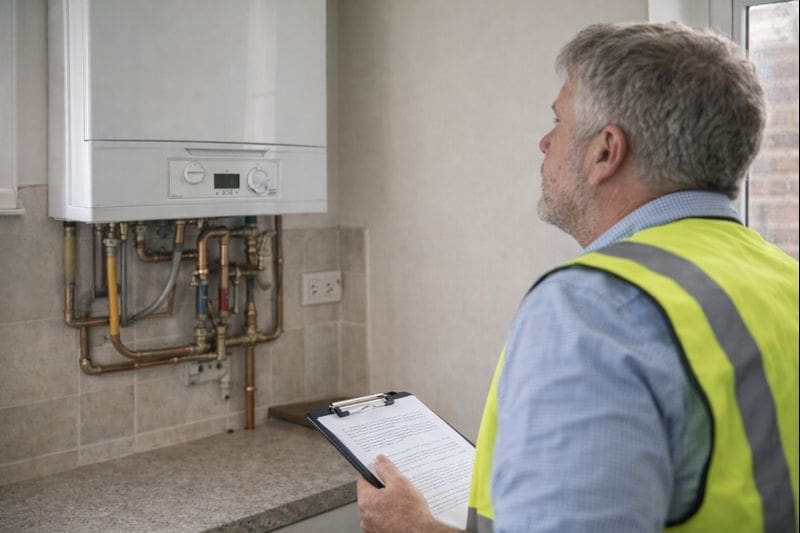
Services: Heating, Electrics, and Plumbing
Level 2 surveys include a visual review of services. They do not test systems, but they highlight visible concerns and recommend specialist checks where appropriate.
Included:
- Visible pipework, radiators, and boilers
- Consumer unit location and apparent age
- Water tanks and cylinders
- Visible drainage runs and ventilation
- Signs of leaks, corrosion, or poor installation
Not included:
- Testing electrics or gas appliances
- Pressure testing plumbing
- Running heating systems through full cycles
Damp, Movement, and Timber Issues
Damp and movement are two of the most common buyer concerns. A Level 2 survey includes targeted checks in these areas.

Damp checks include:
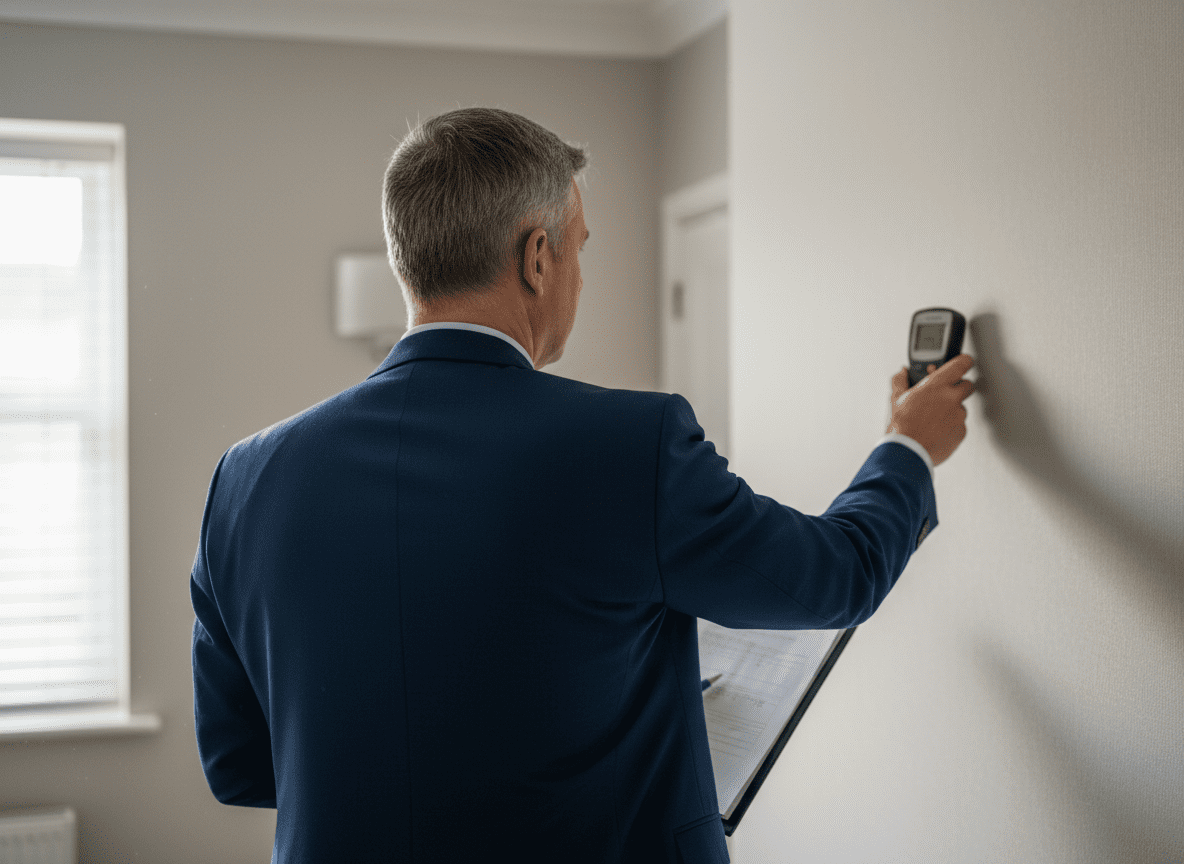
- Moisture meter readings at accessible points
- Assessment of ventilation and insulation
- Identification of condensation risk
- Signs of historic or active leaks
Movement checks include:
- Review of cracks, bulges, and distortions
- Comment on whether movement appears historic or active
- Assessment of external ground conditions
Timber checks include:
- Visible signs of decay or infestation
- Accessible loft timbers
- Visible floor structures where accessible
Grounds, Boundaries, and Outbuildings
External areas can influence maintenance costs and responsibility.
- Paths, drives, and hard standings
- Boundary walls, fences, and gates
- Garages and small outbuildings (visual only)
- Drainage covers and surface water flow
- Vegetation affecting walls or structures
Understanding the RICS Traffic-Light System
All Level 2 surveys use the RICS traffic-light rating system. This allows you to understand urgency at a glance.

| Rating | Meaning |
|---|---|
| Green | No immediate concerns. Normal maintenance. |
| Amber | Issues that need attention or monitoring. |
| Red | Serious defects requiring urgent repair or investigation. |
Red ratings often influence negotiations. Amber ratings help you plan future maintenance.
How to Use a Level 2 Survey During the Buying Process
A Level 2 survey is most valuable when you know how to act on it. The report is not just a list of defects. It is a decision-making tool that can protect your budget and reduce risk before you exchange contracts.

Review the summary first
Start with the summary and traffic-light ratings. This gives you a clear overview of any urgent issues without getting lost in detail. Red ratings deserve immediate attention. Amber ratings usually indicate medium-term maintenance rather than deal-breakers.
Understand what matters and what doesn’t
Not every defect needs to stop a purchase. Some findings are typical for the property’s age and construction. The key is understanding which issues affect safety, future cost, or mortgage suitability.
If you are unsure, ask the surveyor to explain the practical impact rather than focusing on technical wording.
Share the report with your solicitor
Your solicitor should be aware of any defects that could affect legal responsibility, boundaries, drainage, or guarantees. The survey can highlight issues that warrant further legal checks or enquiries with the seller.
Decide whether further investigations are needed
If the report recommends specialist inspections, consider whether they are proportionate. Some follow-up checks confirm risk, while others may simply provide reassurance. Your surveyor can help you prioritise.
Use the findings for negotiation
Clear survey findings often support price renegotiation or requests for repairs. Focus on documented defects with realistic cost implications rather than cosmetic issues.
Many buyers recover the cost of the survey through negotiation alone.
Plan future maintenance realistically
Even if you proceed at the agreed price, the survey helps you plan future maintenance. Knowing what will need attention in the next few years allows you to budget and prioritise work rather than being caught out later.
The goal is not to find a perfect house. It is to understand the one you are buying.
Common Issues a Level 2 Survey Often Uncovers
Even homes that look well presented can hide problems. Common findings include:
- Roof tile slippage or flashing defects
- Damp at skirting level
- Poor ventilation causing condensation
- Cracking linked to historic movement
- Blocked or poorly draining gullies
- Outdated electrical installations
Identifying these before exchange often saves buyers thousands or allows renegotiation.
Is a Level 2 Home Survey Worth It?
For most modern, standard homes, yes.
A Level 2 survey typically costs a few hundred pounds. In contrast, issues such as roof repairs, damp treatment, or rewiring can run into the thousands.
Many buyers find the survey either saves them money through negotiation or helps them avoid a purchase that carries unexpected risk.
When a Level 2 Survey Is Not Enough
You should consider a RICS Level 3 Building Survey if:
- The property is older or listed
- There have been significant extensions or alterations
- There are visible signs of movement or serious disrepair
- You plan major renovation works
What a Level 2 survey does not check
A RICS Level 2 Homebuyer Survey is a thorough visual inspection, but it is not a specialist investigation into every element of the property. Understanding its limits helps you decide whether Level 2 is the right choice, or whether the property you are buying warrants a more detailed inspection.
Full electrical testing
The surveyor will observe the electrical installation as part of the Level 2 — noting the consumer unit, visible wiring, and checking whether fittings appear to operate normally. This is not a full electrical inspection. The surveyor will not test circuits, check earth bonding, or carry out any assessment that requires specialist electrical qualifications. If the installation is older or there are visible concerns, the report may flag these and recommend a further check by a qualified electrician — but the Level 2 does not carry out that test itself.
Asbestos identification
A Level 2 survey is not an asbestos survey. The surveyor may note where asbestos-containing materials are commonly found in properties of a certain age or type, and may flag areas of concern where materials appear suspect. However, formal identification requires sampling and laboratory analysis by a licensed specialist. If the property was built before the late 1990s and you have concerns about asbestos, a separate asbestos survey is the appropriate route — not a homebuyer report.
Concealed or hidden defects
The Level 2 is a visual inspection of accessible areas. The surveyor will not lift fitted carpets or floor coverings, move furniture, open up walls, or access areas that are not readily reachable. This means defects hidden behind finishes, inside wall cavities, or beneath fixed flooring may not be picked up. The report will cover what can be seen — it cannot confirm the condition of what cannot.
Invasive structural investigation
A Level 2 does not include any invasive or destructive investigation. Where the surveyor identifies a visible concern — cracking, movement, or signs of settlement — the report will describe what was seen and may recommend further investigation by a structural engineer. The surveyor will not reach a firm conclusion about hidden structural issues without specialist investigation, and will not carry out that investigation as part of the Level 2.
When these limits matter: For a modern property in reasonable condition, these boundaries rarely cause problems. The concerns above are more likely to be relevant for older homes, properties with visible defects, heavily altered buildings, or homes where you already have specific questions about electrics or materials. In those cases, a RICS Level 3 Building Survey may be the more appropriate choice — it covers a wider range of accessible areas, goes into greater depth on defects, and is better placed to assess the kind of properties where these limitations are most relevant.
If you are unsure which level is right for your property, our choosing the right survey hub can help you decide, or you are welcome to contact us before booking.
Local Insight for Peterborough Buyers
In and around Peterborough, Level 2 surveys commonly identify damp issues in older terraces, minor roof defects, and workmanship issues in newer developments.
These are often not deal-breakers, but they are important to understand before you proceed.
Booking the Right Survey
If you want professional insight without unnecessary complexity, a Level 2 survey is often the right balance.
Level 2 Home Survey FAQs
Does a Level 2 survey include a valuation?
Most Level 2 surveys no longer include a valuation as standard. A valuation can usually be added if you request it, but many buyers rely on the lender’s valuation separately and use the survey purely for condition and risk.
Will the surveyor go into the loft?
Yes, if the loft hatch is accessible and it is safe to enter. If access is restricted or unsafe, the surveyor will comment on limitations and any risks that could not be inspected.
Does a Level 2 survey check for damp?
Yes. The survey includes visual checks and moisture meter readings at accessible points. It assesses likely causes such as condensation, ventilation issues, or external defects. It does not involve invasive damp testing.
Are electrics and the boiler tested?
No. Services are reviewed visually only. If the surveyor sees signs of age, damage, or poor installation, the report will recommend further inspection by a qualified electrician or gas engineer.
Will a Level 2 survey find structural problems?
It can identify visible signs of movement, cracking, or distortion and comment on risk. It does not include structural calculations or invasive investigation. Where serious concerns exist, further specialist advice is recommended.
Can the surveyor move furniture or lift carpets?
No. The inspection is visual only. Furniture, carpets, and fittings remain in place, which means some areas may be inaccessible. Any limitations are clearly noted in the report.
Is a Level 2 survey suitable for older properties?
Sometimes, but not always. Older properties can still be suitable if they appear well maintained and unaltered. However, many older or listed buildings benefit from a Level 3 Building Survey due to construction complexity.
How long does a Level 2 survey take?
The inspection typically takes a few hours, depending on the size and layout of the property. The written report is usually delivered within a few working days.
Can I use the survey to renegotiate the price?
Yes. Many buyers use clear survey findings to renegotiate or request repairs. The report provides independent evidence that can support discussions with the seller or estate agent.
Will the survey flag asbestos?
The survey does not test for asbestos. However, it will highlight materials that may contain asbestos and recommend specialist testing where appropriate.
Do new-build homes still need a Level 2 survey?
Newer homes can still benefit from a survey, particularly to identify workmanship issues or early defects. In some cases, a pre-completion inspection may be more appropriate.
What happens if serious issues are found?
If serious issues are identified, the report will explain the risk clearly and recommend next steps. This may include further investigation, renegotiation, or reconsidering the purchase.
Does a Level 2 survey check the drains?
A Level 2 survey includes a visual check of drainage covers, gullies, and surface water flow as part of the external inspection. It does not include drain camera surveys or pressure testing. If the surveyor identifies visible concerns — such as blocked gullies, poor fall, or signs of leakage — the report will flag this and may recommend a specialist drainage inspection.

If you're buying locally, working with a RICS surveyor in Peterborough ensures the report reflects common property types and issues seen across the area.
If the property is older, altered or showing structural concerns, a building survey for older properties may be more appropriate.
You can learn more about our RICS Level 2 Homebuyer Survey, or compare options in our Choosing the Right Survey guide.





0 Comments