

What Is a Structural Survey? A UK Buyer’s Guide to RICS Level 3
Quick answer: In UK property buying, a “structural survey” almost always refers to a RICS Level 3 Building Survey — the most thorough survey available. It assesses the whole building, not just structural elements. A separate structural engineer’s report also exists, but that is a narrower, targeted inspection commissioned to investigate a specific concern such as cracking or suspected subsidence.
If you have been searching “structural survey” while buying a home, you are far from alone. The phrase is everywhere in property conversations, yet it creates genuine confusion — and that confusion can lead buyers to book the wrong service, pay more than necessary, or miss a defect that should have been flagged.
This guide explains what the term actually means, how a RICS Level 3 Building Survey differs from a structural engineer’s report, when you genuinely need one, and what it costs in 2026.
Why “structural survey” causes so much confusion
Until RICS standardised its survey naming in 2021, a Level 3 Building Survey was widely marketed as a “Full Structural Survey.” That older term stuck. Estate agents, solicitors, and many buyers still use it today — which means the same phrase can mean two very different things depending on who is saying it.
Here is the practical distinction:
- A RICS Level 3 Building Survey is a whole-building condition report. It covers the roof, walls, floors, damp, drainage, services, and joinery. The surveyor is a RICS chartered surveyor.
- A structural engineer’s report is a targeted investigation into a specific structural element — a crack, suspected subsidence, or movement in a wall. The professional is a structural engineer (MIStructE or CEng), not a surveyor.
In most cases, buyers who ask for a “structural survey” actually need a RICS Level 3 Building Survey. The structural engineer’s report usually comes after a survey flags something that warrants closer inspection.
| Type | Who carries it out | Scope | Typical use |
|---|---|---|---|
| RICS Level 3 Building Survey | RICS chartered surveyor | Whole-building condition, defects, maintenance and repair costs | Buying an older, larger or altered property |
| Structural engineer’s report | Structural engineer (MIStructE/CEng) | Specific element — cracking, foundations, lintel or wall | Investigating a concern flagged by a RICS survey |

What a RICS Level 3 Building Survey covers
According to RICS, a Level 3 survey provides an extensive analysis of a property’s condition, including advice on defects, repairs, and maintenance options. The surveyor does not just note what is visible — they investigate why defects have occurred and advise on how to address them.
A Level 3 inspection covers:
- Roof structure, coverings, and accessible loft space
- External walls, pointing, cladding, and signs of movement
- Damp — rising, penetrating, and condensation
- Floors — springiness, settlement, and timber decay
- Internal walls, ceilings, and crack patterns
- Chimney stacks, fireplaces, and flues
- Windows, doors, and external joinery
- Visible elements of services — heating, plumbing, electrics
- Drainage condition and outfall where visible
- Extensions and alterations
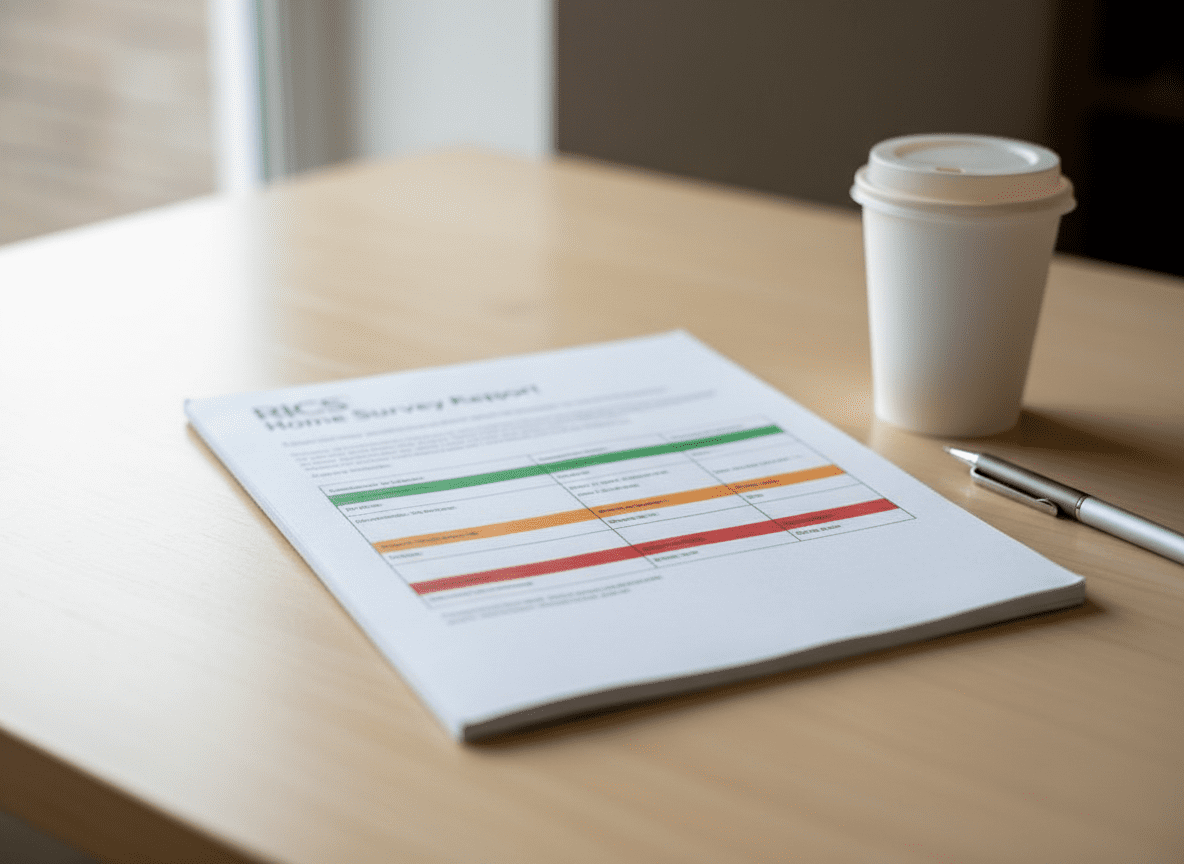
The report typically runs to 30–80 pages and uses a traffic-light grading system. Category 1 issues are routine maintenance. Category 2 defects need attention but are not urgent. Category 3 defects require urgent action or further specialist investigation. A good Level 3 report explains what each finding means in plain English — not just what was found.
The HomeOwners Alliance notes that a Level 3 survey regularly uncovers defects worth £10,000 to £50,000 in repairs — far exceeding the cost of the survey itself and providing a solid basis for renegotiation.
For a detailed breakdown of what each element covers, our guide on what a Level 3 building survey includes goes through the inspection section by section.
When should you get a structural survey?
You should seriously consider a RICS Level 3 Building Survey — or request a structural engineer’s report for a specific concern — in the following situations.
The property was built before 1919
Victorian and Edwardian homes use solid-wall construction, lime mortar, and timber that behaves very differently from modern materials. Damp, movement, and decay are more common, and a Level 2 survey may not probe them deeply enough. Our guide on period property surveys explains the specific risks in older homes.
You can see cracks, uneven floors, or doors that stick
Not all cracks are serious. But stepped cracks through brickwork joints, diagonal cracks above windows, or cracks that vary in width all warrant investigation. A Level 3 surveyor will assess the pattern, age, and likely cause — context that a mortgage valuation will never provide.
The property has been extended or altered
Additions can mask underlying problems. A Level 3 survey will check whether alterations appear structurally sound and whether building regulations approval was likely obtained. Our post on when a Level 3 survey is worth it covers this in more depth.
The construction type is non-standard
PRC homes, timber-frame builds, thatched roofs, and listed buildings all have characteristics that a standard survey may not fully capture. A Level 3 with a specialist follow-up is appropriate for these properties.
You are planning major renovation work
If you intend to remove load-bearing walls, add an extension, or change the roofline, a structural engineer’s report is essential before design work begins. Your RICS Level 3 survey should be the first step in establishing what you are working with.

How much does a structural survey cost in 2026?
A RICS Level 3 Building Survey typically costs £600–£1,500 in 2026. According to Checkatrade’s 2026 structural survey cost guide, the UK average is around £700, with prices higher in London and the South East. In Peterborough and the surrounding area — Stamford, Huntingdon, Corby, Wisbech, Grantham, and Kettering — costs tend to be more competitive.
| Property size | RICS Level 3 (approx.) | Structural engineer’s report (if needed) |
|---|---|---|
| Small flat or cottage | £600–£750 | £300–£500 |
| Average 3-bed family home | £700–£900 | £400–£700 |
| Large or complex property | £900–£1,500+ | £500–£1,000+ |
If a Level 3 survey identifies £12,000 of masonry repairs, that finding is the basis for a price renegotiation that more than covers the survey fee. On most UK purchases, the survey cost is recovered before you exchange. For comparison of all survey levels, our Level 2 vs Level 3 guide sets out the differences clearly.
What happens during the inspection
A Level 3 site visit takes three to five hours for a standard family home — longer for larger or more complex properties. The surveyor works through the building systematically, assessing each element and photographing defects.
You do not need to be present, though being available at the end of the inspection to discuss any significant findings is often useful. The written report typically arrives within five to seven working days. It will include a summary section, element-by-element findings with condition ratings, a schedule of urgent repairs, and recommendations for any specialist investigations.
The survey tells you the condition — the decision is still yours
Buyers often expect a survey to tell them whether to buy the property. It does not. A RICS Level 3 report gives you the facts about condition and risk. What you do with those facts — proceed, renegotiate, or walk away — is your call. The value is in making that decision with full information rather than discovering problems after you have moved in.
Frequently asked questions
Is a structural survey the same as a Level 3 building survey?
In most cases, yes. “Full structural survey” was the common name for what RICS now formally calls a Level 3 Building Survey. Many estate agents and solicitors still use both terms interchangeably. The only distinction is a structural engineer’s report, which is a separate, targeted service investigating a specific concern — and is different from a RICS surveyor’s inspection.
How much does a structural survey cost in the UK?
A RICS Level 3 Building Survey costs approximately £600–£1,500 in 2026, depending on property size and location. The UK average is around £700. Properties in Peterborough and the East Midlands tend to sit at the lower end of that range. If a structural engineer’s report is also needed, expect an additional £300–£700.
When do I need a structural survey?
You should seriously consider a Level 3 Building Survey for any property built before 1919, any showing cracks or movement, non-standard construction types such as timber frame or PRC, and any property you plan to significantly alter. For newer homes in standard condition, a Level 2 survey is often sufficient.
How long does a structural survey take?
The site inspection typically takes three to five hours. The written report usually arrives within five to seven working days of the visit. Some firms offer faster turnaround for an additional fee, though a thorough Level 3 report takes time to prepare accurately.
Considering a RICS Level 3 Building Survey in Peterborough or the East Midlands?
Blue Blossom Surveys cover Peterborough, Stamford, Corby, Huntingdon, Wisbech, Grantham, Kettering, and Oakham. Read about our Level 3 Building Survey or contact us for a quote.







0 Comments