

What Is a RICS Level 1 Condition Report and Do You Need One?
When you start researching property surveys, you will quickly encounter three RICS survey levels. Most buyers are familiar with the Level 2 Homebuyer Survey and the Level 3 Building Survey — but the Level 1 Condition Report is less often discussed, and for good reason.
Understanding what a Level 1 report includes, who it is designed for, and where its limits lie can help you make a more informed choice when you are deciding which survey to commission.
What is a RICS Level 1 Condition Report?
A RICS Level 1 Condition Report is the most basic form of residential property survey. It provides a concise overview of the condition of a property using a straightforward traffic light rating system, without detailed commentary on individual defects or advice on repairs.
The survey covers the main visible elements of the property — the structure, roof, walls, floors, windows, and services — and assigns each a Condition Rating.
- Condition Rating 1 — no repair is currently needed.
- Condition Rating 2 — defects that need attention but are not urgent or serious.
- Condition Rating 3 — serious defects that need to be repaired, replaced, or investigated urgently.
The report also includes a section indicating whether any legal issues are apparent that should be raised with a solicitor, and whether further specialist investigations are recommended.

What does a Level 1 report include?
The Level 1 report is structured and standardised. It provides:
- Condition ratings for the main building elements (roof, walls, floors, ceilings, windows, doors, services).
- A note on any significant risks affecting the property or its grounds.
- An indication of any legal issues the buyer’s solicitor should be made aware of.
- Recommendations for further specialist investigations where warranted.
What it does not include is detailed descriptions of individual defects, guidance on repair methods or costs, an assessment of market value, or the surveyor’s personal recommendations beyond the condition ratings themselves. The Level 1 report tells you what rating each element received — it does not explain in detail why, or what you should do about it.
Who is a Level 1 Condition Report designed for?
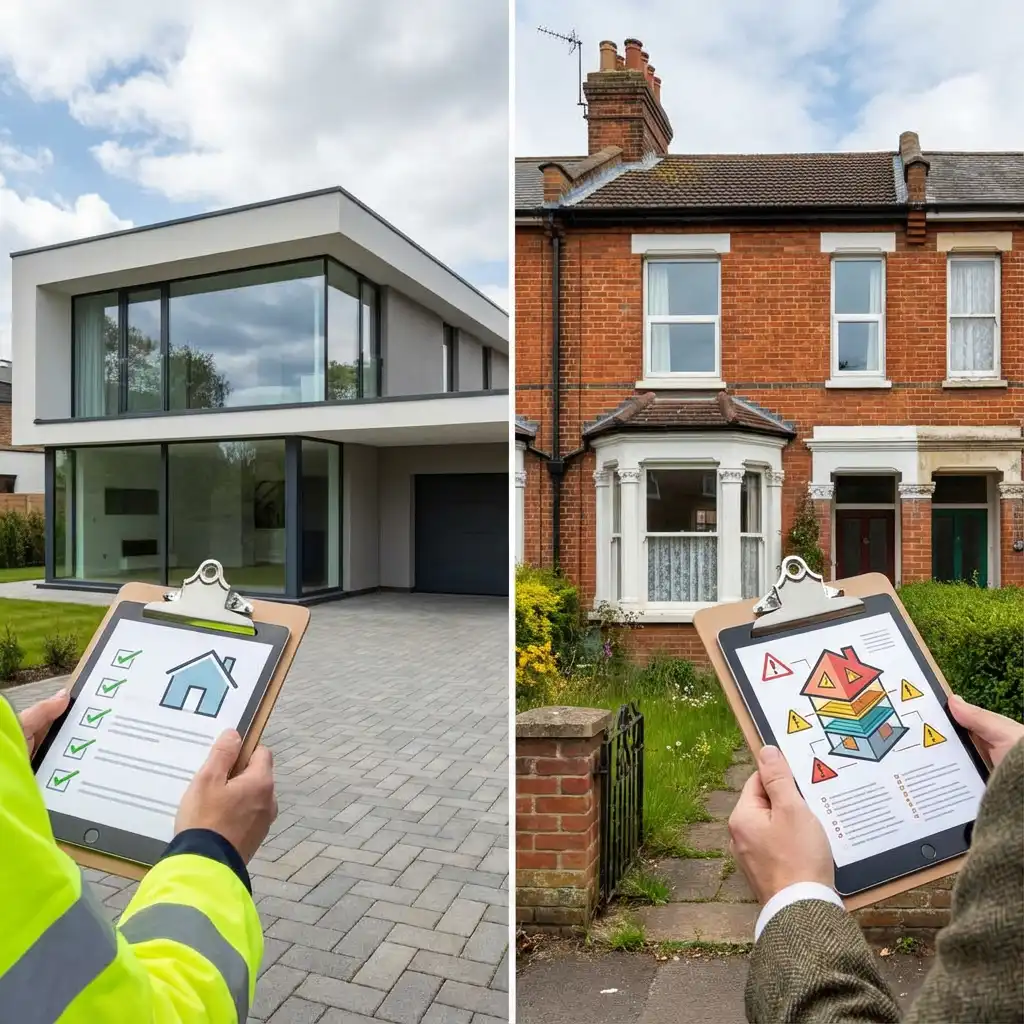
The Level 1 survey is intended for buyers of conventional modern homes in apparently good condition. Specifically, properties that are:
- Relatively new (typically post-1945 or post-1970).
- Constructed from standard modern materials and methods.
- In a condition that shows no visible signs of serious defects or past problems.
- Not significantly altered or extended.
In practice, this means a Level 1 survey is only appropriate for a narrow group of straightforward, well-maintained properties where there is very limited risk of significant hidden issues.
Important: A Level 1 report does not include the surveyor’s advice on defects, repair costs, or what action to take. If the survey returns any Condition Rating 3 items, you will need to commission further investigation to understand what you are dealing with — something a Level 2 or Level 3 survey would already have addressed within the same report.
How does Level 1 compare to Level 2 and Level 3?
| Survey level | What it includes | Best for |
|---|---|---|
| Level 1 — Condition Report | Traffic light ratings only. No repair advice or cost guidance. | Modern, conventional homes in good condition. |
| Level 2 — Homebuyer Survey | Condition ratings plus detailed commentary on defects, repair advice, and a market valuation option. | Conventional homes of any age in reasonable condition. |
| Level 3 — Building Survey | Full structural assessment, detailed analysis of defects, repair options, and cost guidance. | Older, altered, or unusual properties, or where significant issues are expected. |
The key difference between Level 1 and Level 2 is not just depth — it is usability. A Level 2 Homebuyer Survey gives you the same condition ratings as Level 1, but with the surveyor’s detailed observations and recommendations for each defect found. If the survey flags anything significant, you already have the context you need to understand it and act on it.

When a Level 1 report is unlikely to be sufficient
In practice, most buyers who think a Level 1 report will meet their needs are better served by a Level 2 survey. The situations where Level 1 is genuinely appropriate are quite specific — and the properties that meet those criteria are relatively uncommon.
You should strongly consider a higher-level survey if the property:
- Was built before 1970, particularly if it has original features or has not been modernised.
- Has been extended or significantly altered at any point.
- Shows any visible signs of damp, cracking, settlement, or repair.
- Is a flat or leasehold property (where shared structures and services add complexity).
- Has a flat or unusual roof covering.
- Is in a location with a history of subsidence, flooding, or ground movement.
If in doubt, a Level 2 survey gives you considerably more information for a modest increase in cost. The additional detail is almost always worth having.
Choosing the right survey level
The most important factor in choosing a survey is the property itself. The type, age, construction, and visible condition of the building should drive the decision — not the survey fee.
A useful starting point is to ask your surveyor before you book. At Blue Blossom Surveys, we are happy to discuss the property’s characteristics and recommend the most appropriate level of survey before you commit. This costs nothing and helps make sure you get the right information for your purchase decision.
In many cases, buyers who initially enquire about a Level 1 survey find that a Level 2 Homebuyer Survey is more suitable for the property they are buying — and in some cases, particularly for older or altered homes, a Level 3 Building Survey is the right choice.
Frequently Asked Questions
Is a Level 1 Condition Report the same as a mortgage valuation?
No. A mortgage valuation is carried out for the lender’s benefit and is not a survey. It assesses whether the property provides adequate security for the loan. A Level 1 Condition Report is a separate service commissioned by the buyer and focuses on the condition of the building.
Does a Level 1 survey include a valuation?
No. The Level 1 Condition Report does not include a market valuation. If you need a valuation as part of your survey, this is available as an optional addition to a Level 2 Homebuyer Survey.
Can I upgrade from a Level 1 to a Level 2 survey?
If you have already booked a Level 1 survey, speak to your surveyor before the inspection takes place. In most cases it is straightforward to upgrade the instruction. If the survey has already been carried out, a second inspection at a higher level would be required.
Is a Level 1 survey enough for a new build?
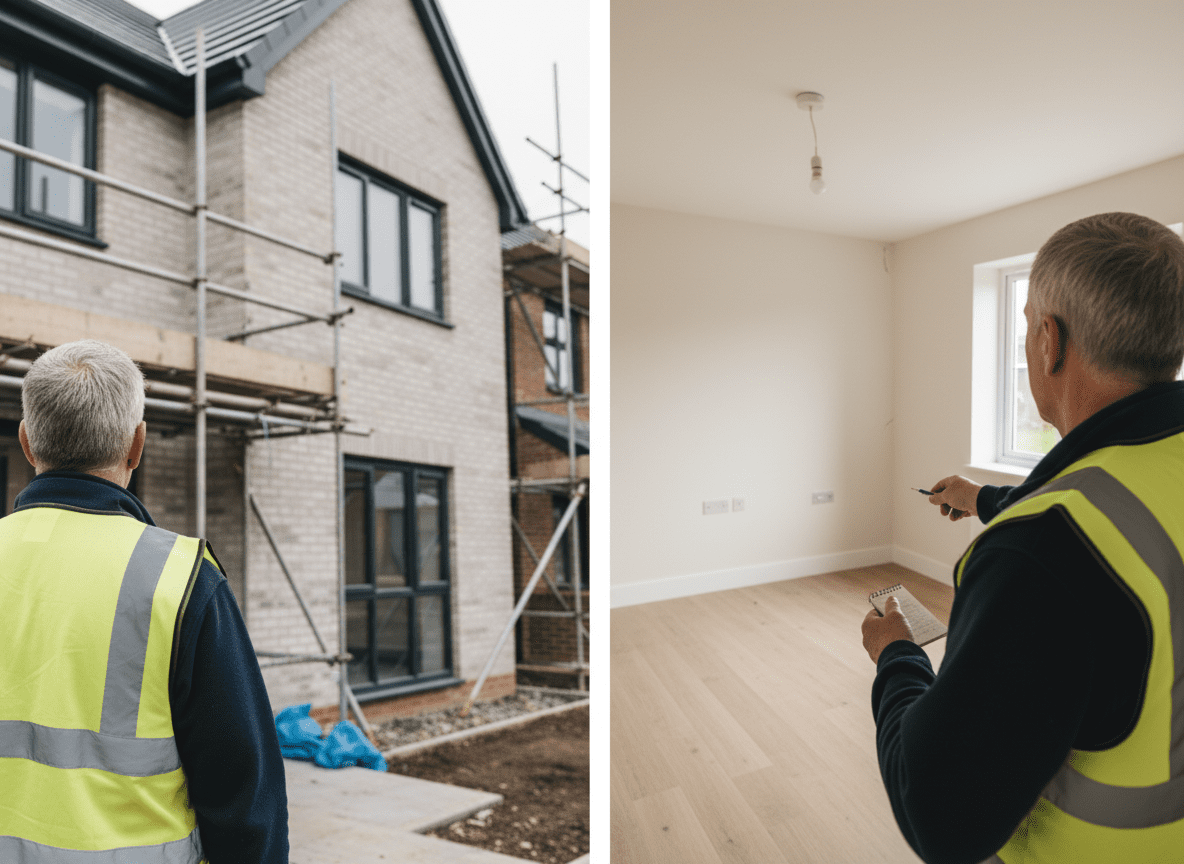
For a new build property, a pre-completion inspection or new build snagging survey is generally more appropriate than a Level 1 Condition Report. These are specifically designed to identify defects, unfinished work, and snags before handover or shortly after moving in.
Not sure which survey level is right for you? Blue Blossom Surveys is based in Peterborough and covers Cambridgeshire, Lincolnshire, Northamptonshire, and Rutland. Contact us to discuss which survey fits your property — no commitment required.




0 Comments