

Should You Get a Survey on a New Build?
Many buyers assume a new build should be the safest purchase they can make. The roof is new. The boiler is new. The walls are straight. The paint looks fresh. On the surface, it feels like the kind of property that should not need an independent survey.
That is exactly why this question comes up so often. If everything is new, do you really need a survey on a new build in the UK?
The practical answer is yes, in many cases it is still worth getting an independent inspection. Not because every new build is badly built, but because new does not mean defect-free. Fast build programmes, multiple subcontractors, rushed handovers, and small finishing mistakes can leave buyers moving into homes with issues that should have been picked up earlier.
This guide explains when a survey or inspection on a new build makes sense, what it can uncover, when to book it, and what you risk if you rely only on the developer’s handover process.
Quick Answer
If you are asking, do I need a survey on a new build UK, the safest answer is this: an independent inspection is often worth it, especially before completion. New build homes can still have defects, incomplete works, poor finishing, drainage issues, insulation gaps, and installation problems. A pre-completion inspection or snagging survey gives you an independent view before issues become your problem to chase.
Do You Need a Survey on a New Build?
You usually do not need a full traditional survey on a new build in the same way you might on an older property, but you often do need an independent inspection of some sort.
That distinction matters.
When buyers hear the word survey, they often picture an older home with damp, movement, roof spread, or structural concerns. A newly built house is a different type of risk. The issue is less about age-related wear and more about workmanship, incomplete items, poor finishing, defects hidden by a fresh appearance, or details that were signed off too quickly.
So the better question is not just whether you need a survey. It is what sort of inspection you need, and when.
For many new build buyers, the most useful option is an inspection aimed at snagging and completion quality rather than a broad condition survey designed for older homes. That is why pages like why pre-completion inspections save you money and stress matter so much in the buying process. Timing changes what you can still get fixed.
In plain terms, a new build can still have:
- poorly fitted doors and windows
- cracked sealant or incomplete finishes
- uneven floors or poor plastering
- insulation or ventilation issues
- incorrect drainage falls outside
- gaps around pipe penetrations or service points
- snagging items that seem small on their own but add up quickly
None of that is unusual. New build homes are assembled by many trades over a tight timeline. Even on reputable developments, defects can slip through.
Why New Builds Still Have Problems
Buyers are often surprised when a brand new house turns out to need an inspection at all. The assumption is understandable. If no one has lived there before, what could really be wrong?
The answer is simple. A home can be newly built and still imperfect because the building process is not a single neat task. It is a chain of separate jobs carried out by different teams, often under time pressure. One trade finishes, another follows, then a snagging team may revisit items, then a site manager signs off, then a buyer views a polished version of the property. That is a lot of stages for small defects to pass through.
Speed of construction creates pressure
Developers work to build programmes, handover targets, and plot completion dates. That does not automatically mean poor standards, but it does mean there is pressure. A rushed final week can be where details get missed. Silicone finishing, trim work, external drainage falls, loft insulation, and final adjustments are exactly the sort of tasks that suffer when time is tight.
Different trades affect the same areas
A bathroom is a good example. Plumbing, tiling, sealant work, ventilation, decoration, flooring, and carpentry all overlap there. If one part is slightly off, the rest may look fine until you start living in the house. It might be a poorly sealed bath edge, a fan duct issue, or a slight fall problem near the shower area. None of that is obvious on a quick viewing.
Fresh finishes can hide underlying issues
New paint, clean carpets, and unused fittings can create a strong impression of quality. Sometimes that impression is deserved. Sometimes it hides a rushed finish. A clean wall can still have uneven plaster behind it. A new window can still close badly. A freshly turfed garden can still mask drainage or grading issues.
Buyers often assume the developer has checked everything already
Developers do carry out their own inspections, and there may be warranty-related checks too. But those are not the same as a buyer instructing an independent surveyor to inspect the property on their behalf. That difference matters. The developer’s process is part of the build and handover system. Your inspection is there to protect your interests only.
If you want a feel for the sort of defects that do turn up, the site already has useful context in top 10 issues found in Peterborough new builds and how we address them. That page helps show the reality behind the “it’s brand new, so it must be fine” assumption.
What a New Build Inspection Actually Covers
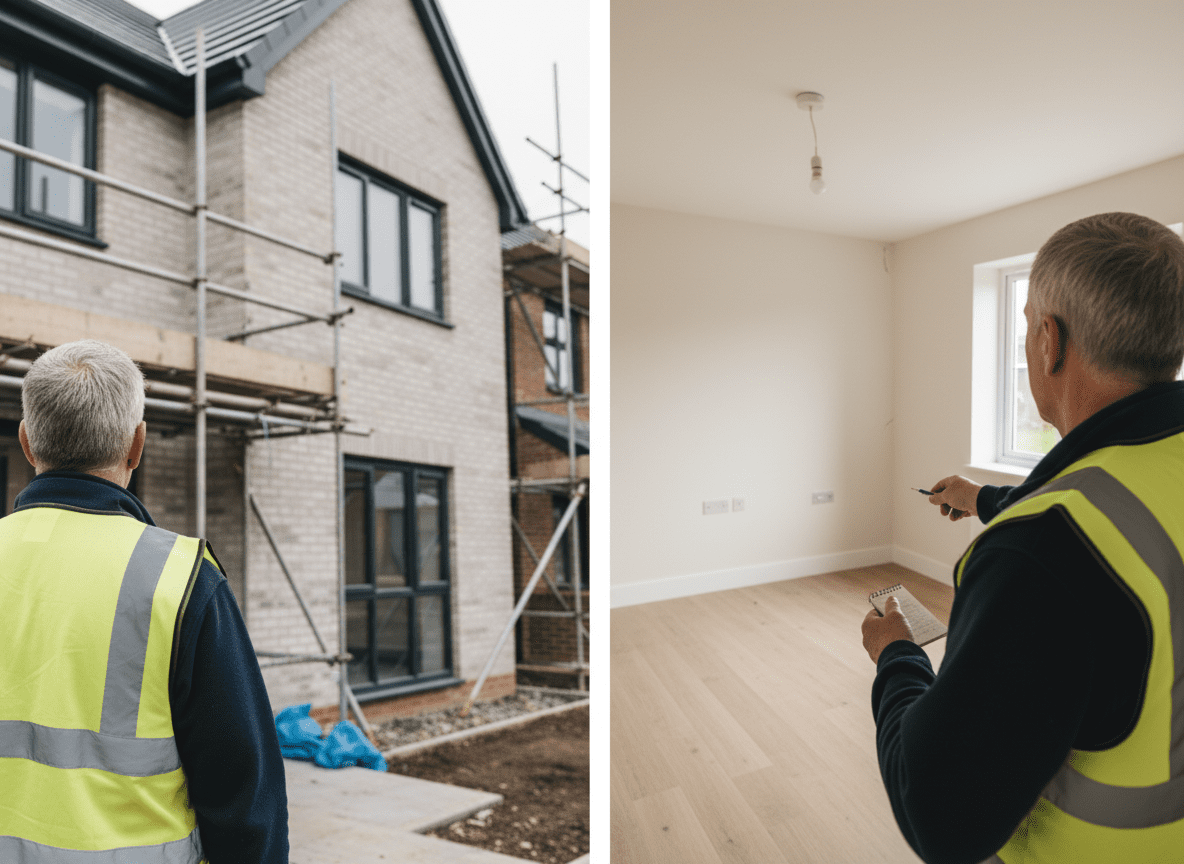
The right inspection on a new build is usually focused on defects, workmanship, completion quality, and whether the home is truly ready to hand over.
In practical terms, that can include checks around:
- walls, ceilings, and visible finishes
- joinery, skirting, architraves, and internal doors
- window and door operation
- sealant and finishing quality in kitchens and bathrooms
- fittings, fixtures, and visible installation standards
- external brickwork, render, paving, and drainage falls
- garage or external store finishes where relevant
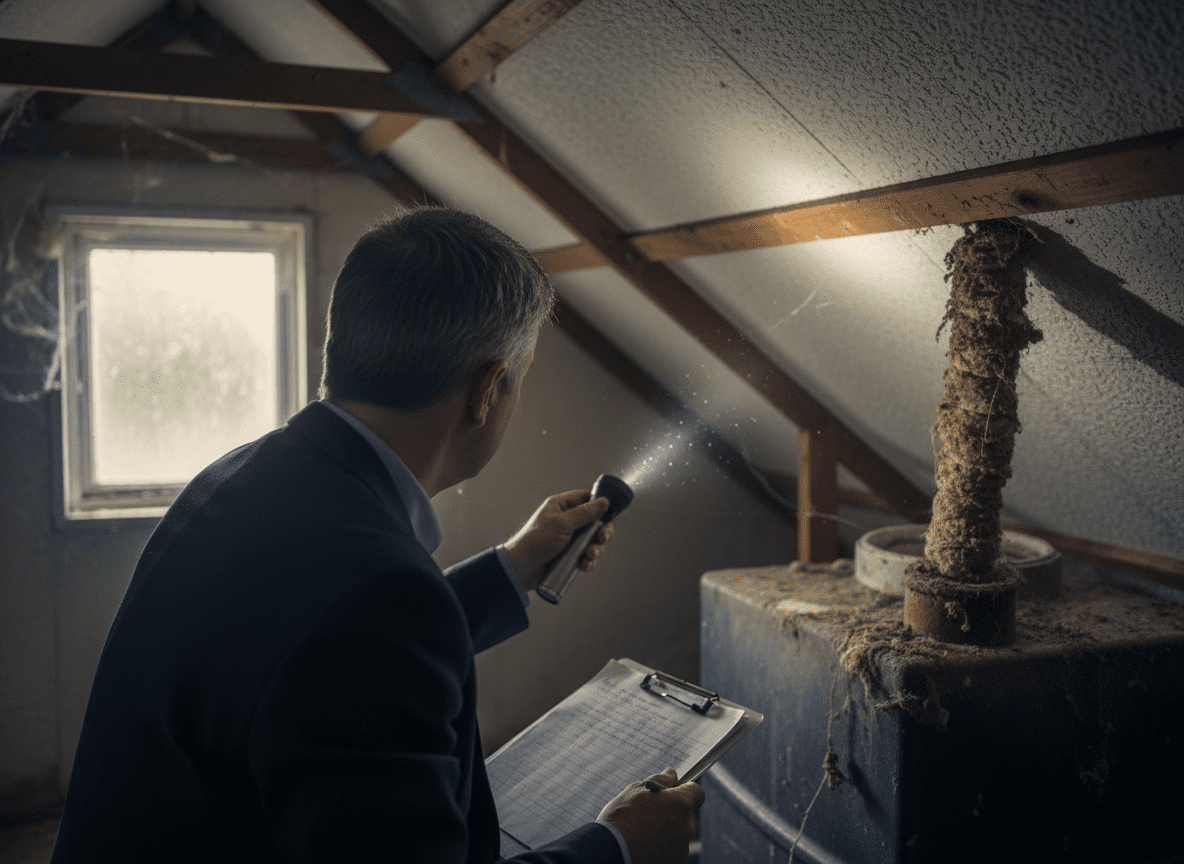
- loft access, insulation visibility, and obvious defects if accessible
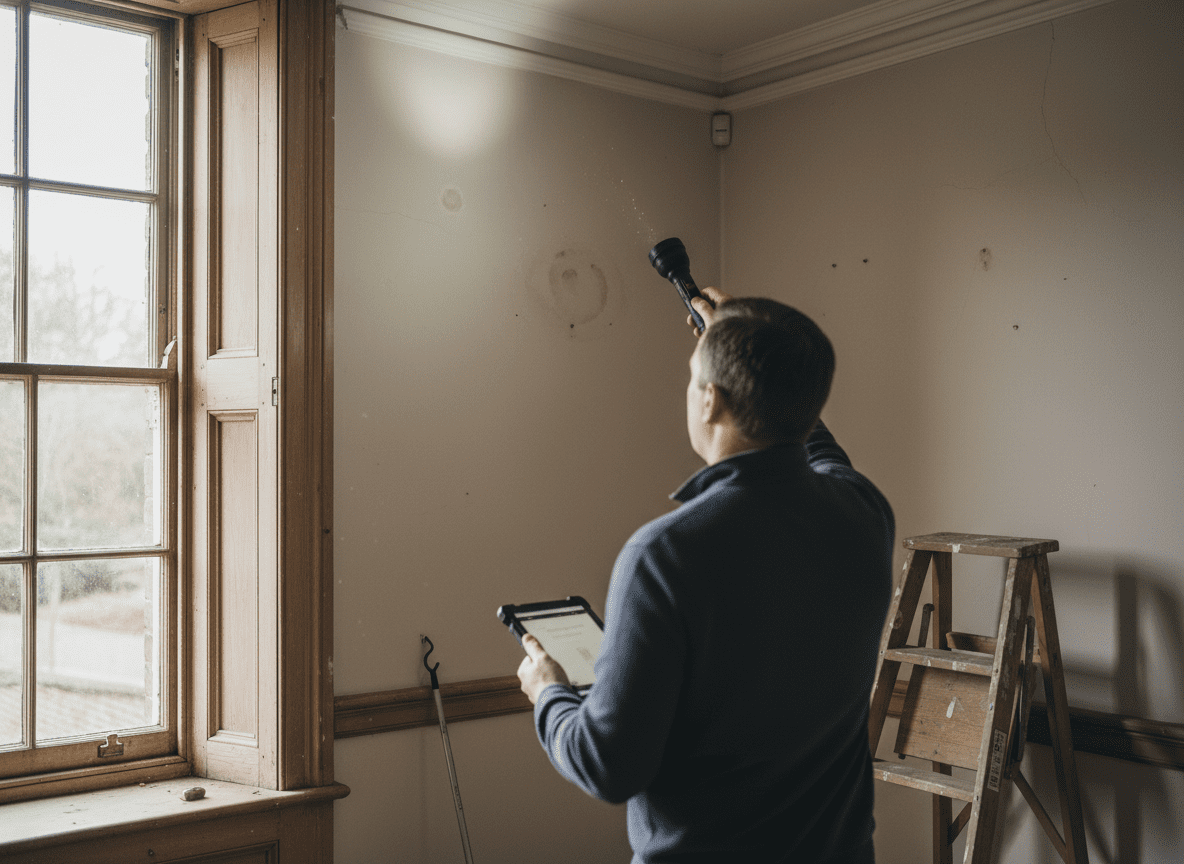
That does not mean every inspection is invasive or destructive. It is still mainly a visual and practical review. But a good inspection is more systematic than the buyer’s own snagging walk-round. It picks up the sort of things people miss when they are excited, rushed, or being guided around the house by the developer’s team.
| Inspection type | Best used for | Main focus |
|---|---|---|
| Pre-completion inspection | Before legal completion | Identifying defects while you still have the strongest leverage |
| Snagging survey | Before or shortly after moving in | Workmanship issues, incomplete items, finishing defects, visible installation concerns |
| Traditional survey | Usually older or more complex homes | Broader condition and structural risk rather than new-build finishing and handover quality |
The wording can vary, but the important point is that you need a service designed for a new build buyer’s actual risk. Not a generic box-ticking exercise.
When Should You Book a Survey on a New Build?
The best time is usually before completion, not after you have moved in.
This is one of the most important points in the whole decision.
Once you complete, the home is yours. You can still report defects, and you may still get them corrected, but the practical balance changes. You are now living with the issues. You are coordinating access. You are chasing aftercare. You may be waiting around for contractors to revisit jobs that should have been right before handover.
Before completion
A pre-completion inspection gives you the best chance to identify problems while the developer still has the strongest responsibility to address them before you take ownership. It is often the cleanest point in the process because you are not yet unpacked, inconvenienced, or trying to fit remedial works around daily life.
This is exactly why pre-completion inspections are so commercially and practically important. They are not just about finding defects. They are about finding them at the stage when they are easiest to act on.
After completion
If you have already completed, it is still worth getting a snagging inspection. Plenty of buyers only realise the importance once they start using the home properly. Doors stick. Cold spots show up. Sealant gaps become obvious. Water sits in the wrong places outside. Minor issues become daily annoyances.
You have not “missed your chance” entirely after completion. But you may have missed your easiest chance.
How early should you organise it?
Early enough that access can be arranged and the timing does not become a last-minute scramble. Buyers often leave this too late because they assume the developer will handle the final standard checks anyway. In reality, the closer you get to completion without a plan, the harder it can be to fit the right inspection into the window you actually need.
If you are unsure how inspection timing fits into the wider buying process, the existing guide on when to book a home survey helps set out the decision points more clearly.
What Happens If You Skip the Inspection?
Sometimes nothing dramatic happens. That is worth saying plainly. Not every new build buyer who skips a survey ends up regretting it.
But when problems do show up, the pattern is familiar. The issues are often not catastrophic enough to justify a major dispute, yet they are annoying enough to affect daily life and expensive enough to matter. That is where buyers feel stuck. Individually, each defect looks minor. Taken together, they damage confidence in the property and create weeks or months of chasing.
Common consequences of skipping an inspection include:
- not noticing defects until after furniture is in place
- losing the chance to raise issues before handover
- assuming an issue is “normal” when it is actually poor workmanship
- spending time compiling your own snagging list after you move in
- having to arrange repeated visits for remedial works
- accepting standards you might have challenged earlier
There is also the confidence factor. Buyers often want reassurance that the property has been checked independently. That peace of mind has value on its own. It is harder to enjoy the excitement of moving into a brand new home if you are already spotting defects and wondering what else you have missed.
Is a New Build Survey Worth the Cost?
In many cases, yes.
The reason is not that every inspection uncovers a huge hidden problem. The reason is that the cost of the inspection is usually small compared with the cost, hassle, delay, and frustration of chasing preventable defects after completion.
Think about the value in a realistic way.
If an inspection identifies poor drainage falls, unfinished sealant, incomplete insulation, ill-fitting doors, or external defects before completion, you have moved those issues from “your problem after moving in” to “the developer’s problem before handover”. That shift matters.
The value is often found in one or more of these outcomes:
- you avoid moving into a house with obvious defects still outstanding
- you save time by having a clear independent snagging list
- you reduce the chance of longer aftercare disputes
- you gain peace of mind from an independent check
- you understand which items are genuinely worth chasing and which are minor
That is also why broader cost-focused content such as how much does a home survey cost in Peterborough can support this page well internally. Buyers want to weigh cost against risk. On new builds, the “risk” is often inconvenience and lost leverage rather than major structural failure, but it is still real.
When You Might Not Need One
A balanced answer matters here.
You may decide not to instruct an inspection if:
- the developer has a very strong reputation and transparent handover process
- the build is small-scale and you have seen a consistently high finish standard
- you are comfortable picking up and managing minor snagging items yourself
- the practical timing makes a pre-completion inspection impossible and you are prepared to monitor issues closely after moving in
Even then, it is less a case of “new builds never need surveys” and more a case of “this buyer is comfortable taking that risk”.
That is an important distinction. The question is not whether an inspection is theoretically mandatory. It is whether you are happy to proceed without one, knowing how new build defects often show up in real life.
How to Decide What Is Right for You
If you are still unsure, use a simple decision checklist.
You should lean towards booking an inspection if:
- you are a first-time buyer and want independent reassurance
- the build programme feels rushed
- you have noticed finishing issues already during viewings
- you want the strongest chance to raise issues before moving in
- you are buying on a large development where plots are being handed over quickly
- you do not want to rely only on the developer’s own process
You may be more relaxed about it if:
- you are experienced in spotting defects yourself
- you fully understand the aftercare and warranty process
- you accept that minor defects may be left for you to chase later
Most buyers are not really deciding whether the home is structurally sound in the traditional survey sense. They are deciding whether they want an independent expert to inspect the property before the responsibility shifts more heavily onto them.
That is why this is not the same as a general “do I need a survey” article. It is a timing and leverage decision as much as a condition decision.
Final Thoughts
New build homes can be excellent purchases, but they are not automatically perfect just because no one has lived in them before. If you are asking whether you need a survey on a new build in the UK, the strongest practical answer is that an independent inspection is often a smart step, especially before completion.
You are not looking for problems for the sake of it. You are making sure small issues are found at the point when they are easiest to put right. That usually saves hassle, protects your confidence, and helps you move in with fewer surprises.
If you are buying a new build in Peterborough or within the surrounding area, an independent inspection can help you understand what has actually been finished well and what still needs attention. You can start by reading more about pre-completion inspections, reviewing common new build issues, or learning what a surveyor looks for during an inspection.
FAQs
Do I need a survey on a new build house in the UK?
You often do not need a full traditional survey in the same way as with an older property, but many buyers still benefit from an independent pre-completion inspection or snagging survey. The point is to identify defects and workmanship issues before or shortly after handover.
What is the difference between a snagging survey and a full building survey?
A snagging survey focuses on defects, finish quality, incomplete works, and visible new-build issues. A full building survey is broader and is usually more suitable for older, altered, or more complex properties where age, condition, and construction type create different risks.
When should I book a snagging survey before completion?
As early as possible once the property is close enough to inspect and access can be arranged. Booking before legal completion is usually the most useful point because defects can be raised while the developer still has the clearest responsibility to address them.
Will a developer fix snagging items after I move in?
Often yes, but that does not mean the process will be quick or convenient. After completion, you may need to report issues, arrange access, and wait for remedial visits. Finding items before completion is usually easier for the buyer.
What kind of defects are common in new build homes?
Common issues include poor sealant, ill-fitting doors and windows, uneven finishes, incomplete decoration, drainage falls outside, insulation issues, and minor installation defects. They are often not major on their own, but they can add up quickly once you move in.







0 Comments