

Buying at Auction? How to Get a Survey Before the Hammer Falls
Property auctions move quickly. You register to bid, attend the auction, and if you are the highest bidder, contracts exchange immediately — usually with a 10% deposit payable on the day. You then have 28 days or so to complete the purchase.
There is no cooling-off period, no opportunity to renegotiate after the hammer falls, and no way to back out without losing your deposit and potentially facing further liability. This makes getting a survey before you bid one of the most important steps you can take.
Key point: Once you win an auction bid, you are legally committed to buy. Any defects discovered after the hammer falls become your problem. A pre-auction survey gives you the information you need to decide whether to bid — and what to bid — before that moment arrives.
Why Auction Properties Often Have More Uncertainty
Properties sold at auction include everything from well-maintained homes being sold for probate reasons to genuinely distressed properties that have been empty, neglected, or that have structural or legal issues that have prevented conventional sale.
This range of condition is part of what makes auctions attractive — there can be value to be found. But it is also why thorough due diligence matters more, not less, than in a standard purchase.
The seller is not required to volunteer information about defects. The legal pack provided before the auction will include title information, any searches already carried out, and the special conditions of sale — but it will not typically include a property condition survey. That is something you arrange independently, for yourself.

Can You Get a Survey Before an Auction?
Yes, in most cases. Vendors and their agents have an incentive to allow viewings and surveys ahead of the auction, because a larger pool of prepared buyers typically produces stronger results. Most auction houses actively encourage prospective bidders to carry out due diligence before the sale date.
You will need to contact the auction house or selling agent to arrange access. Survey appointments are usually scheduled during the general viewing periods advertised for the property, though it is sometimes possible to arrange separate access in advance of those dates.
The cost of commissioning a survey before a bid you may not win is a real consideration. However, it is worth weighing that cost against the alternative: discovering significant defects after you are legally committed to purchase.
What if you cannot access the property before the auction?
Access can occasionally be difficult to arrange — for example, if the property is tenanted, if the executor of an estate is not cooperative, or if the auction house’s viewing schedule does not align with surveyor availability.
In these cases, a surveyor may be able to carry out a desktop assessment using planning records, Land Registry data, available photographs, and other publicly available information. This is not a substitute for a full inspection, but it can help identify obvious red flags or areas of concern that may inform your decision to bid and at what level.
Where access is genuinely impossible, bidders sometimes budget conservatively to allow for unknown remedial works — but this is a risk management approach, not a replacement for professional advice.
What Type of Survey Is Appropriate for an Auction Property?
The right level of survey depends on the property itself. The compressed timescales of auction purchases, however, generally push the decision toward a more thorough inspection rather than a lighter one.
| Survey level | Best suited to | What it covers |
|---|---|---|
| RICS Level 2 Homebuyer Survey | Auction properties in reasonable condition; standard construction; no obvious defects visible | Condition ratings; damp readings; material defects; brief recommendations |
| RICS Level 3 Building Survey | Older properties; visibly distressed homes; non-standard construction; any property with visible structural movement or significant alteration | Full structural inspection; detailed defect analysis; repair options and implications; recommended further investigations |
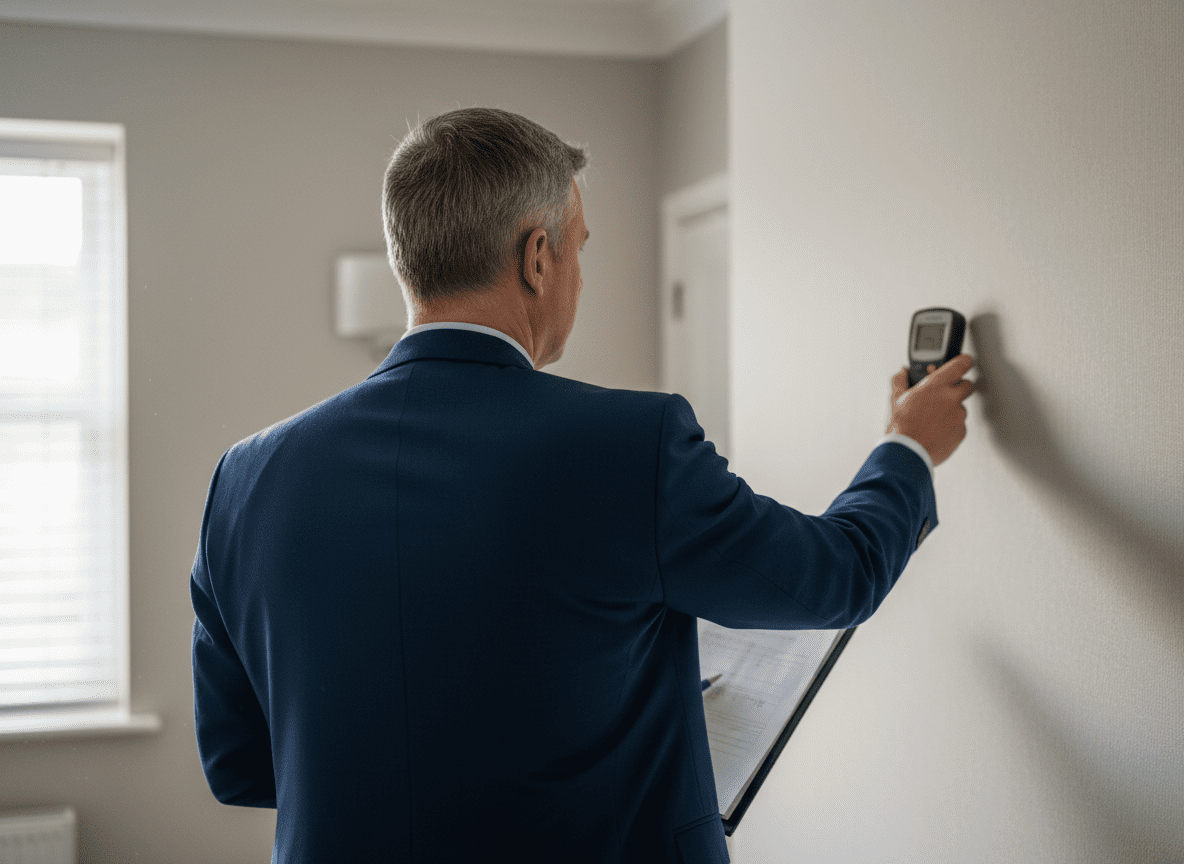
For most auction properties — particularly those that are older, have been empty, or show any signs of wear or structural movement on viewing — a RICS Level 3 Building Survey is worth serious consideration. The detail it provides is genuinely useful when setting a maximum bid figure.
If the property is relatively modern and in sound condition, a RICS Level 2 Homebuyer Survey may be sufficient. If you are unsure, contact us before the auction and we can help you make that call based on what you know about the property.
Using the Survey to Set Your Maximum Bid
One of the most practical benefits of a pre-auction survey is that it allows you to set a genuinely informed maximum bid. Once you know the condition of the property and have a sense of the likely remedial costs, you can calculate what you are willing to pay and stick to that figure with confidence.
Without survey information, bidders are making decisions based on incomplete evidence. That can result in overbidding for a property that requires significant investment, or in underbidding because unknown risks feel uncomfortable.
A survey does not remove all uncertainty, but it significantly reduces it — and it gives you something concrete to work with when setting your limit.
What the legal pack does and does not tell you
The legal pack provided before an auction typically includes the title documents, local authority searches (sometimes), drainage searches, and the special conditions of sale. It is important to have your solicitor review this before you bid.
What it does not include is any professional assessment of the property’s physical condition. That is what a survey provides. The legal and physical due diligence are separate exercises, and both matter.
What If the Survey Reveals Serious Problems?
If your pre-auction survey identifies significant defects, you have a straightforward decision: decide not to bid, adjust your maximum bid downward to reflect remedial costs, or seek further specialist investigations before the auction if time permits.
Unlike a conventional purchase, you cannot renegotiate after the auction. The decision — and the information it requires — must be in place before you raise your paddle.
This is why timing matters. Commission a survey as early as possible once you identify a property you are seriously considering. Surveyor availability varies, and a report typically takes several days to be delivered after the inspection.
Frequently Asked Questions
How quickly can a pre-auction survey be turned around?
Timescales vary depending on surveyor availability and the complexity of the property. It is reasonable to allow a week from instruction to receiving your report in most cases. If you are working to a tight auction deadline, contact us as early as possible so we can assess what is achievable.
What happens if the auction is postponed or the property is withdrawn?
If the property is withdrawn or the auction is postponed, you will still have incurred the cost of the survey. This is an unavoidable risk of pre-auction due diligence. However, the alternative — bidding without information — carries a much higher financial risk if you win.
Can a survey be used if I buy the same property privately after the auction?
If a property fails to sell at auction and is subsequently offered privately, a recent survey report is still a useful resource. Depending on how much time has passed and whether circumstances have changed, it may be worth commissioning a fresh inspection or checking whether the original surveyor can provide an update.
Do auction lenders require a survey?
If you are buying with a mortgage, your lender will require their own valuation. This is not the same as an independent survey and is carried out in the lender’s interest. You should commission your own independent RICS survey regardless of any valuation arranged by the lender.
Is a Level 3 Building Survey always necessary for auction properties?
Not always, but it is more often appropriate at auction than in a conventional sale — because auction properties skew older, less maintained, and more variable in condition. A Level 2 Homebuyer Survey is suitable for properties in reasonable condition using standard construction. If there is any doubt about the property’s age, structure, or condition, a Level 3 is the safer choice.
Bidding at auction? Blue Blossom Surveys Ltd provides independent RICS Level 2 and Level 3 surveys across Peterborough, Corby, Oakham, Stamford, Wisbech, and the surrounding area. If you need a survey before an upcoming auction, contact us to discuss timing and what is achievable.




0 Comments